Encouraging the Voluntary Mobilization of Mental Resources by Manipulating Task Design: Explorative Study
Lina-Estelle Louis, Saïd Moussaoui, Sébastien Ravoux, Isabelle Milleville-Pennel

TL;DR
This study explores how adding game-like elements to cognitive tasks can influence users' mental effort and enjoyment.
Contribution
The novelty lies in investigating the effects of gamification and cognitive solicitation on perceived playfulness and mental workload in a narrative context.
Findings
Adding visual game-like elements decreased task completion time but slightly reduced performance.
Gamification increased mental workload related to attentional resources.
Increasing cognitive solicitation affected mental workload without impacting task performance.
Abstract
Cognitive training is increasingly being considered and proposed as a solution for several pathologies, particularly those associated with aging. However, trainees need to be willing to invest enough mental effort to succeed and make progress. In this study, we explore how gamification in a narrative context (ie, the addition of visual game-like elements [GLEs] embedded in real-world contexts) could contribute increase in perceived playfulness (PP) and voluntary mental effort allocated to a cognitive task. In such context, narrative elements and GLEs can be designed to align with a commonly relatable scenario (like simulating fishing or gardening activity) to ground the task in familiar, real-world contexts. We also consider if the supposed effect of GLEs on PP and voluntary mental effort could endure while manipulating an intrinsic variable of the task (ie, by increasing cognitive…
Genes, proteins, chemicals, diseases, species, mutations and cell lines named across the full text — each resolved to its canonical identifier and authoritative record.
Click any figure to enlarge with its caption.
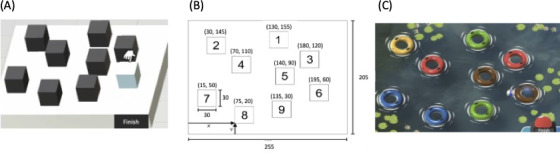 Figure 1
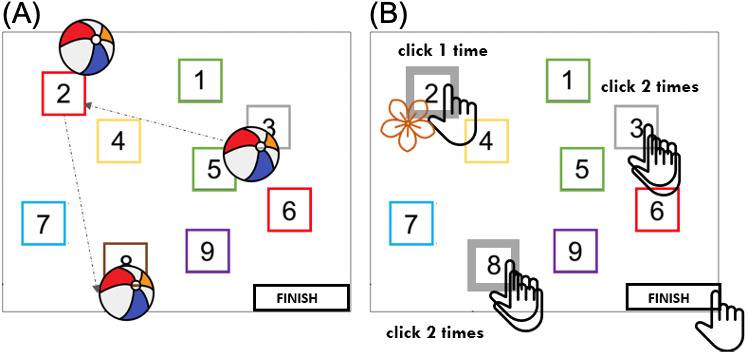 Figure 2
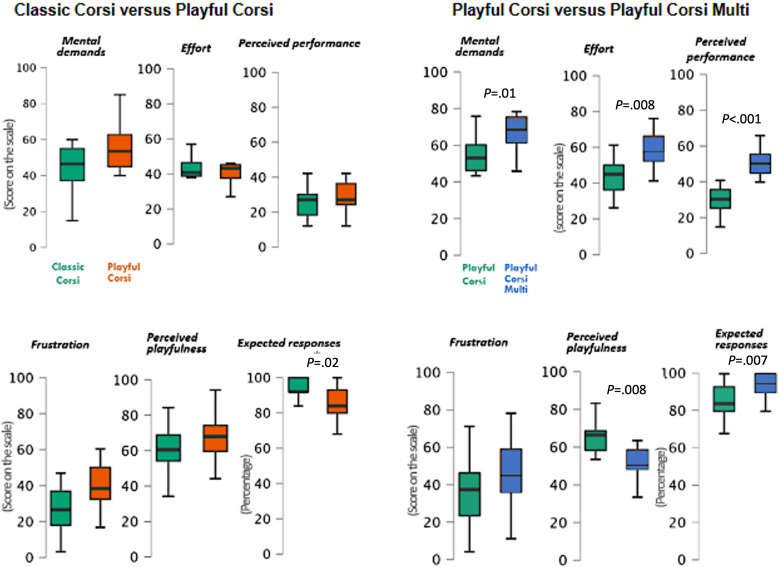 Figure 3
Peer Reviews
No public reviews on file for this paper yet. If you reviewed it on a platform where reviews are public (OpenReview, ICLR, NeurIPS, ICML), you can paste yours below so the community can read it here.
Videos
No videos yet. Explain this paper in a talk, walkthrough, or lecture? Add one.
Taxonomy
TopicsHuman-Automation Interaction and Safety · Cognitive Functions and Memory · Cognitive Abilities and Testing