FirstCPR: A pragmatic community organisation-based cluster randomised trial to increase community training and preparedness to respond to out-of-hospital cardiac arrest
Sonali Munot, Julie Redfern, Janet E Bray, Blake Angell, Andrew Coggins, Alan Robert Denniss, Garry Jennings, Sarah Khanlari, Pramesh Kovoor, Saurabh Kumar, Kevin Lai, Simone Marschner, Paul M. Middleton, Ian Oppermann, Zoe Rock, Christopher Semsarian, Matthew Vukasovic

TL;DR
This study tested a community-based approach to improve CPR training and found that participants in the intervention group were more likely to be trained and confident in using CPR and AEDs.
Contribution
A novel community organization-targeted approach to increase BLS training and preparedness for out-of-hospital cardiac arrest.
Findings
Intervention clusters showed higher rates of CPR training and willingness to perform CPR on a stranger.
Participants in the intervention reported greater confidence in using automated external defibrillators.
Survey respondents in the intervention group were more willing to use AEDs on strangers compared to the control group.
Abstract
Bystander cardiopulmonary resuscitation (CPR) and defibrillation improve out-of-hospital cardiac arrest survival. However, basic life support (BLS) skills are low. The FirstCPR cluster randomised controlled trial aimed to test the effectiveness of a community organisation-targeted BLS education and training approach. Clusters (community organisations with 50+ members) were randomly allocated to intervention (12-month period of opportunities to access BLS education and training) or control (no intervention). Outcomes were assessed via surveys at 12 months and pre-specified analysis involved hierarchical mixed-models. Of 165 randomised clusters (82 intervention), 58% were sports and 42% were social/faith-based. Most of the intervention clusters (74/82) participated in at least one intervention activity (15 in all activities). Factors such as the COVID-19 pandemic and organisation…
Genes, proteins, chemicals, diseases, species, mutations and cell lines named across the full text — each resolved to its canonical identifier and authoritative record.
Click any figure to enlarge with its caption.
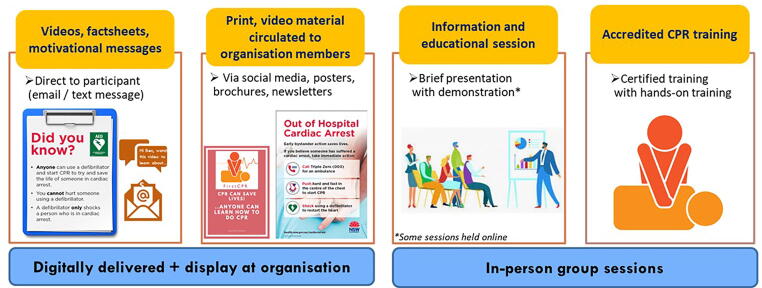 Figure 1
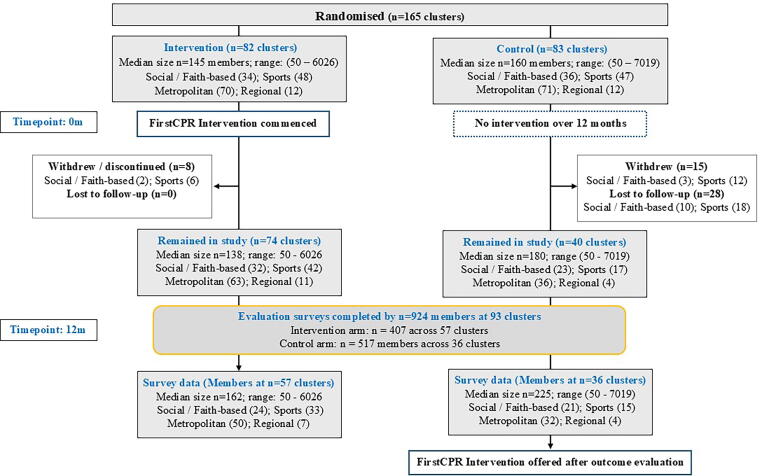 Figure 2
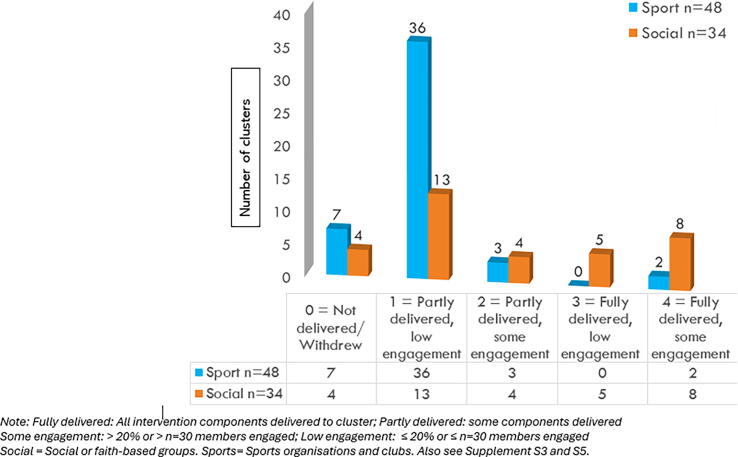 Figure 3
Peer Reviews
No public reviews on file for this paper yet. If you reviewed it on a platform where reviews are public (OpenReview, ICLR, NeurIPS, ICML), you can paste yours below so the community can read it here.
Videos
No videos yet. Explain this paper in a talk, walkthrough, or lecture? Add one.
Taxonomy
TopicsCardiac Arrest and Resuscitation · Emergency and Acute Care Studies · Trauma and Emergency Care Studies