Protein–polyelectrolyte complexation: effects of sterically repulsive groups, macromolecular architecture and hierarchical assembly
Raman Hlushko, Alexander Marin, Alexander K. Andrianov

TL;DR
This paper explores how proteins and polyelectrolytes self-assemble in water, focusing on how molecular structure affects stability and binding.
Contribution
The study introduces new insights into how macromolecular architecture influences protein–polyelectrolyte complexation and hierarchical assembly.
Findings
Protein–polyion complex stability depends on the molecular architecture of the polyions.
Hierarchical assemblies formed via ionic crosslinking reduce protein-binding ability.
Combining thermodynamic and visualization methods reveals multivalent charge interactions.
Abstract
Self-assembly of proteins and polyelectrolytes in aqueous solutions is a promising approach for the development of advanced biotherapeutics and engineering efficient biotechnological processes. Synthetic polyions containing sterically repulsive ethylene oxide moieties are especially attractive as protein modifying agents, as they can potentially induce a PEGylation-like stabilizing effect without the need for complex covalent binding reactions. In this study, we investigated the protein-binding properties of anionic polyelectrolytes based on an inorganic polyphosphazene backbone, with ethylene oxide groups incorporated into both grafted and linear macromolecular topologies. The study was conducted in aqueous solutions using isothermal titration calorimetry, dynamic light scattering, and cryogenic electron microscopy to analyze the samples in their vitrified state. Our findings revealed…
Genes, proteins, chemicals, diseases, species, mutations and cell lines named across the full text — each resolved to its canonical identifier and authoritative record.
Click any figure to enlarge with its caption.
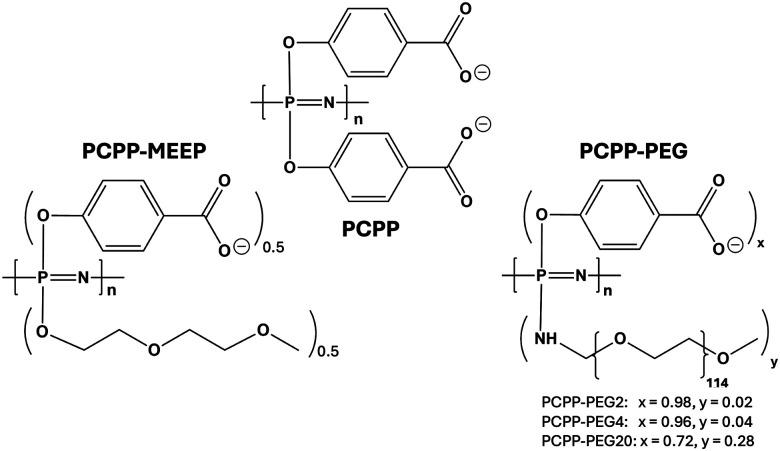 Figure 1
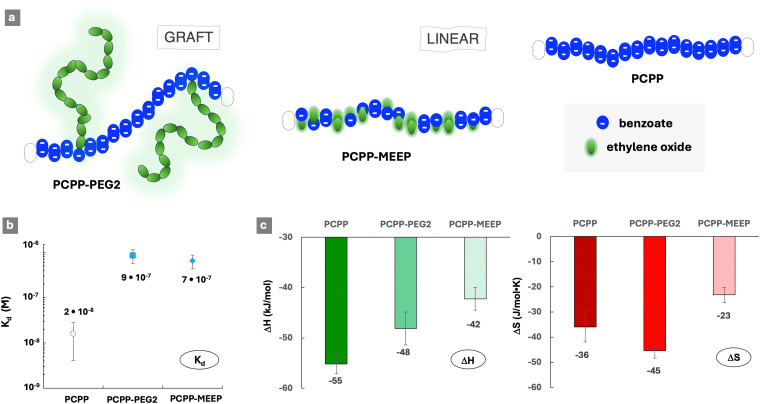 Figure 2
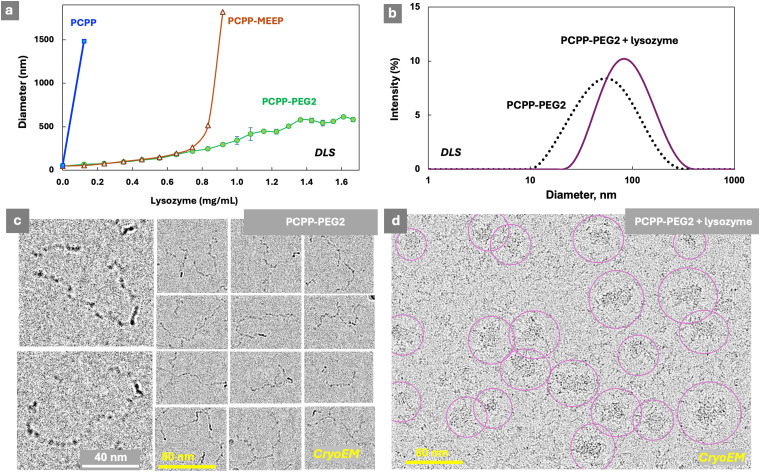 Figure 3
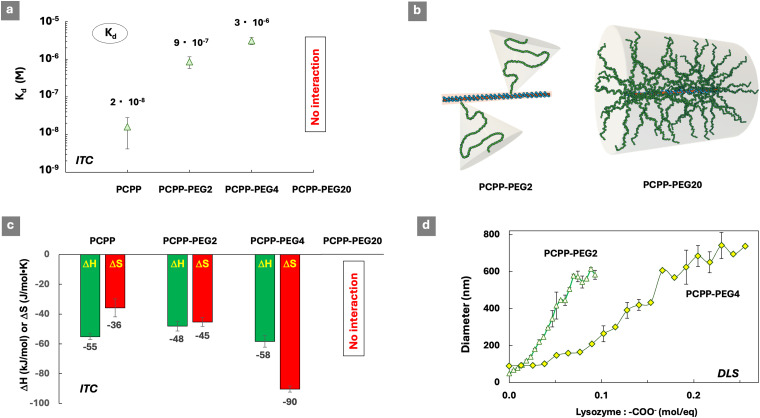 Figure 4
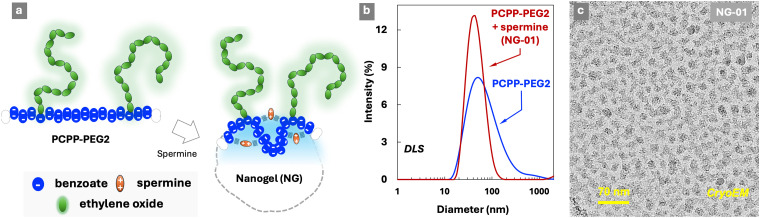 Figure 5
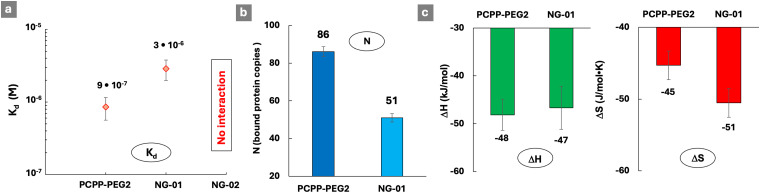 Figure 6
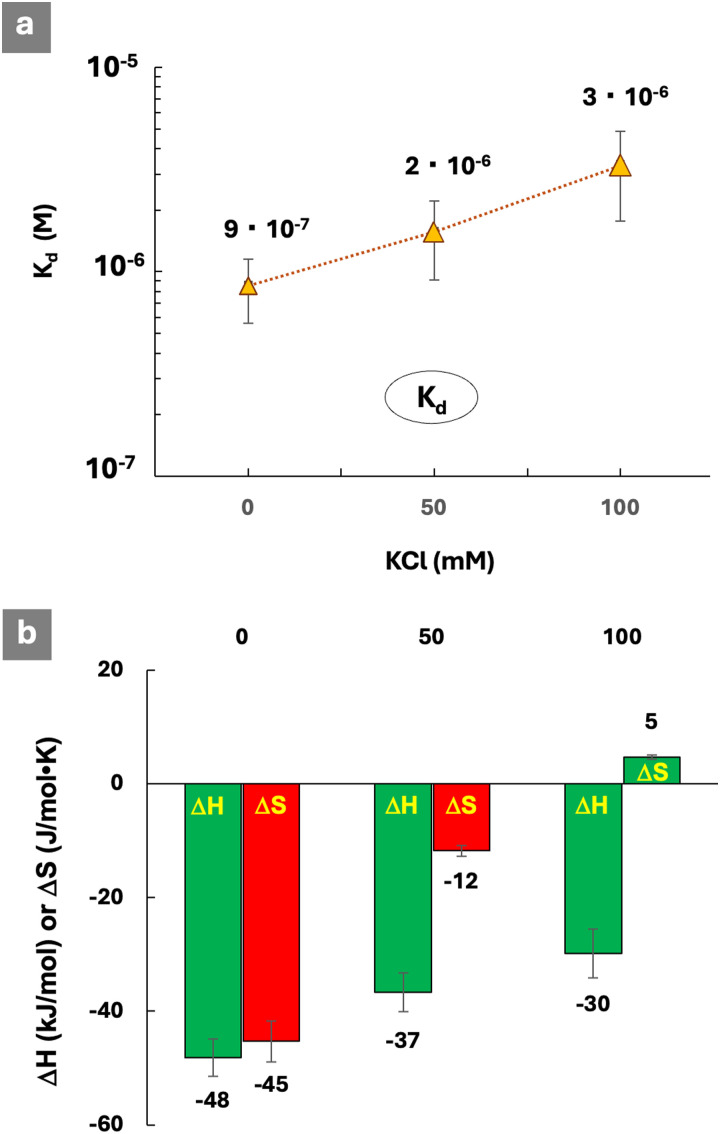 Figure 7
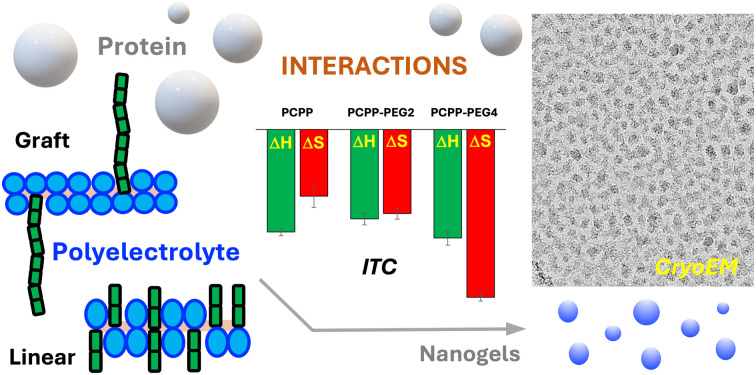 Figure 8
Peer Reviews
No public reviews on file for this paper yet. If you reviewed it on a platform where reviews are public (OpenReview, ICLR, NeurIPS, ICML), you can paste yours below so the community can read it here.
Videos
No videos yet. Explain this paper in a talk, walkthrough, or lecture? Add one.
Taxonomy
Topicsbiodegradable polymer synthesis and properties · Polymer Surface Interaction Studies · Protein purification and stability