Humanized Saccharomyces cerevisiae provides a facile and effective tool to identify damaging human variants that cause exosomopathies
Khondakar Sayef Ahammed, Milo B Fasken, Anita H Corbett, Ambro van Hoof

TL;DR
A humanized yeast model helps identify harmful genetic variants in the RNA exosome that cause rare diseases called exosomopathies.
Contribution
A humanized yeast model was developed to test patient variants in the RNA exosome for their damaging effects.
Findings
Six out of nine noncatalytic core subunits of the yeast RNA exosome can be replaced by mammalian orthologs.
Functional defects were observed in both known and unknown disease-associated variants of EXOSC2, EXOSC4, EXOSC7, and EXOSC9.
Some variants reduce protein levels, while others are expressed normally but still impair RNA exosome function.
Abstract
The RNA exosome is an evolutionarily conserved, multiprotein complex that is the major RNase in 3′ processing and degradation of a wide range of RNAs in eukaryotes. Single amino acid changes in RNA exosome subunits cause rare genetic diseases collectively called exosomopathies. However, distinguishing disease-causing variants from nonpathogenic ones remains challenging, and the mechanism by which these variants cause disease is largely unknown. Previous studies have employed a budding yeast model of RNA exosome-linked diseases that relies on mutating the orthologous yeast genes. Here, we develop a humanized yeast model of exosomopathies that allows us to unambiguously assess damaging effects of the exact patient variant in budding yeast. Individual replacement of the yeast subunits with corresponding mammalian orthologs identified 6 out of 9 noncatalytic core subunits of the budding…
Genes, proteins, chemicals, diseases, species, mutations and cell lines named across the full text — each resolved to its canonical identifier and authoritative record.
Click any figure to enlarge with its caption.
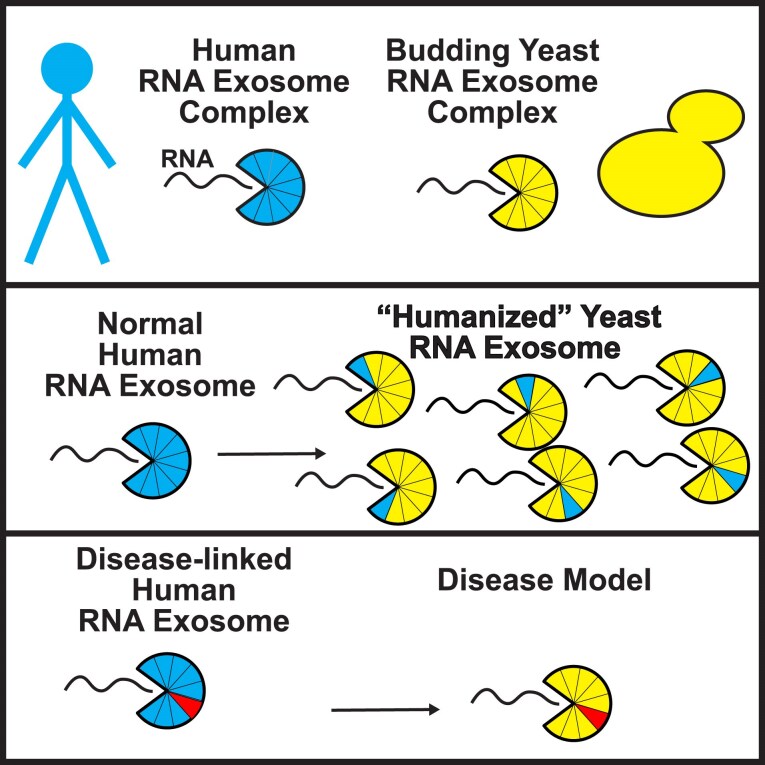 Figure 1
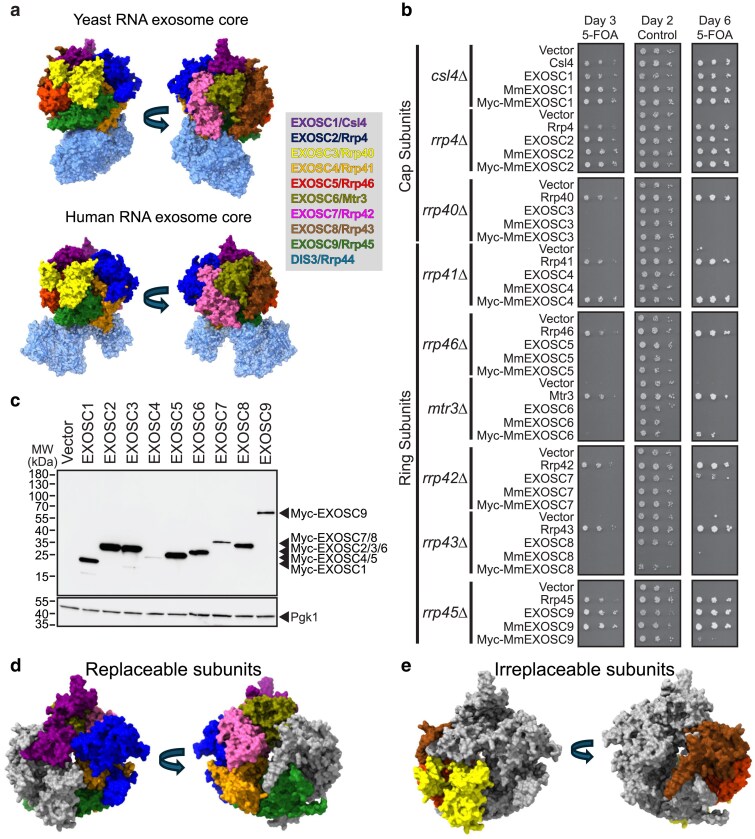 Figure 2
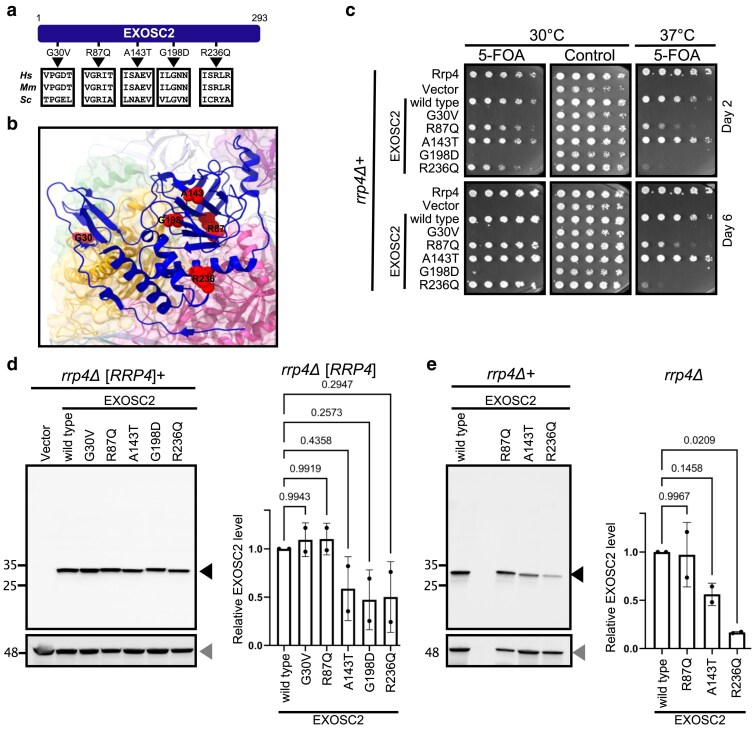 Figure 3
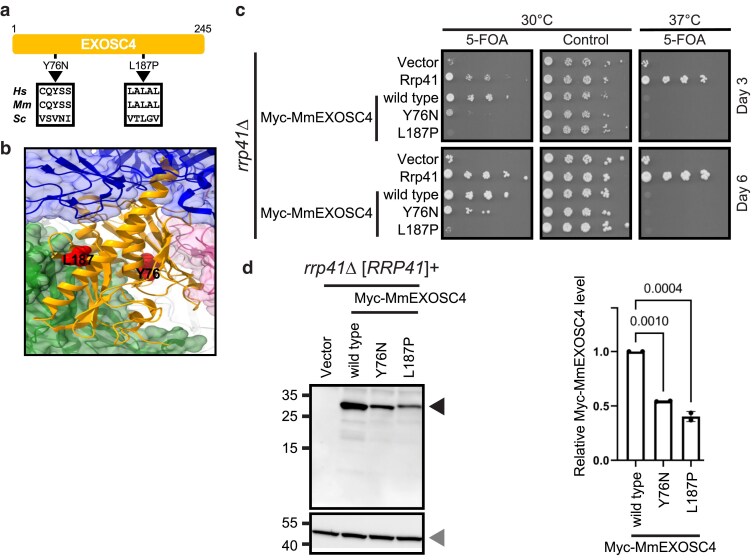 Figure 4
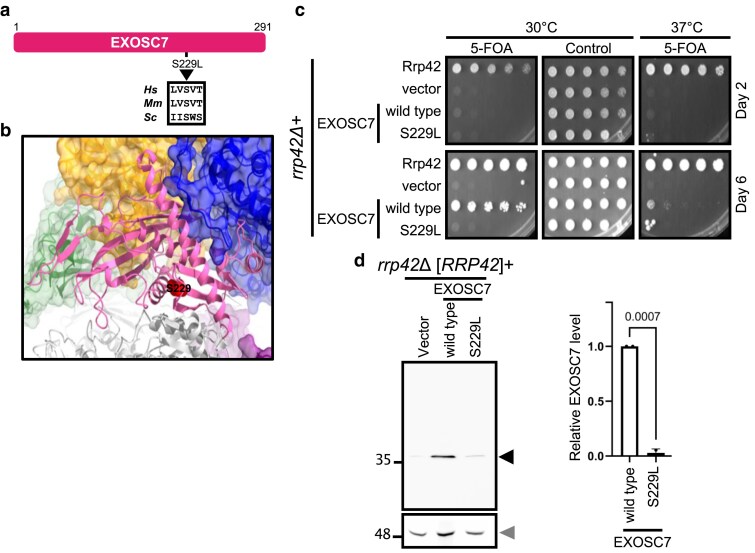 Figure 5
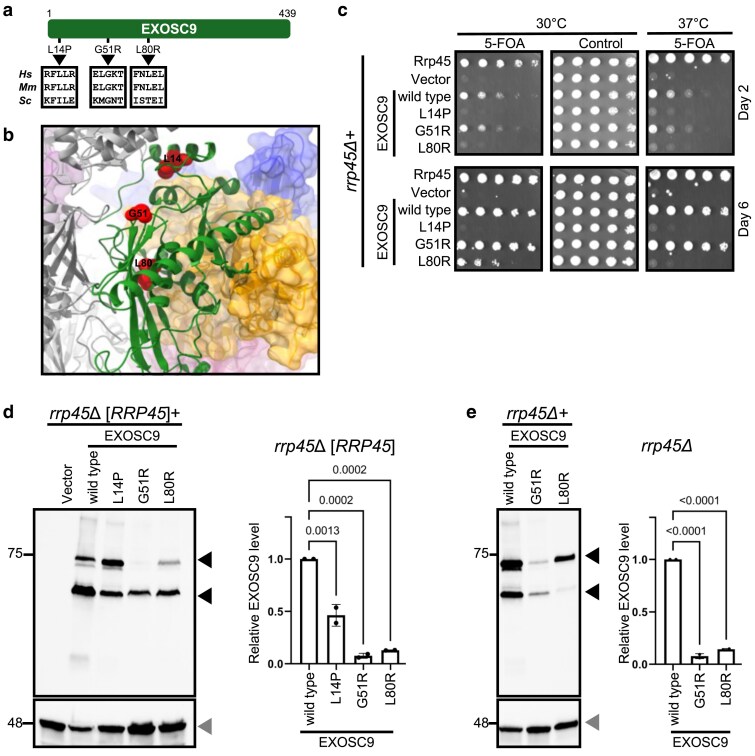 Figure 6
Peer Reviews
No public reviews on file for this paper yet. If you reviewed it on a platform where reviews are public (OpenReview, ICLR, NeurIPS, ICML), you can paste yours below so the community can read it here.
Videos
No videos yet. Explain this paper in a talk, walkthrough, or lecture? Add one.
Taxonomy
TopicsRNA Research and Splicing · RNA modifications and cancer · RNA and protein synthesis mechanisms