De novo whole-genome assembly of the critically endangered southern muriqui (Brachyteles arachnoides)
Christopher Faulk, Carrie Walls, Brandie Nelson, Paloma R Arakaki, Irys H L Gonzalez, Nancy Banevicius, Rodrigo H F Teixeira, Marina A Medeiros, Gessiane P Silva, Mauricio Talebi, Wilson C J Chung, Rafaela S C Takeshita

TL;DR
This paper presents the first high-quality whole-genome assembly of the critically endangered southern muriqui, a large Neotropical primate, to support conservation efforts.
Contribution
The study provides the first de novo whole-genome assembly for the genus Brachyteles, enabling future genomic research and conservation strategies.
Findings
The genome assembly is 2.6 Gb with a BUSCO completeness score of 99.5% and an N50 of 58.8 Mb.
The assembly identified 24,353 protein-coding genes and 46% of the genome as repetitive elements.
The mitogenome was assembled with 16,562 bp over 37 genes and a mean CpG methylation of 80%.
Abstract
The southern muriqui (Brachyteles arachnoides) is one of the 2 species of muriquis (genus Brachyteles), the largest body-sized nonhuman primate from the Neotropics. Deforestation and illegal hunting have led to a continuing decline in the muriqui population, leading to their current classification as critically endangered. The lack of a reference genome for the genus Brachyteles prevents scientists from taking full advantage of genomic tools to improve their conservation status. This study reports the first whole-genome assemblies of the genus Brachyteles, using DNA from 2 zoo-housed southern muriqui females. We performed sequencing with Oxford Nanopore Technologies’ PromethION 2 Solo using a native DNA library preparation to preserve DNA modifications. We used Flye to assemble genomes for each individual. The best final assembly was 2.6 Gb, in 319 contigs, with an N50 of 58.8 Mb and an…
Genes, proteins, chemicals, diseases, species, mutations and cell lines named across the full text — each resolved to its canonical identifier and authoritative record.
Click any figure to enlarge with its caption.
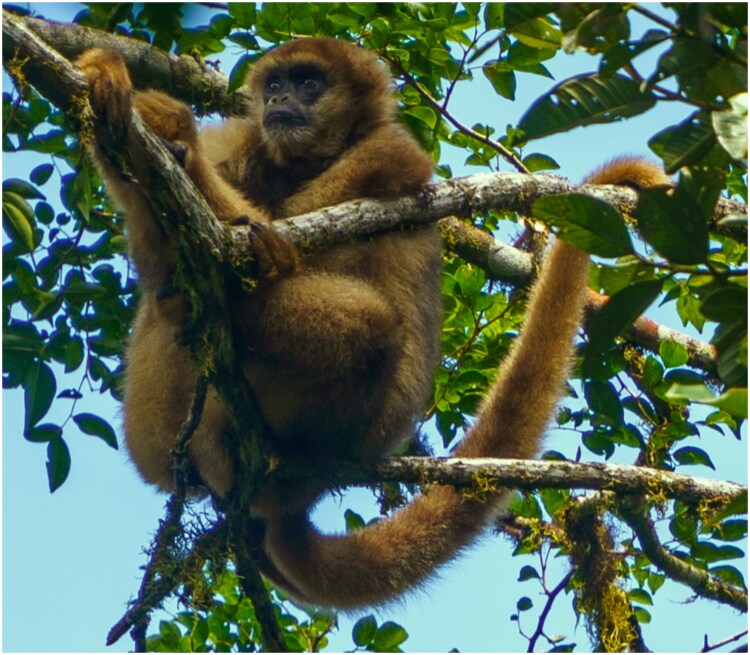 Figure 1
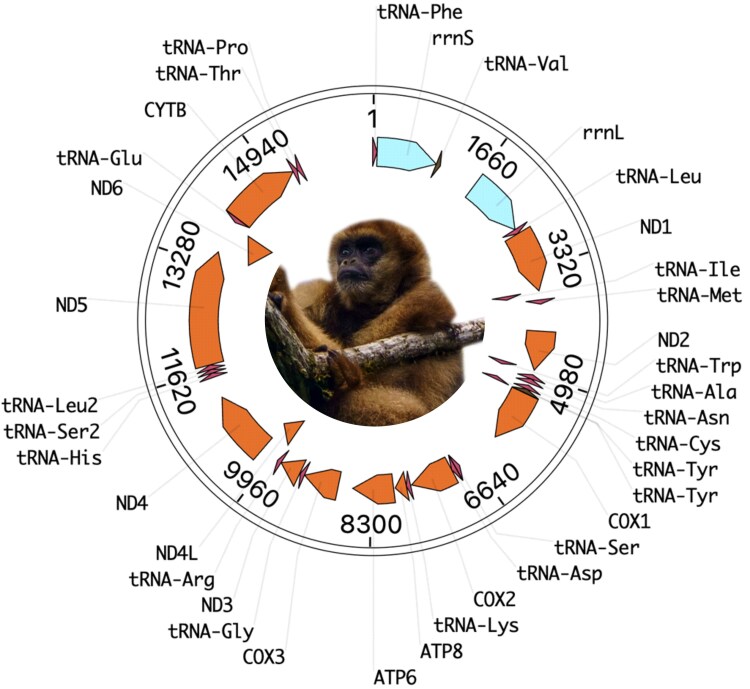 Figure 2
Peer Reviews
No public reviews on file for this paper yet. If you reviewed it on a platform where reviews are public (OpenReview, ICLR, NeurIPS, ICML), you can paste yours below so the community can read it here.
Videos
No videos yet. Explain this paper in a talk, walkthrough, or lecture? Add one.
Taxonomy
TopicsGenomics and Phylogenetic Studies · Chromosomal and Genetic Variations · Machine Learning in Bioinformatics