Deep Brain Stimulation of the VIM for Tremor in a Patient with POLR3A-Associated Cerebellar Syndrome Without Long-Term Benefit
Ute Scheller, Steffen Paschen, Fabian Maass, Christoph van Riesen

TL;DR
A patient with a rare genetic disorder did not benefit from a brain stimulation treatment typically used for tremors.
Contribution
This case suggests VIM DBS may not be effective for POLR3A-related cerebellar tremors.
Findings
VIM DBS did not provide long-term relief for the patient's drug-resistant tremor.
Tremor from POLR3A mutations may involve different brain networks than typical tremor disorders.
Abstract
Deep brain stimulation is an approved therapy for essential tremor and Parkinson’s disease. In addition, VIM-DBS is used off-label for the treatment of tremor syndromes with a different etiology. We present the case of a woman with a drug-refractory action tremor due to rare compound heterozygous POLR3A mutations. Her treatment with VIM DBS did not lead to a sustained improvement of symptoms. Tremor due to POLR3A-related cerebellar syndromes may not be responsive to VIM DBS. The networks contributing to cerebellar tremor should be better investigated in terms of where neuromodulatory therapy might be more effective.
Genes, proteins, chemicals, diseases, species, mutations and cell lines named across the full text — each resolved to its canonical identifier and authoritative record.
Click any figure to enlarge with its caption.
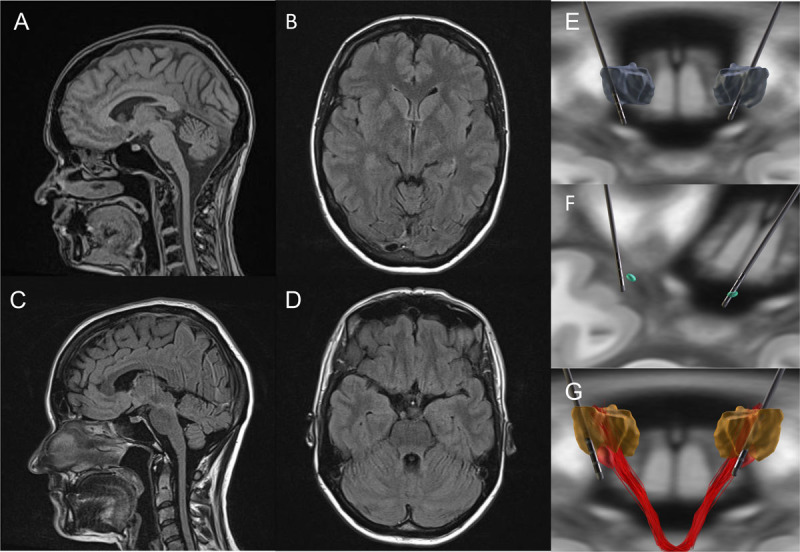 Figure 1
Peer Reviews
No public reviews on file for this paper yet. If you reviewed it on a platform where reviews are public (OpenReview, ICLR, NeurIPS, ICML), you can paste yours below so the community can read it here.
Videos
No videos yet. Explain this paper in a talk, walkthrough, or lecture? Add one.
Taxonomy
TopicsNeurological disorders and treatments · Genetic Neurodegenerative Diseases · Parkinson's Disease Mechanisms and Treatments