FOIM: Thermal Foaming of Shape Memory Polyurethane Foil
Anna‐Lisa Poser, Thorsten Pretsch

TL;DR
FOIM is a shape memory polyurethane foil that can transform into a foam when heated to 60°C, useful for applications needing compact transport and shape change.
Contribution
A new semi-finished shape memory polyurethane product (FOIM) with unique thermal foaming properties is introduced.
Findings
FOIM exhibits a melting peak at 45°C and crystallization at 14°C, indicating soft segment phase transitions.
The material can switch back to foam when reheated to 60°C after being compressed into a foil at that temperature.
The structure remains stable despite significant deformation, as shown by buoyancy and heat transmission measurements.
Abstract
This work introduces the semi‐finished product FOIM, a neologism from FOIl and foaM, a phase segregated polyester urethane urea (PEUU) foam, which is synthesized from poly(1,6‐hexylene adipate) diol, 4,4’‐methylene diphenyl diisocyanate, polyethylene glycol and water as blowing agent. The PEUU is obtained by following a one‐shot synthesis and is characterized by a hard/soft segment ratio of 1.06 and an open pore content of 78%. Differential scanning calorimetry reveals a melting peak at 45 °C and a crystallization signal at 14 °C, both of which are associated with the phase transitions of the soft segment. The glass transition temperature, which is determined as a local maximum within the tan δ using dynamic mechanical analysis, is 1 °C. During programming, the foam is heavily compressed at 60 °C. Once unloaded at 23 °C, a translucent foil, the FOIM, is obtained. When reheated to 60 °C,…
Genes, proteins, chemicals, diseases, species, mutations and cell lines named across the full text — each resolved to its canonical identifier and authoritative record.
Click any figure to enlarge with its caption.
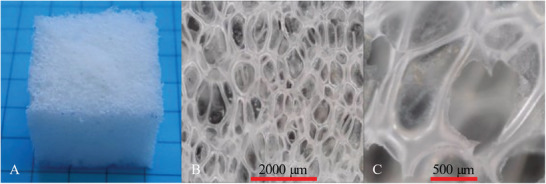 Figure 1
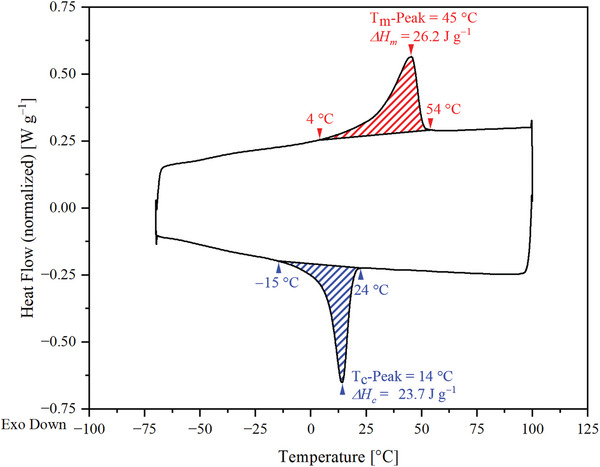 Figure 2
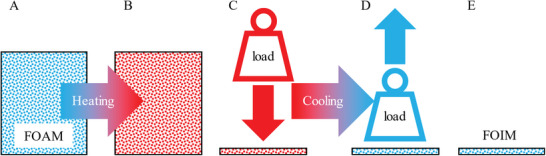 Figure 3
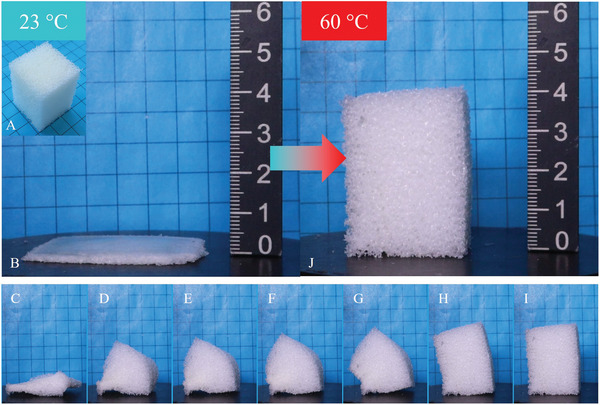 Figure 4
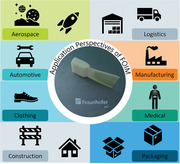 Figure 5
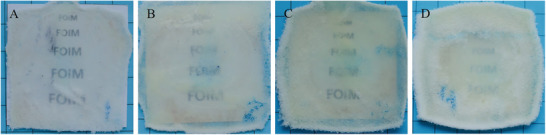 Figure 6
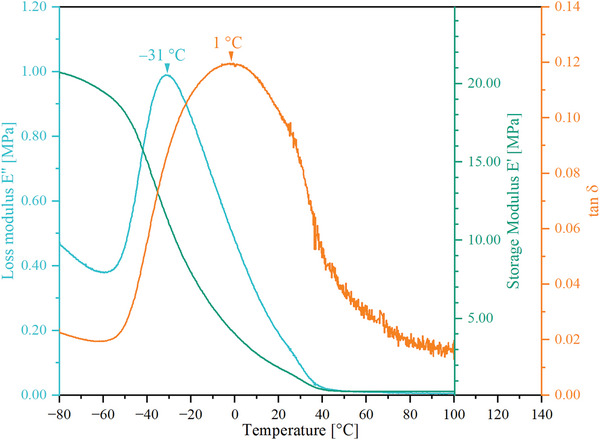 Figure 7
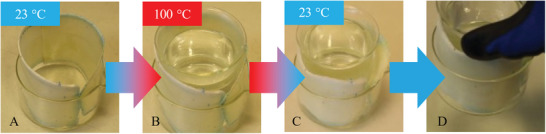 Figure 8
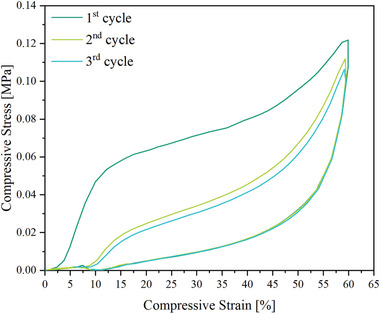 Figure 9
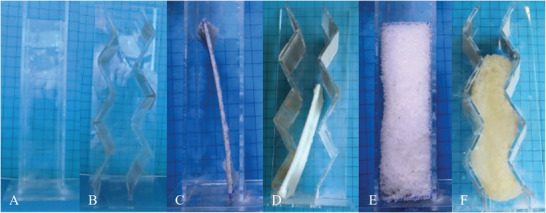 Figure 10
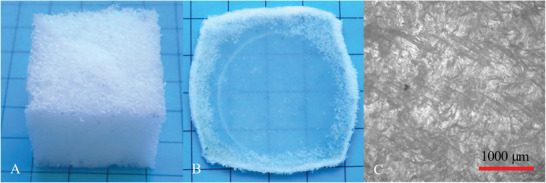 Figure 11
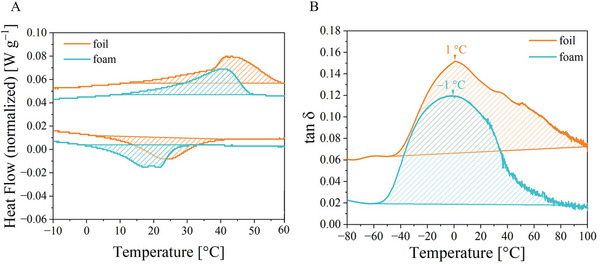 Figure 12
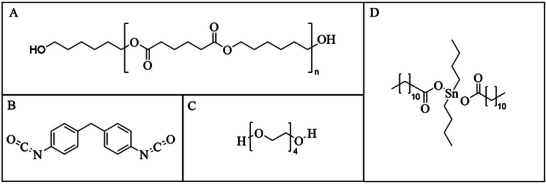 Figure 13
Peer Reviews
No public reviews on file for this paper yet. If you reviewed it on a platform where reviews are public (OpenReview, ICLR, NeurIPS, ICML), you can paste yours below so the community can read it here.
Videos
No videos yet. Explain this paper in a talk, walkthrough, or lecture? Add one.
Taxonomy
TopicsPolymer composites and self-healing · Silicone and Siloxane Chemistry · Polydiacetylene-based materials and applications