New burn model for developing consistent second- and third-degree burn injuries in rats
Ahmed Ibrahim, Khaled M. A. Hassanein, Mahmoud Soliman, Abdelnaby M. Elshahawy

TL;DR
Researchers developed a reliable method using a digital drying oven to create consistent second- and third-degree burns in rats for experimental studies.
Contribution
A new, controllable burn model using a digital drying oven is introduced for creating consistent burn injuries in rats.
Findings
Burns at 100 °C produced second-degree injuries with epidermal sloughing and dermal necrosis.
Burns at 150 and 200 °C caused third-degree injuries with necrosis extending to subcutaneous fat and muscles.
Burn depth was significantly greater at 100 °C and higher temperatures compared to lower ones.
Abstract
This study’s aim was: (1) introduce the digital drying oven as a reproducible, controllable, and accurate heating device for burn model creation. (2) Define the heating temperature appropriate for developing consistent second and third-degree burn injuries in rats. Burns appeared deeper with more distinct borders in groups (B) and (C) than in group (A). The stainless-steel rod at 100 ºC created burn injuries of the second degree, evidenced by the sloughing of the epidermis and necrosis in the epithelium and upper part of the dermis. Heating at 150 and 200 ºC created third-degree burn injuries, where necrosis involved the epidermis and dermis and extended to the subcutaneous fat and muscles. The depth of the burn wound in the group (B) (371.2 ± 41.3 μm) and (C) (385.2 ± 38.0 μm) was significantly deeper compared with the group (A) (178 ± 46.6 μm) (P < 0.001). The digital drying oven is…
Genes, proteins, chemicals, diseases, species, mutations and cell lines named across the full text — each resolved to its canonical identifier and authoritative record.
Click any figure to enlarge with its caption.
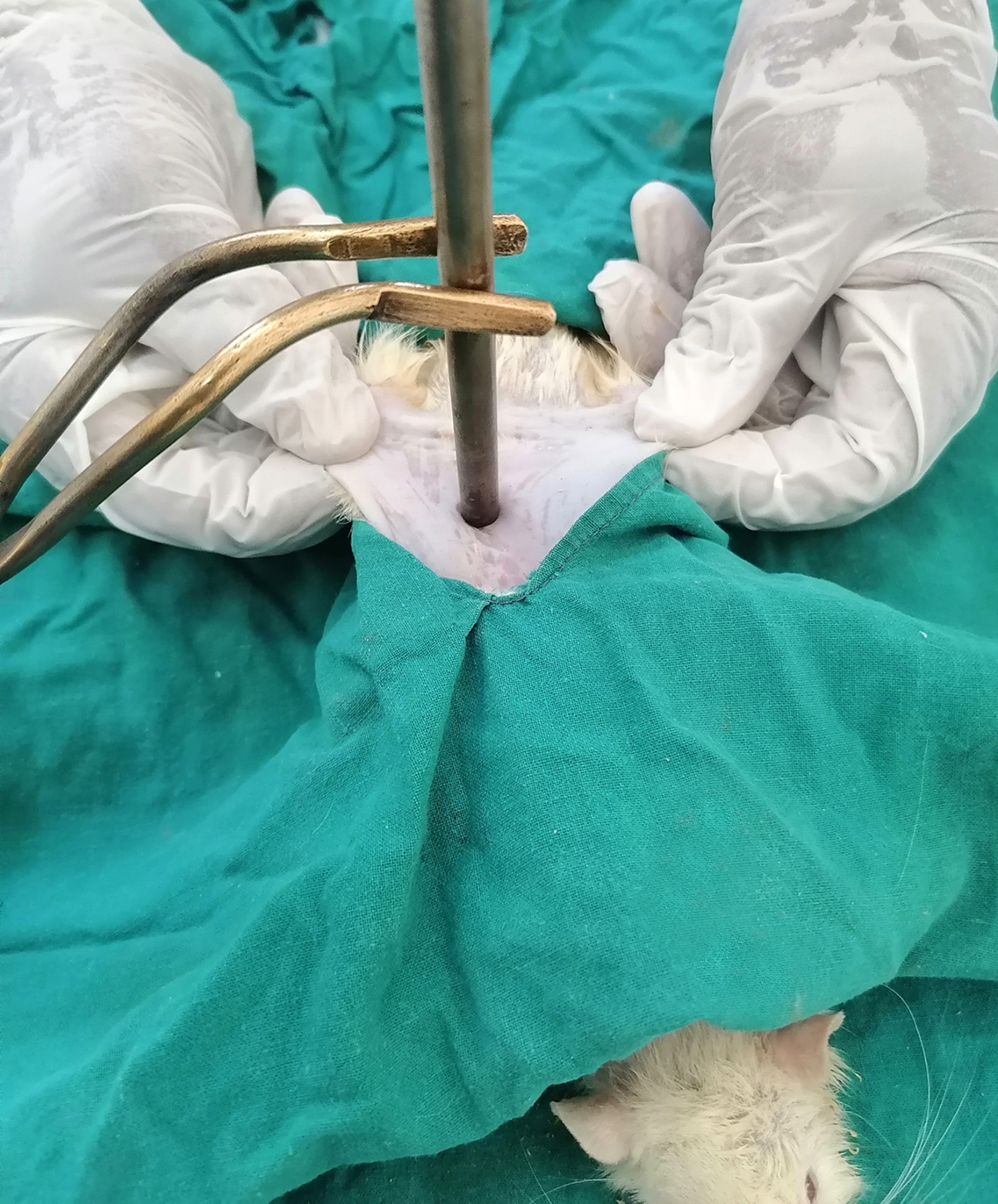 Figure 1
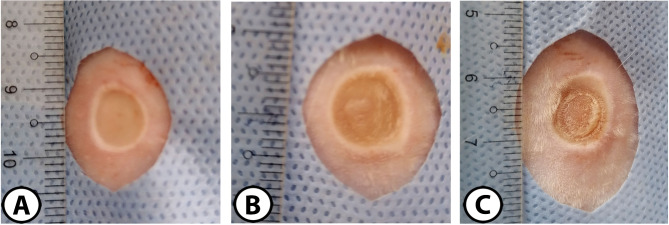 Figure 2
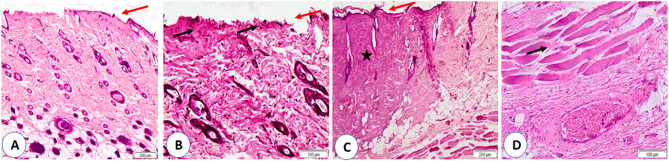 Figure 3
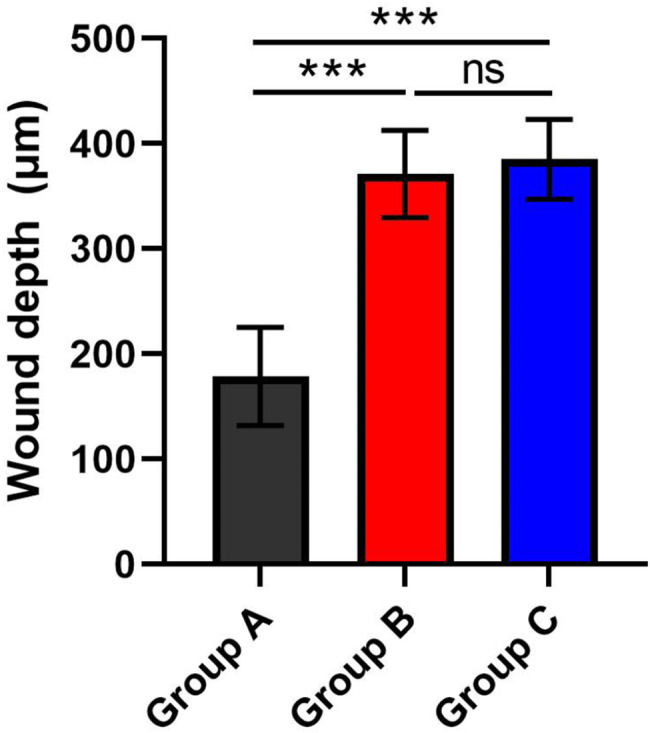 Figure 4
Peer Reviews
No public reviews on file for this paper yet. If you reviewed it on a platform where reviews are public (OpenReview, ICLR, NeurIPS, ICML), you can paste yours below so the community can read it here.
Videos
No videos yet. Explain this paper in a talk, walkthrough, or lecture? Add one.
Taxonomy
TopicsWound Healing and Treatments · Burn Injury Management and Outcomes · Animal testing and alternatives