Evaluation of dental students' learning curve in intraligamentary anesthesia using different syringe systems: A prospective crossover study
Philipp Luhrenberg, Mirjam Renders, Diana Heimes, Anke Hollinderbäumer, Sebahat Kaya, Solomiya Kyyak, Saskia V. Schröger, Daniel G. E. Thiem, Helen Wagner, Peer W. Kämmerer

TL;DR
This study found that dental students improved their success in administering intraligamentary anesthesia with repeated practice, especially when using a computer-controlled system.
Contribution
The study introduces a crossover design to evaluate learning curves of dental students using different syringe systems for intraligamentary anesthesia.
Findings
The computer-controlled system showed a significantly higher success rate in the first session compared to manual systems.
Students' success rates and confidence improved with repeated practice, regardless of the syringe system used.
Penetration pain decreased significantly across all techniques with repeated use.
Abstract
This prospective crossover preclinical trial aimed to evaluate the learning curve of dental students in successfully administering intraligamentary anesthesia (ILA) using three different syringe systems. Dental students performed ILA using three devices in two separate sessions, each targeting mandibular and/or maxillary premolars. The devices included two manual systems (pistol‐type and lever‐based) and one computer‐controlled local anesthetic delivery system (CCLAD). The primary research parameter was the success rate of anesthesia, defined as the percentage of successful ILA administrations confirmed by a negative response to a cold test. Secondary parameters included pain experienced during needle penetration and injection, students' self‐reported levels of mental tension and handling of the syringes, and any potential side effects. A total of 110 students performed ILA on 599…
Genes, proteins, chemicals, diseases, species, mutations and cell lines named across the full text — each resolved to its canonical identifier and authoritative record.
Click any figure to enlarge with its caption.
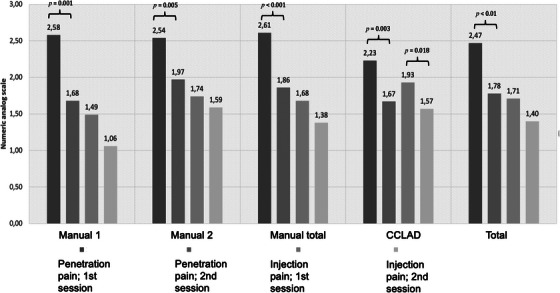 Figure 1
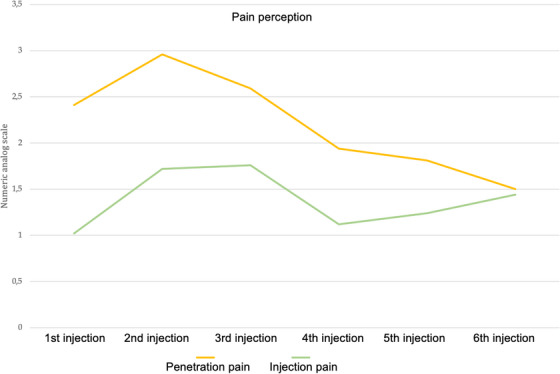 Figure 2
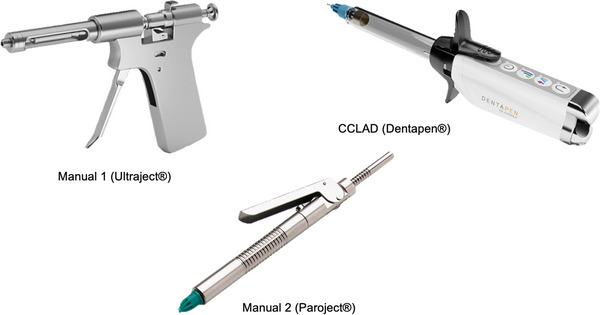 Figure 3
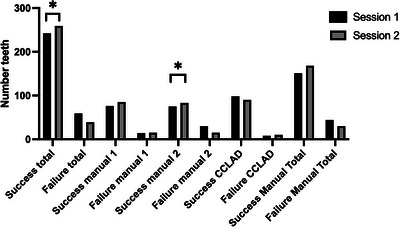 Figure 4
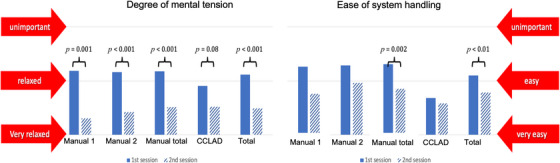 Figure 5
Peer Reviews
No public reviews on file for this paper yet. If you reviewed it on a platform where reviews are public (OpenReview, ICLR, NeurIPS, ICML), you can paste yours below so the community can read it here.
Videos
No videos yet. Explain this paper in a talk, walkthrough, or lecture? Add one.
Taxonomy
TopicsDental Anxiety and Anesthesia Techniques · Anesthesia and Sedative Agents · Dental Research and COVID-19