Rehabilitating a Complex Mid-facial Defect With an Interim, Magnet-Retained, Two-Piece Acrylic Prosthesis: A Case Report
Suja Joseph, Nazia Rasheed, Angel M Joseph, Shibi Mathew, Joshy P Abraham

TL;DR
This case report describes the successful use of a magnet-retained, two-piece acrylic prosthesis to rehabilitate a complex mid-facial defect in a patient with a history of cancer.
Contribution
The paper presents a novel, non-invasive, and cost-effective prosthetic solution for complex mid-facial defects with intraoral communication.
Findings
The prosthesis improved facial appearance, swallowing, and prevented nasal regurgitation and oral fluid leakage.
Magnetic retention enhanced the stability and support of the prosthesis despite fibrotic tissue and trismus.
Speech and mastication were partially affected, requiring dietary adjustments and reliance on remaining dentition.
Abstract
Mid-facial defects, which often communicate with intraoral maxillary defects, pose significant challenges for prosthetic rehabilitation. An 80-year-old male reported for orofacial rehabilitation following multiple resections for recurrent adenoid cystic carcinoma. The chief concerns include facial appearance, mastication, speech, swallowing, nasal regurgitation, and oral fluid leakage. Examination revealed a complex left-sided mid-facial defect involving the maxilla, infratemporal fossa, and lateral nasal wall, with an intraoral-external communication. Complications included fibrotic tissue healing, trismus, and mandibular deviation. Surgical reconstruction was contraindicated. An interim, magnet-retained, two-piece acrylic prosthesis was fabricated with a palatal obturator without artificial teeth for the intraoral defect and a cheek prosthesis for the external defect. The cheek…
Genes, proteins, chemicals, diseases, species, mutations and cell lines named across the full text — each resolved to its canonical identifier and authoritative record.
Click any figure to enlarge with its caption.
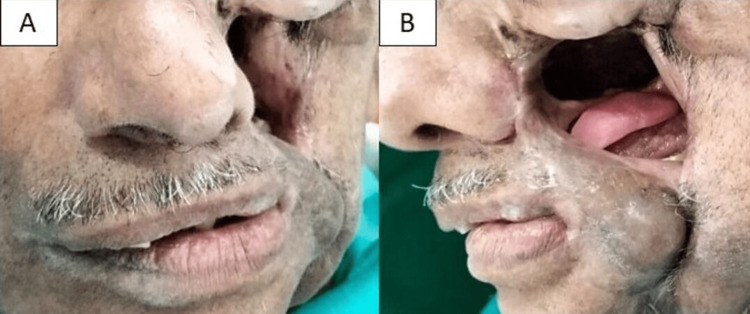 Figure 1
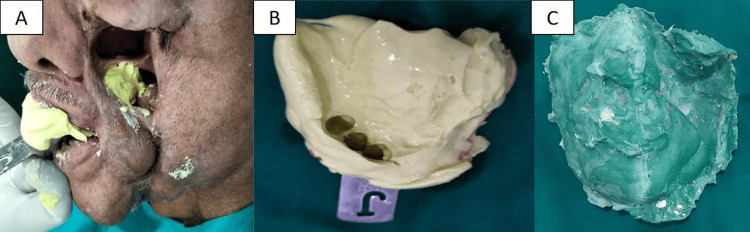 Figure 2
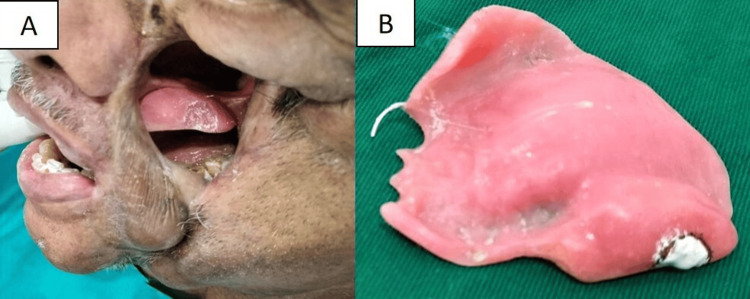 Figure 3
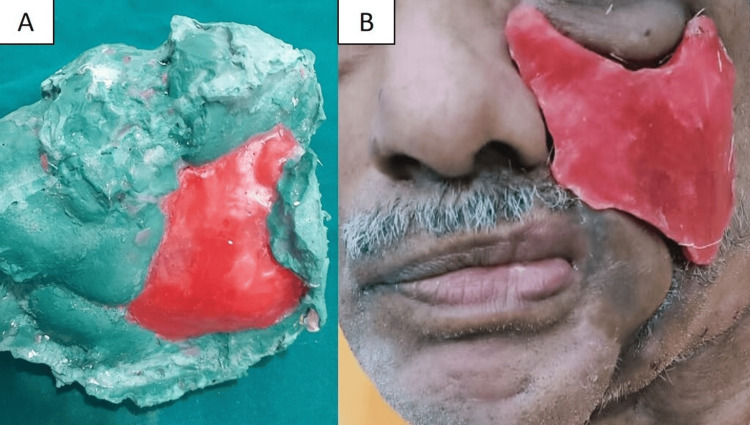 Figure 4
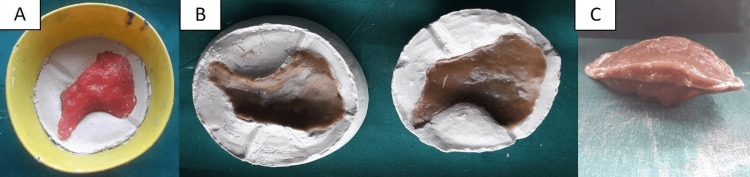 Figure 5
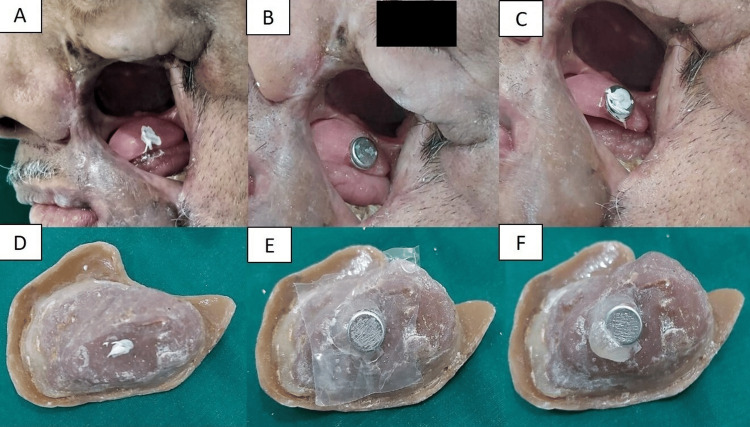 Figure 6
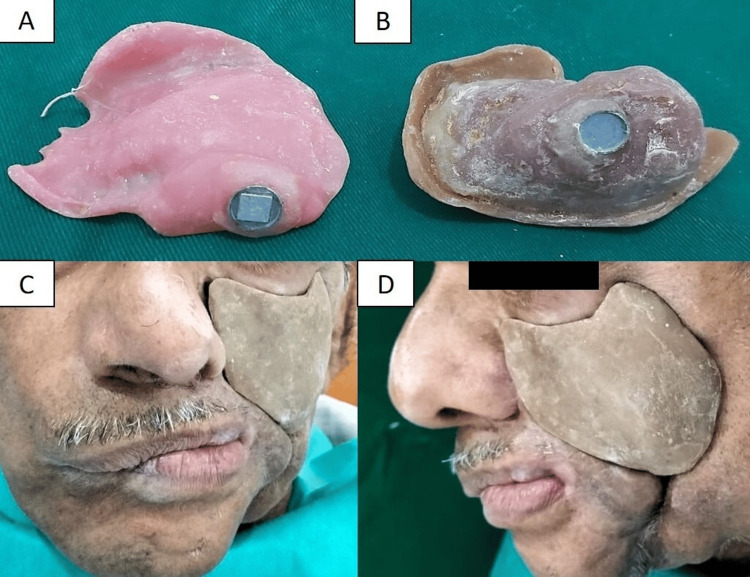 Figure 7
Peer Reviews
No public reviews on file for this paper yet. If you reviewed it on a platform where reviews are public (OpenReview, ICLR, NeurIPS, ICML), you can paste yours below so the community can read it here.
Videos
No videos yet. Explain this paper in a talk, walkthrough, or lecture? Add one.
Taxonomy
TopicsReconstructive Facial Surgery Techniques · Facial Nerve Paralysis Treatment and Research · Facial Rejuvenation and Surgery Techniques