Evaluating the effects of volume censoring on fetal functional connectivity
Jung-Hoon Kim, Josepheen De Asis-Cruz, Kevin M. Cook, Catherine Limperopoulos

TL;DR
This study shows that censoring high-motion volumes in fetal brain scans helps reduce motion-related bias and improves the accuracy of predicting fetal traits like age and sex.
Contribution
The study provides the first systematic evaluation of volume censoring's effectiveness in fetal resting-state fMRI to mitigate motion artifacts.
Findings
Nuisance regression reduced motion associations in BOLD time series but not in functional connectivity.
Volume censoring improved prediction accuracy of gestational age and sex compared to no censoring.
Combining regression and censoring is recommended for fetal functional connectivity analysis.
Abstract
Advances in neuroimaging have enabled non-invasive investigation of fetal brain development in vivo. Resting-state functional magnetic resonance imaging (rs-fMRI) has provided critical insights into emerging brain networks in fetuses. However, acquiring high-quality fetal rs-fMRI remains challenging due to the unpredictable and unconstrained motion of the fetal head. Nuisance regression, where the brain signal is regressed onto translational and rotational head motion parameters, has been widely and effectively used in adults to reduce the influence of motion. However, subsequent studies have revealed that associations between head motion and large-scale brain functional connectivity (FC) persisted even after regression. In ex utero groups (e.g., newborns, toddlers, and adults), censoring high-motion volumes has shown effectiveness in mitigating such lingering impacts of head motion.…
Genes, proteins, chemicals, diseases, species, mutations and cell lines named across the full text — each resolved to its canonical identifier and authoritative record.
Click any figure to enlarge with its caption.
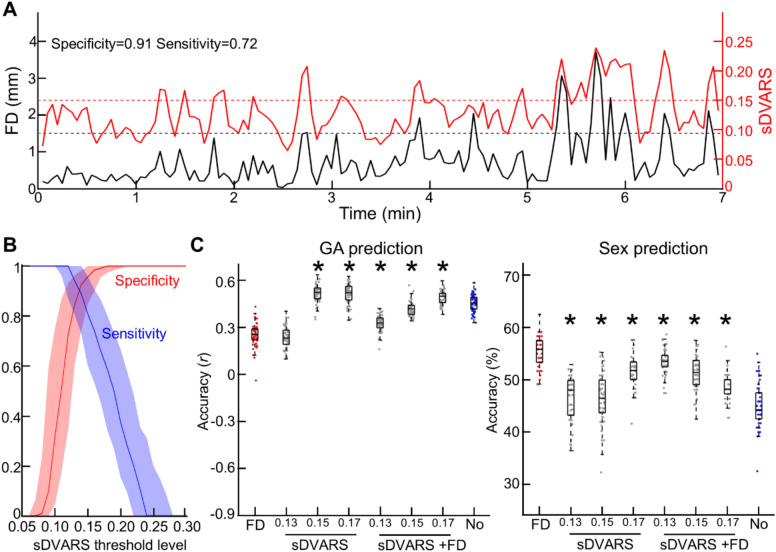 Figure 10
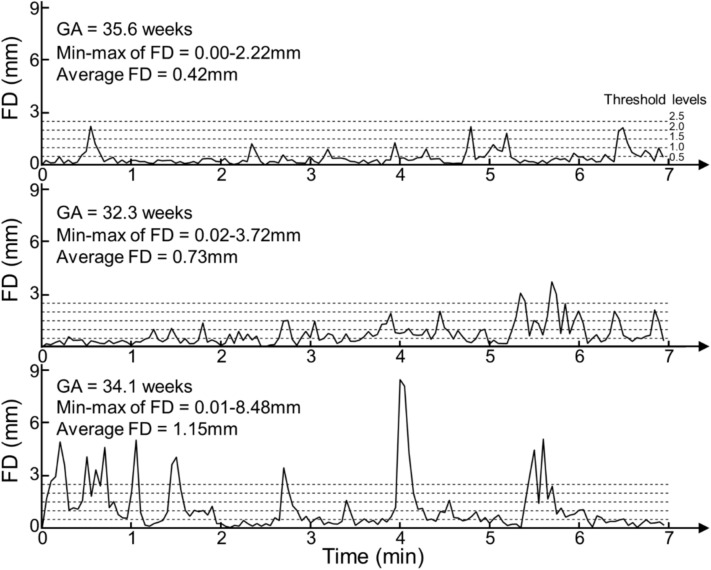 Figure 1
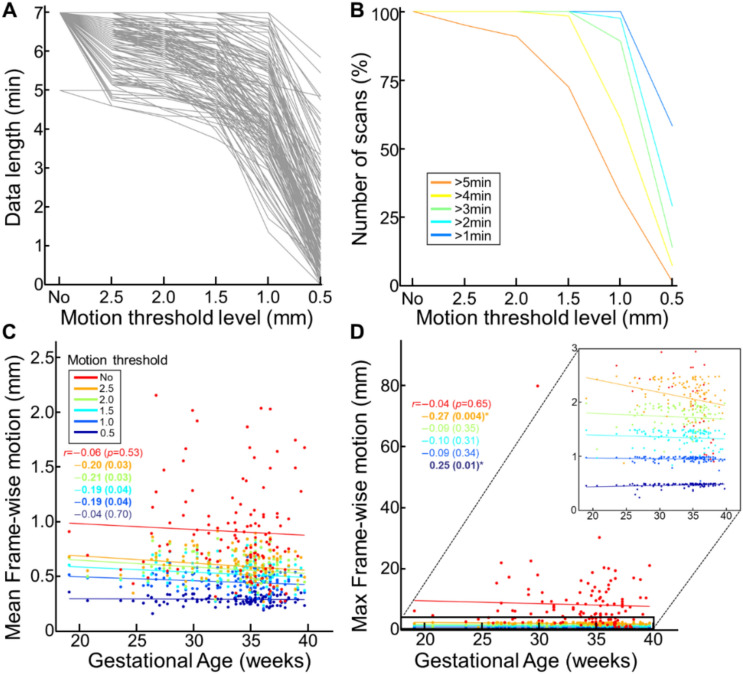 Figure 2
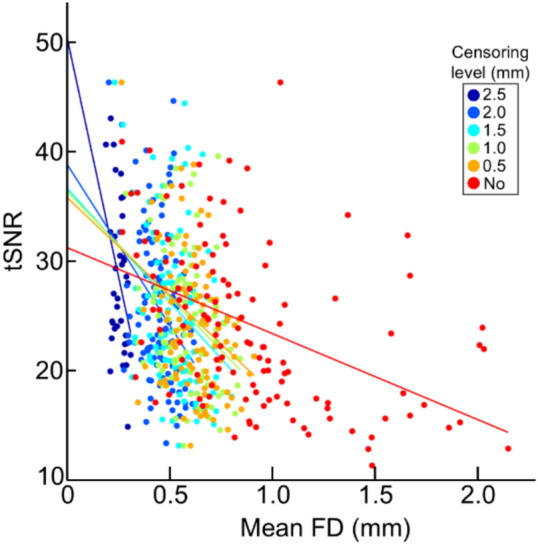 Figure 3
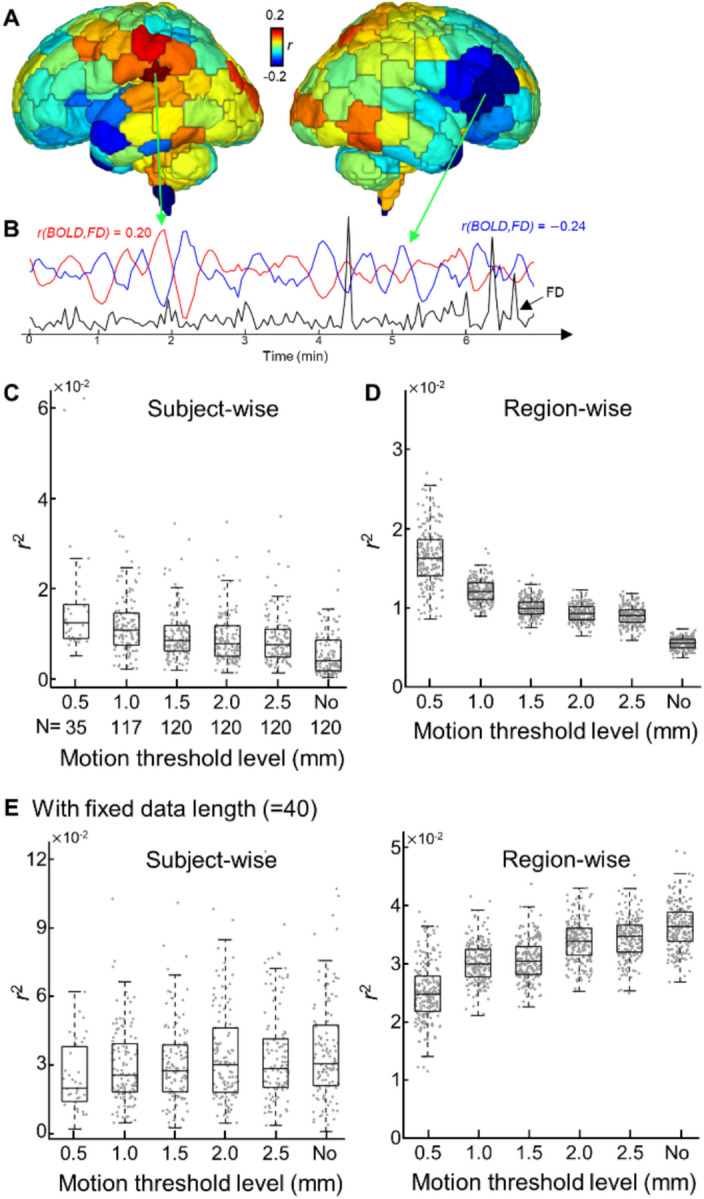 Figure 4
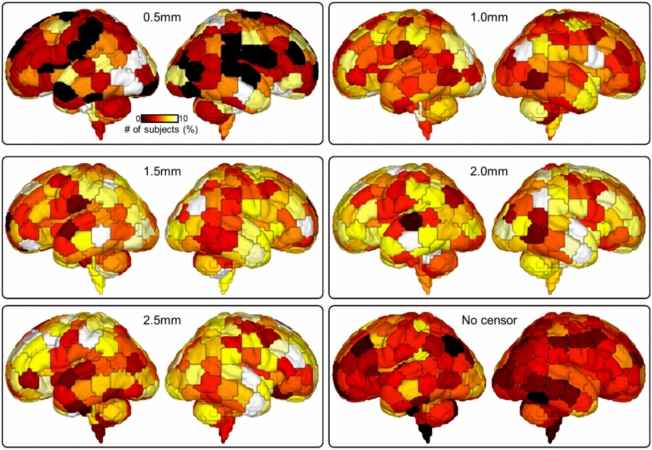 Figure 5
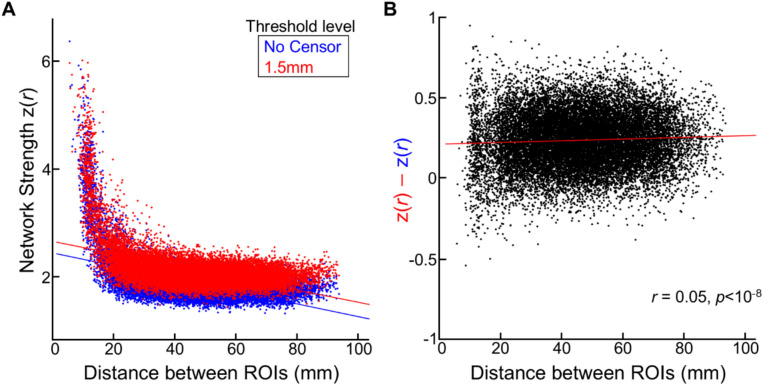 Figure 6
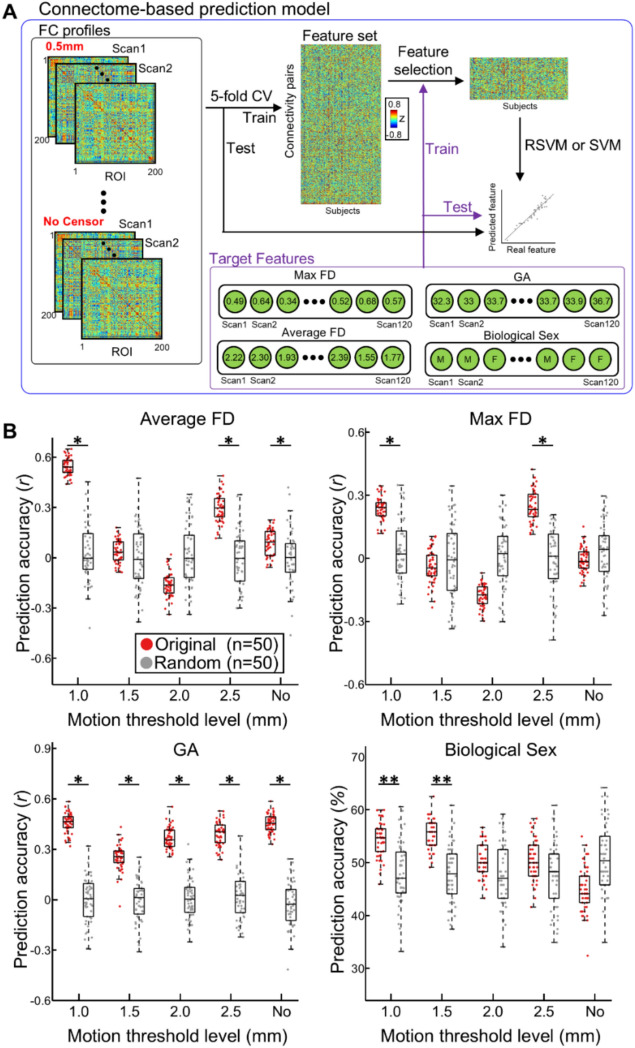 Figure 7
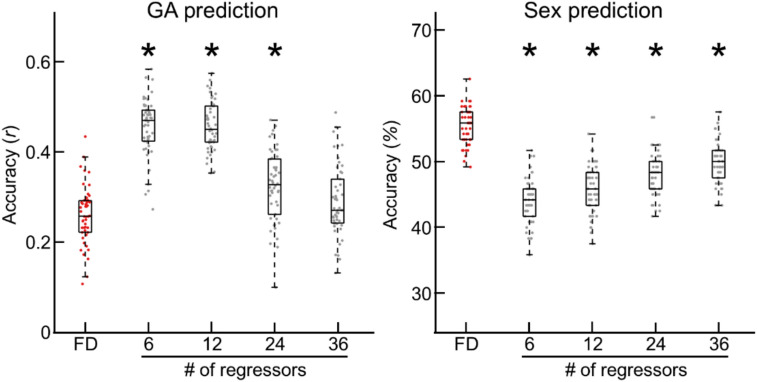 Figure 8
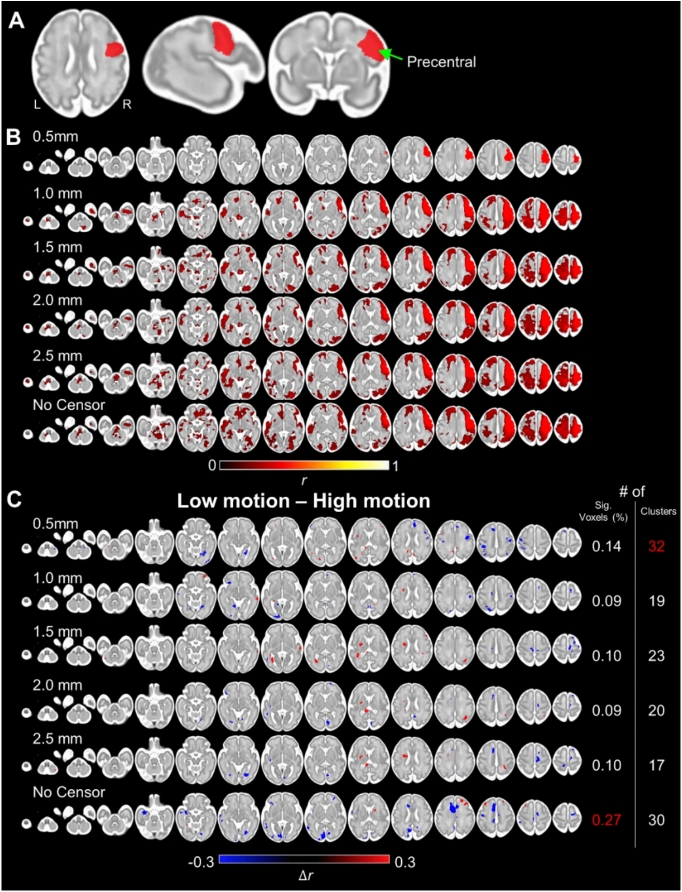 Figure 9
Peer Reviews
No public reviews on file for this paper yet. If you reviewed it on a platform where reviews are public (OpenReview, ICLR, NeurIPS, ICML), you can paste yours below so the community can read it here.
Videos
No videos yet. Explain this paper in a talk, walkthrough, or lecture? Add one.
Taxonomy
TopicsFetal and Pediatric Neurological Disorders · Neonatal and fetal brain pathology · Advanced Neuroimaging Techniques and Applications