Oncological effects and complications of salvage cryotherapy for radio-recurrent prostate cancer: a systematic review and meta-analysis
Shengyu Zhu, Jianjiang Liu, Bin Shen, Huali Xu, Wei Zhong, Sheng Jin

TL;DR
This study reviews the effectiveness and risks of using cryotherapy to treat prostate cancer that returns after initial radiotherapy.
Contribution
The study provides a systematic review and meta-analysis of cryotherapy outcomes and complications in radio-recurrent prostate cancer.
Findings
Salvage cryotherapy for radio-recurrent prostate cancer shows a median recurrence-free survival of 56.7 months.
Factors like longer treatment interval and lower PSA levels improve recurrence-free survival outcomes.
Severe complications include genitourinary events and urinary incontinence, but serious fistulas are rare.
Abstract
Cryotherapy plays a crucial role in managing radio-recurrent prostate cancer (PCa) after initial treatment. This study aims to provide a comprehensive review of its effectiveness and associated complications. A systematic review was conducted using PubMed and EMBASE databases up to June 2024, focusing on recurrence-free survival (RFS) with salvage cryotherapy across various subgroups. Severe complications were also assessed. Survival curves were reconstructed using WebPlotDigitizer and a newly developed Shiny application. The incidence of complications was summarized with a 95% confidence interval (CI) using a random-effects model. Complications were evaluated using the Clavien-Dindo Scale (CDS). Thirty-six studies were included, with 15 papers (3174 patients) contributing to survival curve reconstruction. Among 1593 patients treated with salvage cryotherapy, the median RFS was 56.7…
Genes, proteins, chemicals, diseases, species, mutations and cell lines named across the full text — each resolved to its canonical identifier and authoritative record.
Click any figure to enlarge with its caption.
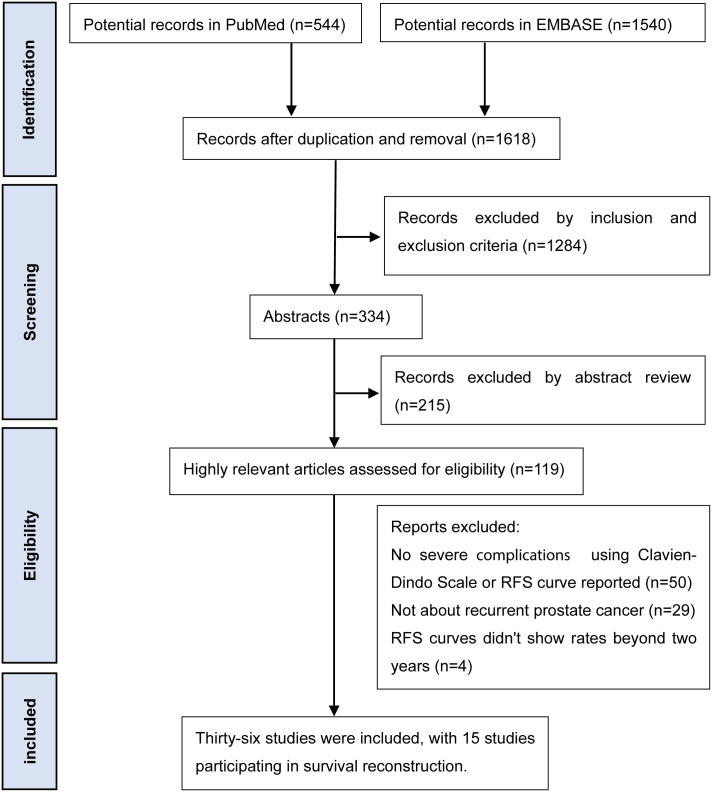 Figure 1
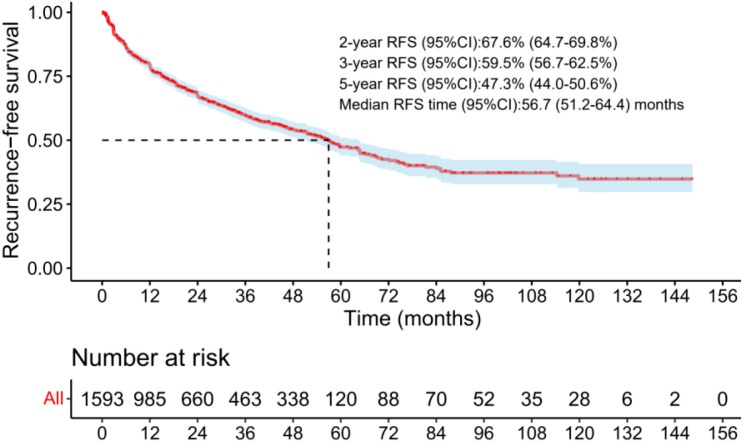 Figure 2
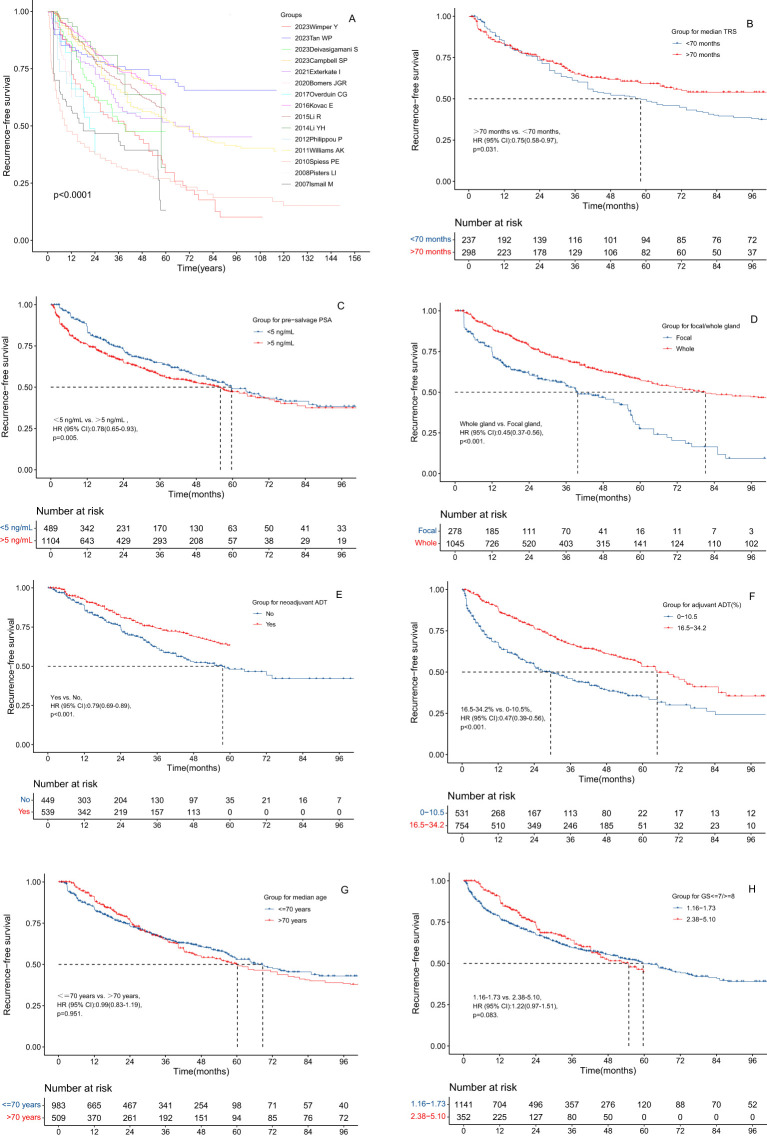 Figure 3
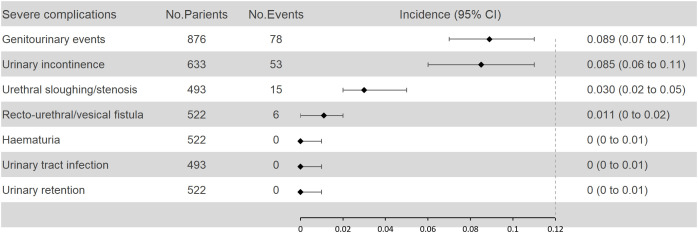 Figure 4
| First author | Publication year | Patients in RFS curves (n) | Time of enrollment | Institutions of enrollment | RFS curves reconstruction or not with the influence of duplicate cases eliminated | ||||||||
|---|---|---|---|---|---|---|---|---|---|---|---|---|---|
| Single | All | Age at recurrence | Median TRS | Pre-salvage PSA | Pre-salvage GS ≤ 7/≥8 | Focal vs. Whole | Neoadjuvant ADT | Ajuvant ADT | |||||
| Wimper Y ( | 2023 | 99 | 2011.5-2021.12 | Radboud University Medical Center | Yes | Yes | Yes | No | Yes | Yes | Yes | No | Yes |
| Tan WP ( | 2023 | 110 | 2002.1-2019.9 | Duke University Medical Center | Yes | Yes | Yes | Yes | Yes | Yes | Yes | No | No |
| Deivasigamani S ( | 2023 | 113 | 1992-2016 | COLD registry; The Duke PCa database | Yes | No | No | No | No | No | No | No | No |
| Campbell SP ( | 2023 | 419 | 1992-2016 | COLD registry; Duke Prostate Cancer databases | Yes | No | No | No | No | No | No | No | No |
| Exterkate L ( | 2021 | 169 | 2006-2018 | Canisius-Wilhelmina Hospital | Yes | Yes | Yes | Yes | Yes | Yes | No | Yes | Yes |
| Bomers JGR ( | 2020 | 61 | 2011.5-2017.12 | Radboud University Medical Center | Yes | No | No | Yes | No | No | No | No | No |
| Overduin CG ( | 2017 | 47 | 2011.5-2015.7 | Radboud University Medical Center; University of Twente | Yes | No | No | No | No | No | No | No | No |
| Kovac E ( | 2016 | 486 | NR | COLD registry | Yes | No | No | No | No | No | No | No | No |
| Li R ( | 2015 | 254 | 1992.7-2014.4 | COLD registry | Yes | Yes | Yes | No | Yes | Yes | Yes | Yes | Yes |
| Li R ( | 2015 | 486 | 1992.7-2014.4 | COLD registry | Yes | Yes | Yes | No | Yes | Yes | Yes | Yes | Yes |
| Li YH ( | 2014 | 26 | 1999-2012 | COLD registry | Yes | Yes | Yes | No | Yes | Yes | Yes | Yes | No |
| Li YH ( | 2014 | 53 | 1999-2012 | COLD registry | Yes | Yes | Yes | No | Yes | Yes | Yes | Yes | No |
| Philippou P ( | 2012 | 19 | 2006.2-2008.8 | Barts and The London NHS Trust | Yes | Yes | Yes | Yes | Yes | Yes | Yes | No | No |
| Williams AK ( | 2011 | 176 | 1999-2004 | University of Western Ontario | Yes | No | Yes | Yes | No | No | Yes | No | No |
| Spiess PE ( | 2010 | 277 | 1990.9-2005.10 | Columbia University; University of Western Ontario (London); Triangle Urological Group; The University of Texas M.D. Anderson Cancer Center; Prostate Institute of America; University of California in San Francisco | Yes | Yes | No | No | Yes | Yes | No | No | Yes |
| Pisters LL ( | 2008 | 279 | NR | COLD registry | Yes | No | No | No | No | No | No | No | No |
| lsmail M ( | 2007 | 100 | 2000.5-2005.11 | The Royal Surrey County Hospital; St Luke’s Cancer Centre | Yes | Yes | Yes | No | Yes | No | Yes | No | No |
| First author | Publication year | Design | Time of enrollment | Institutions of enrollment | Patients | PSA (ng/mL) | GS (%) | Primary treatment | |
|---|---|---|---|---|---|---|---|---|---|
| (n) | (range) | ≤7 | ≥8 | ||||||
| Wimper Y ( | 2023 | R | 2011.5-2021.12 | Radboud University Medical Center | 99 | 12.5 (7.7-19.2) | NR | NR | EBRT (59.6%)/BT (24.6%)/EBRT+BT (2.6%) |
| Tan WP ( | 2023 | R | 2002.1-2019.9 | Duke University Medical Center | 110 | NR | NR | NR | BT (29.1%)/BT+EBRT (3.6%)/EBRT (57.3%)/HDR-BT (1.8%) |
| Deivasigamani S ( | 2023 | R | 1992-2016 | COLD registry; The Duke PCa database | 113 | NR | NR | NR | RT |
| Campbell SP ( | 2023 | R | 1992-2016 | COLD registry; Duke Prostate Cancer databases | 419 | NR | NR | NR | RT |
| Exterkate L ( | 2021 | R | 2006-2018 | Canisius-Wilhelmina Hospital | 169 | 36 (18-66) | 67.5 | 17.2 | EBRT (37%)/EBRT+ADT (44%)/BT (18%) |
| Bomers JGR ( | 2020 | P | 2011.5-2017.12 | Radboud University Medical Center | 62 | 12.0 (7.6-18.2) | 80.6 | 16.1 | EBRT (64.5%)/BT (33.9%)/EBRT+BT (1.6%) |
| Overduin CG ( | 2017 | R | 2011.5-2015.7 | Radboud University Medical Center; University of Twente | 47 | NR | NR | NR | EBRT (62%)/BT (36%)/EBRT+BT (2%) |
| Kovac E ( | 2016 | R | NR | COLD registry | 486 | NR | NR | NR | RT |
| Li R ( | 2015 | R | 1992.7-2014.4 | COLD registry | 254 | NR | NR | NR | RT |
| Li R ( | 2015 | R | 1992.7-2014.4 | COLD registry | 486 | NR | NR | NR | RT |
| Li YH ( | 2014 | P | 1999-2012 | COLD registry | 32 | NR | NR | NR | BT (23.1%)/ERBT (69.2%)/BT+ERBT (7.7%) |
| Li YH ( | 2014 | P | 1999-2012 | COLD registry | 59 | NR | NR | NR | BT (41.3%)/ERBT (56.5%)/BT+ERBT (2.2%) |
| Philippou P ( | 2012 | R | 2006.2-2008.8 | Barts and The London NHS Trust | 19 | 8.67 | 78.9 | 21.1 | RT (53%)/ADT+RT (47%) |
| Williams AK ( | 2011 | R | 1999-2004 | University of Western Ontario | 176 | >10 | 52.4 | 3.7 | RT |
| Spiess PE ( | 2010 | R | 1990.9-2005.10 | Columbia University; University of Western Ontario (London); Triangle Urological Group; The University of Texas M.D. Anderson Cancer Center; Prostate Institute of America; University of California in San Francisco | 450 | 17.8 (1.3-157.1) | 82.7 | 17.3 | RT |
| Pisters LL ( | 2008 | R | NR | COLD registry | 279 | NR | NR | NR | BT (11.5%)/ERBT (78.1%)/beam+boost (7.2%) |
| lsmail M ( | 2007 | P | 2000.5-2005.11 | The Royal Surrey County Hospital; St Luke’s Cancer Centre | 100 | NR | 63 | 37 | RT |
| First author | Age(years) | Median TRS (mo) | PSA (ng/mL) | GS | Imaging for relapse | Biopsy | SWC (%) | Neoadjuvant ADT (%) | Adjuvant ADT (%) | Follow-up (mo) | BCR definition | ||
|---|---|---|---|---|---|---|---|---|---|---|---|---|---|
| (range) | (range) | (range) | ≤7(%) | ≥8(%) | ≤7/≥8 | (range) | |||||||
| Wimper Y ( | 68 (64-72) | NR | 4.2 (2.7-7.4) | 44.4 | 38.4 | 1.16 | MRI/PET-CT/CT | Yes | 0 | 39.4 | 34.2 | 12 | Phoenix |
| Tan WP ( | 67 (64.1-73.0) | 78.6 (50.3-110.9) | <4 | 47.3 | 33.6 | 1.41 | PET-CT/CT/Bone scan | Yes | 100 | 20 | NR | 71(42.3-116) | Phoenix |
| Deivasigamani S ( | 69.1 | NR | 5.55 (3.8-8.9) | 71.7 | 28.3 | 2.53 | CT/bone scan/MRI | Yes | 81.4 | 27.5 | NR | 71 (66-75) | Phoenix |
| Campbell SP ( | 70.9 | NR | 7.01 | 69.2 | 30.8 | 2.25 | CT/Bone scan/MRI | Yes | 92.1 | 33.9 | NR | 72 (60-170) | Phoenix |
| Exterkate L ( | 68 | 84(60-108) | 5.5 (3.5-9.1) | 53.3 | 30.8 | 1.73 | MRI/PET-CT/CT | Yes | 91 | 0 | 25.4 | 36(18-66) | Phoenix |
| Bomers JGR ( | 67.0 (64.0-70.8) | 69.5 (49.3-95.0) | 4.1 (2.5-6.8) | 46.8 | 27.9 | 1.68 | MRI | Yes | 0 | NR | NR | NR | Phoenix |
| Overduin CG ( | 66 (52-79) | 60 (12-216) | 4.9 (0.7-31.0) | 51 | 34 | 1.50 | MRI | Yes | 0 | 36 | NR | 24(3-42) | Phoenix |
| Kovac E ( | 72 | NR | 4.7 | 66.5 | 28 | 2.38 | NR | Yes | 100 | 0 | NR | 18.2(6.4-45.2). | Phoenix |
| Li R ( | 70 (45-88) | NR | 6 (0-117.2) | 55.9 | 36.6 | 1.53 | NR | Yes | 100 | 100 | 16.5 | 14.4(0-185.6) | Phoenix |
| Li R ( | 72 (46-93) | NR | 4.7 (0-64.2) | 66.5 | 28 | 2.38 | NR | Yes | 100 | 0 | 10.5 | 18.2(0.2-249.5) | Phoenix |
| Li YH ( | 71.8 | NR | 7.1 (0-92.6) | 78.1 | 21.9 | 3.57 | NR | Yes | 0 | 100 | NR | 15 (1-97) | Phoenix |
| Li YH ( | 70.8 | NR | 4.7 (0.9-19.0) | 83.6 | 16.4 | 5.10 | NR | Yes | 0 | 0 | NR | 15 (1-97) | Phoenix |
| Philippou P ( | 69.2 (55-79) | 72.3 | 6.84 | 78.9 | 21.1 | 3.74 | MRI/bone scan | Yes | 100 | NR | NR | 33.3 | Phoenix |
| Williams AK ( | >70 | <60 | 5.0-10.0 | 47.1 | 30.5 | 1.54 | CT/bone scan | Yes | 100 | NR | 38.6 | 89.52 | Phoenix |
| Spiess PE ( | NR | NR | 7.8 (0.5-64.2) | 54.6 | 45.4 | 1.20 | X-ray/CT/bone scan | Yes | NR | 38.1 | 0 | 40.8(32.4-48) | Phoenix |
| Pisters LL ( | 70.0 | NR | 7.6 | 51.2 | 43.7 | 1.17 | NR | Yes | 100 | NR | NR | 21.6 | Phoenix/ASTRO |
| lsmail M ( | 66.8 (54-78) | NR | 5.4 | NR | NR | NR | MRI/bone scan | Yes | 0 | 46 | NR | 33.5(12-79) | ASTRO |
Peer Reviews
No public reviews on file for this paper yet. If you reviewed it on a platform where reviews are public (OpenReview, ICLR, NeurIPS, ICML), you can paste yours below so the community can read it here.
Videos
No videos yet. Explain this paper in a talk, walkthrough, or lecture? Add one.
Taxonomy
TopicsProstate Cancer Diagnosis and Treatment · Prostate Cancer Treatment and Research · Advanced Radiotherapy Techniques
Introduction
Approximately 30–40% of individuals diagnosed with localized prostate cancer (PCa) choose non-extirpative treatments, such as external beam radiation therapy (EBRT), brachytherapy (BT), or cryotherapy, as their primary management options (1, 2). Within this cohort, 20 to 50% are expected to experience prostate recurrence, influenced by various risk factors. A subset of these patients may benefit from salvage therapies (3–5). Salvage interventions following non-extirpative treatments include salvage radical prostatectomy (SRP), stereotactic body radiation therapy (SBRT), BT, high-intensity focused ultrasound (HIFU), and salvage cryotherapy, among others. However, due to the limited number of high-quality clinical trials and the prevalence of low-quality evidence, recommendations for their use remain inconclusive (6).
A prior meta-analysis revealed that patients undergoing salvage cryotherapy had 2-year and 5-year recurrence-free survival (RFS) rates of 68% (95% confidence interval [CI], 62–73) and 50% (95% CI, 44–56), respectively. Genitourinary (GU) complications occurred in 15% (95% CI, 10–22) of cases (7). However, the literature search for this meta-analysis was conducted up until 2019, which is relatively early. Due to space limitations, the descriptions of each study in the analysis were insufficiently detailed. Moreover, the presence of duplicate cases among the studies may have affected the accuracy of the reported results.
In our recent meta-analysis (8), we reconstructed and summarized the RFS curves and evaluated toxicities in patients with radio-recurrent PCa undergoing salvage high-dose-rate brachytherapy (HDR-BT). This analysis yielded significant subgroup findings and a summary of toxicities. However, no comparable meta-analysis has assessed salvage cryotherapy. Thus, the aim of this systematic review and meta-analysis is to evaluate the efficacy and complications of cryotherapy for radio-recurrent PCa.
Materials and methods
Research design
This meta-analysis adhered to the guidelines of the Preferred Reporting Items for Systematic Reviews and Meta-Analyses (PRISMA). The evaluation protocol was prospectively registered in the International Prospective Register of Systematic Reviews (PROSPERO) and is publicly available with the registration number CRD42024552270.
Data source and searches
A comprehensive and systematic literature search was conducted across two reputable electronic databases, Embase and PubMed, covering articles from their inception through June 15, 2024. Full-text eligibility screening was independently performed by two investigators. The search strategy included the following terms: (cryotherapy OR cryosurgery OR cryoablation OR cryosurgical OR cold therapy) AND (prostate OR prostatic) AND (recurrence OR recurrent OR relapse OR salvage OR Recrudescence OR local failure OR radio-recurrent) (\Supplementary Table 1). Additionally, reference lists of eligible studies were manually reviewed for potential additional inclusions.
Study selection and eligibility criteria
Inclusion criteria: 1) Patients with a confirmed diagnosis of radio-recurrent PCa; 2) Availability of quantitative data on either RFS or severe complications treated with cryotherapy, with RFS curves demonstrating rates exceeding two years.
Exclusion criteria: 1) Duplicate publications; 2) Articles lacking full-text access; 3) Non-English language publications; 4) Studies that did not employ the Clavien-Dindo Scale (CDS) to assess severe urinary complications.
Inclusion criteria for RFS curve reconstruction: 1) Fulfillment of the inclusion and exclusion criteria outlined above; 2) Availability of risk tables within the RFS curves.
Exclusion criteria for RFS curve reconstruction:1) Duplicate data.
Survival curve reconstruction was performed independently by two investigators, with any discrepancies resolved through consensus.
Data extraction
Two investigators independently utilized a standardized data extraction form to collect relevant information, with any discrepancies addressed through discussion. Patient characteristics were categorized into two main areas: 1) Primary disease and treatment characteristics; 2) Disease and treatment details during the peri-salvage cryotherapy period. Moreover, we extracted raw data points and numbers at risk from the original studies to reconstruct individual patient data (IPD) for RFS analysis. To mitigate the impact of duplicate reports, we meticulously excluded redundant data by considering the enrollment institutions and times, ensuring the accuracy of the data related to RFS and severe complications.
Data synthesis and analysis
The primary objective of this study is to evaluate the RFS of PCa patients treated with salvage cryotherapy across various subgroups, with a secondary focus on assessing the occurrence of severe complications.
The definition of RFS varies among studies, with the Phoenix criteria (9) being the most widely adopted standard. While some studies follow the criteria set by the American Society for Radiation Oncology (ASTRO) (10), others regard local failure, metastatic progression, or the initiation of hormone suppression therapy as indicators of recurrence. In this study, we define biochemical RFS, failure-free survival, and disease-free survival as equivalent to RFS. Urinary complications will be evaluated using the CDS, where Grade ≥ 3a is considered indicative of severe events (11).
To reconstruct survival data, screenshots of necessary survival curves and risk tables will be obtained from each publication. Raw data coordinates will then be extracted using the semi-automated tool WebPlotDigitizer. IPD will be reconstructed utilizing a novel application developed by Liu et al. (12), followed by survival curve plotting using R (version 4.0.3). Summary outcomes of complications will be presented as incidence rates with 95% CIs. These rates and CIs will be calculated using a random effects model with logit transformation, as delineated by Nyaga et al. (13), and implemented in STATA 14.0. A two-sided test will be performed, with statistical significance set at α = 0.05, and results will be considered significant if the p-value is below this threshold.
Results
Study selection and patient characteristics
After removing duplicate records, a total of 2084 entries were retrieved from two databases. A preliminary review of titles and abstracts led to the exclusion of records that did not meet the inclusion criteria, resulting in 119 records being retained (Figure 1). Following a comprehensive review of the full texts, 36 studies were included (14–49). Among these, curve data extraction software was used to derive 2-year or 5-year RFS rates from 34 papers (14–47) (Supplementary Table 2). RFS curves were reconstructed for 15 studies (16–19, 21, 26, 29–31, 37, 38, 40, 41, 43, 49), with near-complete duplication observed in 5 studies (18, 19, 26, 29, 41) (Table 1). A summary of severe urinary complications was compiled from 11 studies (14–17, 20, 21, 23, 27, 28, 48, 49), noting partial duplication in 2 studies (27, 49) (Supplementary Table 3).
Flow chart of literature search.
Table 2 outlines the patient characteristics regarding primary disease and treatment across 15 studies used for the reconstruction of RFS curves. These studies, published between 2007 and 2023, included three prospective and the remainder retrospective designs. Patient enrollment occurred from 1992 to 2021, with the majority of studies conducted in North America. The number of patients enrolled in each study ranged from 19 to 486, with median pre-treatment prostate-specific antigen (PSA) levels ranging from 12 to 36 ng/mL. The distribution of Gleason score (GS) was summarized across the studies, although missing data were noted in several of them. Most patients received definitive treatment based on external beam radiation therapy (EBRT), while other treatments included BT and unspecified radiotherapy.
Table 3 summarizes the disease and treatment characteristics during the peri-salvage cryotherapy period. In the studies reviewed, the median age at recurrence ranged from 66 to 72 years, and the median time from primary treatment to salvage therapy (TRS) ranged from < 60 to 84 months. Median pre-treatment PSA levels ranged from < 4 to 7.8 ng/mL. Imaging methods for diagnosing pelvic recurrence primarily included magnetic resonance imaging (MRI), computed tomography (CT), bone scans, and positron emission tomography-computed tomography (PET-CT). Pathological biopsies of recurrent lesions were performed for all enrolled patients, and recurrence was primarily defined according to the Phoenix criteria. The majority of studies implemented salvage whole-gland cryotherapy (SWC), though salvage focal-gland cryotherapy (SFC) was used in several cases. Additionally, the proportion of patients receiving neoadjuvant/adjuvant androgen deprivation therapy (ADT) and the follow-up time after salvage therapy were also summarized.
Reconstructed RFS curves for the entire cohort
The RFS curves for the total cohort were reconstructed from data of 1,593 patients across 8 studies (16, 17, 21, 30, 31, 37, 40, 43). The median RFS duration was 56.7 months (range: 51.2–64.4 months). The pooled 2-, 3-, and 5-year RFS rates were 67.6% (95% CI: 64.7–69.8%), 59.5% (95% CI: 56.7–62.5%), and 47.3% (95% CI: 44.0–50.6%), respectively (Figure 2).
The RFS curves of the radio-recurrent patients treated with salvage cryotherapy in the total group. .
Subgroup analysis of RFS
Various factors were assessed to determine their impact on RFS following salvage cryotherapy. Patients from the studies by Campbell SP et al. (15), Tan WP et al. (17), and Kovac E et al. (29) exhibited significantly higher RFS rates compared to those in studies by Overduin CG et al. (26), Spiess PE et al. (40), and Ismail M et al. (43) (Figure 3A). Similarly, individuals with TRS >70 months exhibited notably higher RFS rates than those < 70 months (hazard ratio, HR: 0.75, 95% CI: 0.58-0.97, p=0.031) (Figure 3B). Patients with pre-salvage PSA <5 ng/mL exhibited significantly higher RFS rates compared to >5 ng/mL (HR: 0.78, 95% CI: 0.65-0.93, p = 0.005) (Figure 3C). Moreover, patients treated with SWC showed significantly higher RFS rates than those treated with SFC (HR: 0.45, 95% CI: 0.37-0.56, p<0.001) (Figure 3D). Patients who received neoadjuvant ADT exhibited significantly better RFS rates compared to those who did not (HR: 0.79, 95% CI: 0.69-0.89, p < 0.001) (Figure 3E). Furthermore, patients with an adjuvant ADT proportion ranging from 16.5% to 34.2% demonstrated significantly higher RFS rates than those with a proportion of 0 to 10.5% (HR: 0.47, 95% CI: 0.39-0.56, p < 0.001) (Figure 3F). However, no significant differences in RFS rates were observed based on median age (≤ 70 years vs. >70 years) or median Gleason score (GS ≤7 vs. GS ≥8) (Figures 3G–H).
The RFS curves of the radio-recurrent patients treated with salvage cryotherapy in different subgroups. (A) Grouping of different papers. (B) Grouping of different median age at time of recurrence. (C) Grouping of different median TRS. (D) Grouping of different median pre-salvage PSA level. (E) Grouping of different pre-salvage values of GS ≤7/≥8. (F) Grouping of SFC vs. SWC. (G) Grouping of different median proportion of neoadjuvant ADT. (H) Grouping of different median proportion of adjuvant ADT.
2- and 5-year RFS rates from 34 studies
As shown in Supplementary Table 2, the 2-year RFS rates reported in 34 studies ranged from 15.4% to 92%, with a median rate of 72.0%. The 5-year RFS rates, available from 26 studies, ranged from 0% to 86.5%, with a median of 46.5% (13–46).
Pooled analysis of severe complications based on the CDS
Supplementary Table 3 summarizes the severe complications reported in 11 studies (14–17, 20, 21, 23, 27, 28, 48, 49). After excluding duplicates, we compiled a summary of the most common severe complications (Supplementary Tables 4–10). Among 876 patients, 78 (8.9%, 95% CI: 7-11) experienced GU events. Of 633 patients, 53 (8.5%, 95% CI: 6-11) suffered from urinary incontinence, 15 out of 493 patients (3.0%, 95% CI: 2-5) developed urethral sloughing/stenosis, and 6 out of 522 patients (1.1%, 95% CI: 0-2) had recto-urethral or vesical fistulae (Figure 4). No cases of severe hematuria, urinary tract infection, or urinary retention were reported (Figure 4).
Pooled analysis of severe urinary complications according to the CDS.
Discussion
To the best of our knowledge, this meta-analysis represents the first comprehensive attempt to assess the RFS rates and the incidence of severe complications associated with salvage cryotherapy in patients with radio-recurrent PCa, utilizing a survival curve reconstruction methodology.
Our findings revealed that the estimated 2-year and 5-year RFS rates following salvage cryotherapy were 67.6% (95% CI: 64.7–69.8%) and 47.3% (95% CI: 44.0–50.6%), respectively. These rates are notably higher than those reported for salvage stereotactic body radiation therapy (SBRT), which demonstrated 2-year and 5-year RFS rates of 64.8% (95% CI: 60.3–67.9%) and 40.6% (95% CI: 34.4–46.7%) (50), but lower than those for salvage low-dose-rate brachytherapy (LDR-BT), which showed 2-year and 5-year RFS rates of 84.6% (95% CI: 81.5–87.5%) and 63.5% (95% CI: 59.0–68.7%) (51), as well as for salvage high-dose-rate brachytherapy (HDR-BT), which reported 2-year and 5-year RFS rates of 75.9% (95% CI: 72.8–79.2%) and 52.3% (95% CI: 47.5–57.4%) (8). All pooled analyses in this study utilized survival curve reconstruction techniques to ensure comparability and precision across the data.
Additionally, the aggregated incidence of severe GU complications in our cohort of 876 patients from 9 studies was 8.9% (95% CI: 7–11%). This figure was higher than the rates reported for salvage SBRT (5.8% [95% CI: 4.5–7.4%]) (50) and salvage HDR-BT (5.8% [95% CI: 4–7%]) (8), but lower than that for salvage LDR-BT (12.7% [95% CI: 10–15%]) (51). It is important to note that the CDS, employed in the current study, does not classify urinary incontinence as a graded complication. However, the incidence of severe urinary incontinence following salvage cryotherapy was non-negligible, with our pooled analysis revealing a rate of 8.5% (95% CI: 6–11%). In contrast, studies using the Common Terminology Criteria for Adverse Events (CTCAE) for toxicity assessment reported a very low incidence of severe urinary incontinence with other treatments such as SBRT, LDR-BT, and HDR-BT. Consequently, it is not possible to conclusively state that salvage cryotherapy is safer than salvage LDR-BT in terms of GU toxicity.
In the subgroup analysis of salvage cryotherapy, we identified several prognostic factors influencing RFS. Specifically, SWC and a higher proportion of ADT were associated with improved RFS rates. Given that solitary lesions are more common in localized recurrent PCa than multifocal lesions, salvage focal-gland therapy (SFC) is theoretically a viable option (52). Observational data suggest that localized ablative treatments, such as high-intensity focused ultrasound (HIFU) and cryotherapy, yield oncological outcomes comparable to those of whole-gland treatments but with reduced toxicity (53–57). In a study by Tan WP et al. (22), which included 385 patients with radio-recurrent PCa (72 of whom underwent SFC), no significant difference in 2-year progression-free survival was found between SWC and SFC (79.8% vs. 77.0%, P = 0.11) after propensity score matching. However, SFC was associated with a significantly lower rate of transient urinary retention compared to SWC (5.6% vs. 22.4%, P < 0.001) (22). Similarly, de Castro Abreu AL et al. (34) conducted a study involving 50 patients, 25 of whom were treated with SFC, and found that SWC resulted in significantly higher 5-year RFS rates compared to SFC (86% vs. 54%). Another study by Wenske S et al. (58), which included 328 patients with radio-recurrent PCa (55 of whom underwent SFC), also reported higher 5-year RFS rates for SWC compared to SFC (63% vs. 47%). Our analysis further supports these findings, showing that SWC significantly improves RFS rates relative to SFC (HR: 0.45, 95% CI: 0.37-0.56, p < 0.001). However, due to variability in baseline characteristics among the studies included in our meta-analysis, the relative effectiveness of SFC versus SWC in terms of RFS or long-term survival remains inconclusive.
In addition, the present study identified a longer duration of treatment-free survival (TRS) as a favorable prognostic factor for RFS, with patients exhibiting TRS > 70 months showing significantly better outcomes compared to those with TRS < 70 months (HR: 0.75, 95% CI: 0.58–0.97, p = 0.031). While several recent studies have investigated the effect of TRS on RFS (21, 38, 43, 59), only Exterkate L et al. (21) observed a significant association between TRS duration and RFS (HR: 0.87, 95% CI: 0.78–0.99, p = 0.03). Therefore, caution should be exercised when interpreting these results. Furthermore, our study demonstrated that the pre-salvage PSA level is a significant prognostic factor for RFS. Specifically, patients with pre-salvage PSA levels <5 ng/mL had superior RFS rates compared to those with PSA >5 ng/mL (HR: 0.78, 95% CI: 0.65–0.93, p = 0.005), although similar studies (8, 51) did not find PSA level to be predictive of RFS.
Furthermore, we found that neoadjuvant ADT prior to salvage therapy was associated with significantly higher RFS rates compared to those who did not receive neoadjuvant ADT (HR: 0.79, 95% CI: 0.69-0.89, p < 0.001). Despite extensive exploration of this issue in many studies (17, 18, 21, 26, 30, 31, 42, 48), only a few have suggested the benefits of neoadjuvant ADT for RFS (26, 30). Consequently, our findings are particularly valuable for patients with high-risk recurrent PCa, recommending peri-salvage ADT for this patient subset.
It is noteworthy that our study is the first meta-analysis to comprehensively examine the prevalence of severe GU complications, such as recto-urethral/vesical fistula, urinary incontinence, and urethral sloughing/stenosis, among others. The incidence of these severe complications was consistently low, with rates not exceeding 10%, and many instances were reported as zero. Given the findings from previous studies on salvage prostatectomy (7), our results suggest that salvage cryotherapy may offer a safer profile than salvage prostatectomy in terms of severe GU complications.
While our study provides valuable insights, it is not without its limitations. Firstly, although survival curve reconstruction for indirect comparison of survival outcomes across different treatment groups is a robust method, the homogeneity of the included studies plays a critical role in ensuring the reliability of the results. Most studies in this meta-analysis were single-arm or retrospective, with relatively low levels of evidence. Additionally, there were considerable variations in baseline patient characteristics, such as primary treatment type, pre-salvage age, median TRS, pre-salvage PSA level, pre-salvage GS, and peri-salvage ADT usage, which may have influenced the observed differences in RFS across subgroups. Furthermore, despite our efforts to avoid duplication, some studies in our analysis, particularly those from the Cryo Online Data (COLD) registry, may have overlapping patient populations. Moreover, discrepancies in data extraction tools, survival reconstruction methodologies, curve resolution techniques, and variations in researchers’ approaches could affect the accuracy of data restoration during survival reconstruction. Consequently, the reliability of our findings may be compromised, necessitating confirmation through relevant randomized controlled trials (RCTs).
Conclusion
Cryotherapy demonstrates strong safety and offers significant benefits in RFS as salvage therapy for radio-recurrent PCa. Particularly, patients with longer TRS, lower pre-salvage PSA, SWC, and peri-salvage ADT usage experience superior RFS outcomes with minimal severe urinary complications. However, these findings require validation through RCTs due to the low evidence quality and variability across studies.
The reference list from the paper itself. Each links out to its DOI / PubMed record.
- 1Scherzer ND Di Biase ZS Srivastav SK Thomas R Di Biase SJ. Regional differences in the treatment of localized prostate cancer: an analysis of surgery and radiation utilization in the United States. Adv Radiat Oncol. (2019) 4:331–6. doi: 10.1016/j.adro.2019.01.004 PMC 646022931011678 · doi ↗ · pubmed ↗
- 2Mahal BA Butler S Franco I Spratt DE Rebbeck TRD’Amico AV. Use of active surveillance or watchful waiting for low-risk prostate cancer and management trends across risk groups in the United States, 2010-2015. JAMA. (2019) 321:704–6. doi: 10.1001/jama.2018.19941 PMC 643961030743264 · doi ↗ · pubmed ↗
- 3Autran-Gomez AM Scarpa RM Chin J. High-intensity focused ultrasound and cryotherapy as salvage treatment in local radio-recurrent prostate cancer. Urol Int. (2012) 89:373–9. doi: 10.1159/000339616 22797110 · doi ↗ · pubmed ↗
- 4Duijzentkunst DA Peters Mvan der Voort van Zyp JR Moerland M Avan Vulpen M. Focal salvage therapy for local prostate cancer recurrences after primary radiotherapy: a comprehensive review. World J Urol. (2016) 34:1521–31. doi: 10.1007/s 00345-016-1811-9 PMC 506390627012712 · doi ↗ · pubmed ↗
- 5Golbari NM Katz AE. Salvage therapy options for local prostate cancer recurrence after primary radiotherapy: a literature review. Curr Urol Rep. (2017) 18:63. doi: 10.1007/s 11934-017-0709-4 28688020 · doi ↗ · pubmed ↗
- 6Mottet Nvan den Bergh RCN Briers E Van den Broeck T Cumberbatch MG De Santis M. EAU-EANM-ESTRO-ESUR-SIOG guidelines on prostate cancer-2020 update. Part 1: screening, diagnosis, and local treatment with curative intent. Eur Urol. (2021) 79:243–62. doi: 10.1016/j.eururo.2020.09.042 33172724 · doi ↗ · pubmed ↗
- 7Valle LF Lehrer EJ Markovic D Elashoff D Levin-Epstein R Karnes RJ. A systematic review and meta-analysis of local salvage therapies after radiotherapy for prostate cancer (MASTER). Eur Urol. (2021) 80:280–92. doi: 10.1016/j.eururo.2020.11.010 PMC 1026298133309278 · doi ↗ · pubmed ↗
- 8Shen B Liu J Wu D Guo J. Evaluation of the safety and efficacy of high-dose rate brachytherapy for radiorecurrent prostate cancer: a systematic review and meta-analysis. Strahlenther Onkol. (2024) 200:655–70. doi: 10.1007/s 00066-024-02205-x 38386054 · doi ↗ · pubmed ↗