Bibliometric and visual analysis in the field of macrophages in Traditional Chinese Medicine from 2003 to 2023
Wenxin Zhang, Kaidi Zhao, Ruimin Ma, Minghan Ma, Yuqiong Du, Peng Fang

TL;DR
This study analyzes macrophage research in Traditional Chinese Medicine from 2003 to 2023, showing growing interest and promising therapeutic potential.
Contribution
The study provides the first comprehensive bibliometric and visual analysis of macrophage research in Traditional Chinese Medicine over two decades.
Findings
The number of macrophage-related publications in TCM increased steadily from 2003 to 2023.
Chinese institutions and scholars dominated the research output in this field.
Macrophage polarization and its role in diseases like ulcerative colitis and tumors are emerging research hotspots.
Abstract
Macrophages are increasingly recognized as crucial therapeutic targets in the treatment of diverse pathological conditions. While considerable research has focused on macrophage-related mechanisms within Traditional Chinese Medicine (TCM), there remains a notable absence of comprehensive quantitative analyses in this field. This study aims to examine the evolutionary trajectory of macrophage-related research in TCM from 2003 to 2023, providing insights to guide future investigative directions. We searched for articles published between 2003 and 2023 from the Web of Science Core Collection (WoSCC) database and analyzed them using R software, VOSviewer and CiteSpace. A total of 1,823 documents were obtained through the search. The results indicated that the number of publications between 2003 and 2023 exhibited an upward trend, with the majority of these documents originating from…
Genes, proteins, chemicals, diseases, species, mutations and cell lines named across the full text — each resolved to its canonical identifier and authoritative record.
Click any figure to enlarge with its caption.
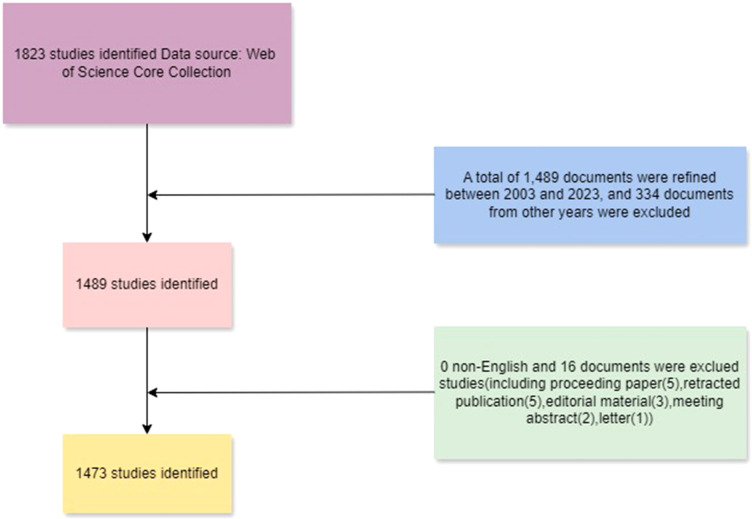 Figure 1
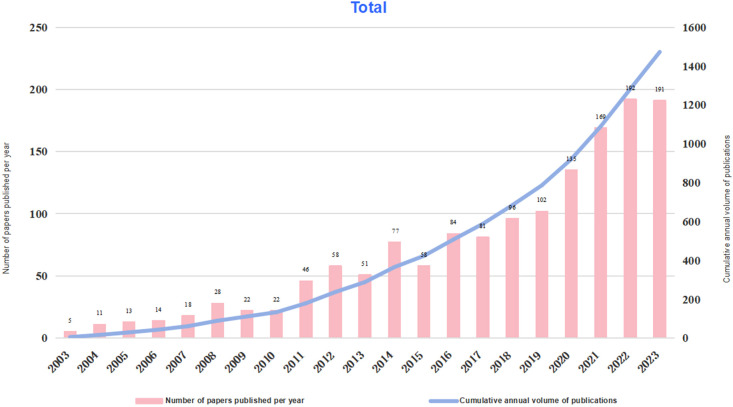 Figure 2
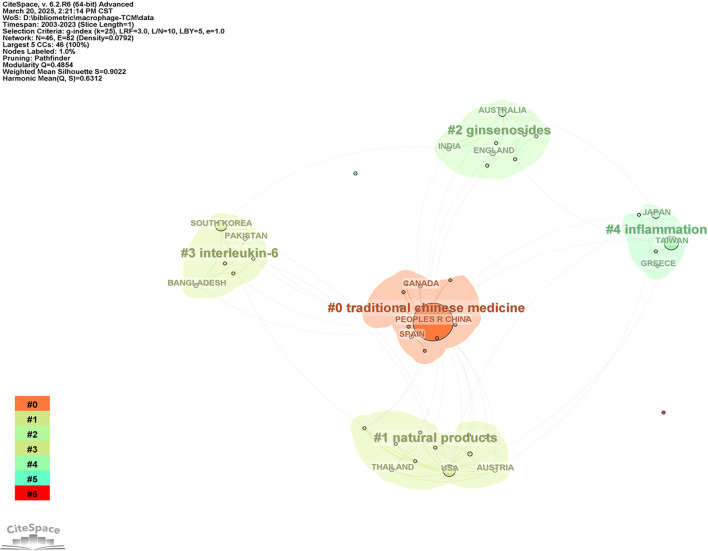 Figure 3
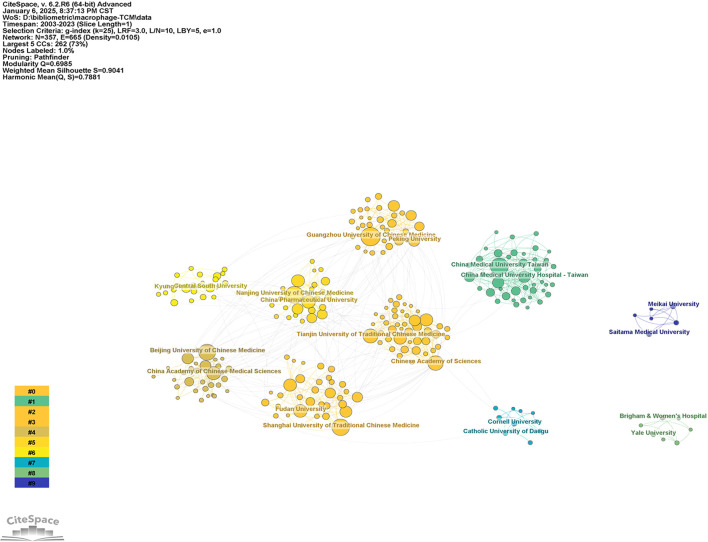 Figure 4
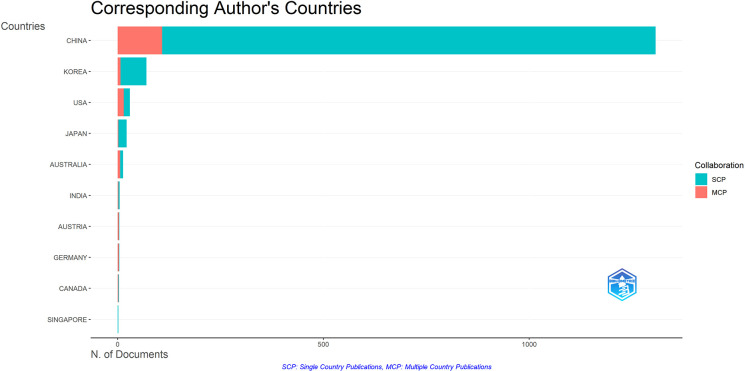 Figure 5
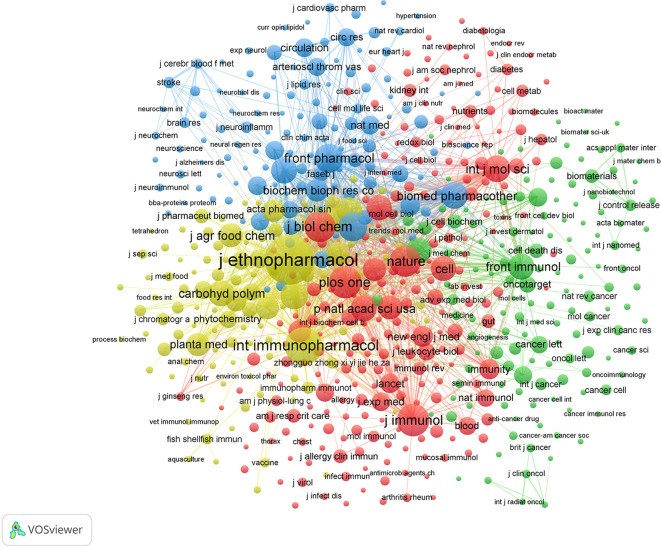 Figure 6
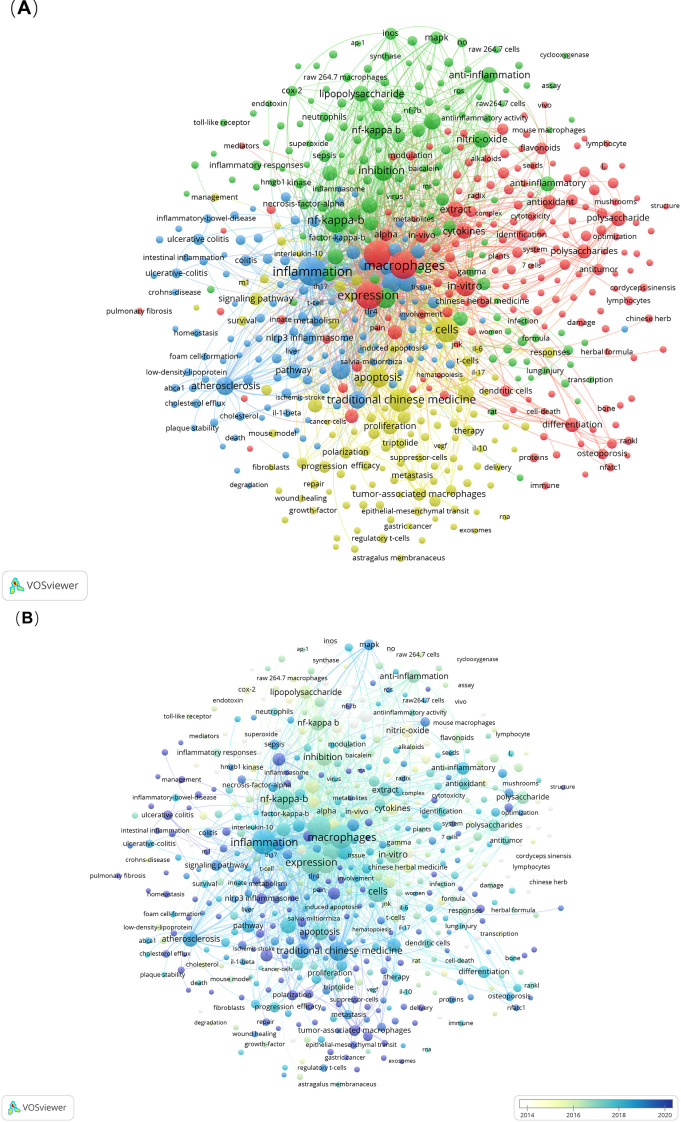 Figure 7
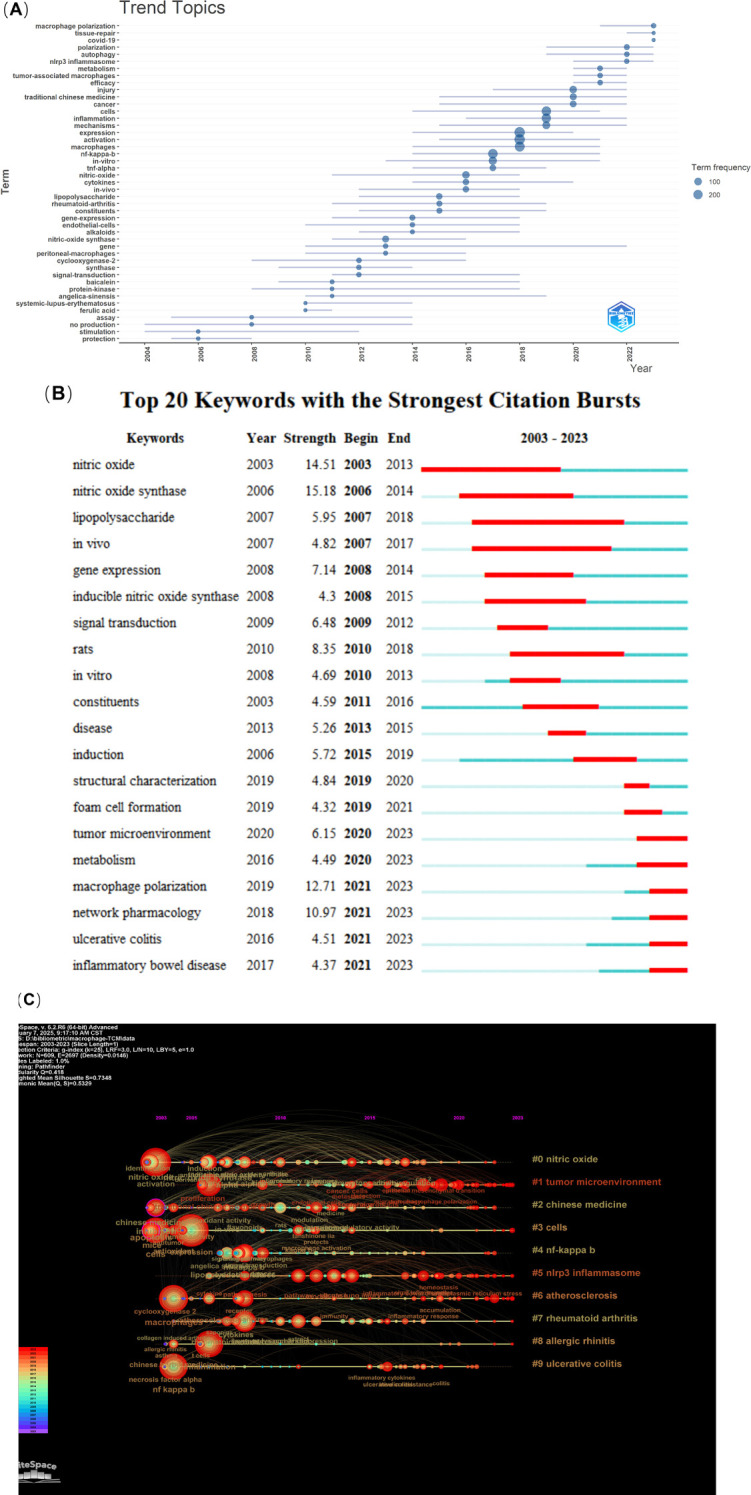 Figure 8
| Rank | Countries/Regions | Count | % of (1655) | Citations | Average Citations | H-index |
|---|---|---|---|---|---|---|
| 1 | CHINA | 1201 | 72.56797583 | 30623 | 25.5 | 71 |
| 2 | CHINA TAIWAN | 135 | 8.157099698 | 4131 | 30.6 | 37 |
| 3 | UNITED STATES | 88 | 5.317220544 | 4402 | 50.02 | 37 |
| 4 | SOUTH KOREA | 74 | 4.471299094 | 1908 | 25.78 | 26 |
| 5 | JAPAN | 34 | 2.054380665 | 575 | 16.91 | 14 |
| 6 | AUSTRALIA | 26 | 1.570996979 | 1255 | 48.27 | 18 |
| 7 | ENGLAND | 9 | 0.543806647 | 314 | 34.89 | 7 |
| 8 | AUSTRIA | 8 | 0.483383686 | 305 | 38.13 | 8 |
| 9 | INDIA | 7 | 0.422960725 | 265 | 37.86 | 7 |
| 10 | GERMANY | 5 | 0.302114804 | 224 | 44.8 | 5 |
| 10 | THAILAND | 5 | 0.302114804 | 234 | 46.8 | 4 |
| Rank | Affiliations | Countries/Regions | Count | % of (2346) | Citations | Average Citations | H-index |
|---|---|---|---|---|---|---|---|
| 1 | GUANGZHOU UNIVERSITY OF CHINESE MEDICINE | CHINA | 76 | 3.239556692 | 2000 | 26.32 | 26 |
| 2 | NANJING UNIVERSITY OF CHINESE MEDICINE | CHINA | 66 | 2.813299233 | 1360 | 20.61 | 22 |
| 3 | CHINA MEDICAL UNIVERSITY TAIWAN | CHINA TAIWAN | 64 | 2.728047741 | 1969 | 30.77 | 26 |
| 3 | SHANGHAI UNIVERSITY OF TRADITIONAL CHINESE MEDICINE | CHINA | 64 | 2.728047741 | 1236 | 19.31 | 24 |
| 5 | BEIJING UNIVERSITY OF CHINESE MEDICINE | CHINA | 56 | 2.387041773 | 961 | 17.16 | 18 |
| 6 | CHINESE ACADEMY OF SCIENCES | CHINA | 48 | 2.046035806 | 1279 | 26.65 | 21 |
| 7 | TIANJIN UNIVERSITY OF TRADITIONAL CHINESE MEDICINE | CHINA | 47 | 2.00341006 | 943 | 20.06 | 20 |
| 8 | CHINA ACADEMY OF CHINESE MEDICAL SCIENCES | CHINA | 39 | 1.662404092 | 1112 | 28.51 | 20 |
| 9 | FUDAN UNIVERSITY | CHINA | 38 | 1.619778346 | 750 | 19.74 | 16 |
| 10 | SHANGHAI JIAO TONG UNIVERSITY | CHINA | 37 | 1.5771526 | 1115 | 30.14 | 21 |
| Rank | Authors | Countries/Regions | Affiliations | Count | Citations | Average Citations | H-index |
|---|---|---|---|---|---|---|---|
| 1 | Leung, Ping-Chung | CHINA | The Chinese University of Hong Kong | 12 | 532 | 44.33 | 11 |
| 2 | ZHOU, LIANG | CHINA | Guangzhou Brain Hospital | 11 | 316 | 28.73 | 9 |
| 3 | Dong, Tina T. X. | CHINA | Hong Kong University of Science & Technology | 10 | 303 | 30.3 | 8 |
| 3 | Lau, Clara Bik-San | CHINA | University of Hong Kong | 10 | 473 | 47.3 | 9 |
| 3 | Lu, Zi-Bin | CHINA | Southern Medical University | 10 | 216 | 21.6 | 9 |
| 3 | Huang, Guan-Jhong | CHINA TAIWAN | China Medical University Taiwan | 10 | 434 | 43.4 | 9 |
| 3 | Fung, Kwok Pui | CHINA | The Chinese University of Hong Kong | 10 | 491 | 49.1 | 9 |
| 8 | Duan, Jin-Ao | CHINA | Nanjing University of Chinese Medicine | 9 | 282 | 31.33 | 9 |
| 8 | Cao, Hui-Hui | CHINA | Shaanxi University of Science & Technology | 9 | 207 | 23 | 9 |
| 8 | Liu, Jun-Shan | CHINA | Southern Medical University - China | 9 | 215 | 23.89 | 9 |
| Rank | Source | Citations | Total link strength |
|---|---|---|---|
| 1 | Journal of Ethnopharmacology | 1921 | 103493 |
| 2 | International Immunopharmacology | 1079 | 58528 |
| 3 | PLOS One | 832 | 42864 |
| 4 | Journal of Immunology | 822 | 35358 |
| 5 | Nature | 741 | 37377 |
| 6 | Frontiers in Pharmacology | 637 | 50636 |
| 7 | Evidence-based Complementary and Alternative Medicine | 636 | 39315 |
| 8 | International Journal of Molecular Sciences | 569 | 40574 |
| 9 | Biomedicine and Pharmacotherapy | 554 | 41055 |
| 10 | Frontiers in Immunology | 543 | 36379 |
Peer Reviews
No public reviews on file for this paper yet. If you reviewed it on a platform where reviews are public (OpenReview, ICLR, NeurIPS, ICML), you can paste yours below so the community can read it here.
Videos
No videos yet. Explain this paper in a talk, walkthrough, or lecture? Add one.
Taxonomy
TopicsMetabolomics and Mass Spectrometry Studies · Traditional Chinese Medicine Studies · Pharmacological Effects of Natural Compounds
Introduction
1
In the late 19th century, Elie Metchnikoff introduced the concept of the “macrophage,” thus initiating the study of innate immunity (1). In addition to phagocytosis, macrophages have been shown to encode a variety of pattern recognition receptors (PRRs). These receptors have been identified as being critical for sensing pathogens and tissue damage (2–5). Macrophages serve dual roles as anti-pathogen effectors and as immune regulators. In this capacity, they release antimicrobial peptides or kill cells to limit pathogens. Furthermore, macrophages have been shown to initiate and coordinate both local and systemic immune activation processes by secreting cytokines, chemokines, and growth factors, as well as presenting antigens to adaptive immune cells (6). Macrophages are found in almost every tissue in the body, including tissue-resident alveolar macrophages, peritoneal macrophages, and Kupffer cells in the liver. These macrophages sense both exogenous pathogens and pathogens from the gastrointestinal tract. Additionally, bone marrow-derived monocytes accelerate their differentiation into macrophages upon sensing pathogen-associated molecular patterns (PAMPs) or damage-associated molecular patterns (DAMPs), enabling them to better respond to pathogens and injury (7). Beyond their role in responding to pathogens and injury, macrophages have been shown to exhibit critical regulatory activity at various stages in the process of tissue repair and regeneration (8, 9). The multifaceted functions of macrophages in innate immunity, pathogen response, and tissue homeostasis make them a compelling subject for study in the context of disease treatment and management.
The therapeutic and preventive efficacy of TCM in disease management has been increasingly validated by researchers. For instance, Yi-Yi-Fu-Zi-Bai-Jiang-San (YYFZBJS), along with its constituent herbs including Yi-yi-ren (Semen Coicis), Fu-Zi (monkshood), and Bai-jiang-cao (Herba Patriniae), has been demonstrated to exhibit diverse pharmacological activities, such as anti-cancer properties (10–12). Studies utilizing both animal models and clinical trials have revealed that YYFZBJS can ameliorate the progression of colorectal cancer by modulating immune cell regulation mediated through the gut microbiota (13). Recent studies have increasingly focused on the role of TCM in ameliorating various diseases through the modulation of macrophage function. For instance, macrophages are recognized as pivotal immune cells in the pathogenesis of atherosclerosis (14). Investigations into the therapeutic mechanisms of the clinically approved Qing-Xue-Xiao-Zhi formula (QXXZF) for atherosclerosis treatment have revealed that QXXZF alleviates atherosclerotic progression by s by inhibiting macrophage lipid accumulation and inflammatory response (15). As the most abundant immune cell population within the tumor microenvironment (TME), macrophages play a pivotal role in recognizing and phagocytosing tumor cells through nonspecific immune responses, making macrophage-targeted therapy a focus of increasing attention among researchers (16). Clinical evidence has demonstrated the promising therapeutic efficacy of the traditional Chinese medicine formulation Danzhi Xiaoyao Powder (DZXY) in breast cancer treatment. Mechanistic studies have revealed that DZXY enhances the phagocytic capacity of macrophages against tumor cells by disrupting ALOX15/PEBP1 interaction and inhibiting phospholipid peroxidation (17).
TCM has made substantial contributions to the field of disease treatment, particularly within the context of complementary and alternative therapies. Despite its limitations and deficiencies, the study of TCM warrants serious consideration (18). However, the precise mechanisms of action of TCM in diseases treatment remain unclear due to the complex composition of ingredients and multi-targeted therapeutic features. A substantial body of evidence indicates that immune mechanisms are implicated in a wide range of diseases. TCM has been demonstrated to exert pharmacological effects on the immune system, with numerous studies focusing on its immunomodulatory properties (19). There is growing evidence suggesting that TCM can influence immune cells and certain cytokines associated with immune responses (20, 21). Furthermore, TCM has the capacity to modulate the activity of both the innate immune system and the cellular subpopulations of adaptive immunity (19, 22). Given the significant roles of both TCM and macrophages in immunity, there has been an increasing number of studies investigating the effects of macrophages on TCM in recent years.
The term “bibliometric” refers to the application of statistical methods to analyze published literature and demonstrate relationships within a body of work. The concept was initially introduced by Pritchard in 1969, who defined it as “the application of mathematical and statistical methods to books and other media of communication” with the objective of illuminating the processes of written communication and the development of the discipline in which it is expressed (23). Bibliometric analysis is a widely employed research method that utilizes quantitative data to evaluate the research output of countries, journals, institutions, authors, and publications within a specific field. Additionally, it can be utilized to examine the frequency and distribution of references and keywords in published works (24). Furthermore, bibliometric analysis offers a visual representation of the collaborative relationships between countries, authors, and institutions, which can assist researchers in rapidly comprehending the characteristics of research in a given field. This information can also provide direction and guidance for future research endeavors (25).
A series of bibliometric analyses have been carried out to investigate patterns and frontiers in the domain of immunotherapy (26, 27). Similarly, bibliometric studies have been performed on literature related to macrophages (28, 29). Nevertheless, there is a paucity of bibliometric research on TCM, despite the existence of a few studies in this area. Of particular note, to the best of our knowledge, no bibliometric analysis has been conducted specifically on the literature related to macrophages in the field of TCM. This gap in the literature highlights the need for a comprehensive bibliometric examination of research at the intersection of macrophages and TCM. To address this gap, we employed bibliometric methods to analyze the literature pertinent to macrophages in the domain of TCM.
The sudden outbreak of COVID-19, in particular, has led to the extensive involvement of TCM in its treatment, demonstrating remarkable therapeutic efficacy (30, 31). The integration of TCM has significantly reduced mortality rates even in the absence of specific antiviral drugs (32). This notable achievement has sparked global interest in the application of TCM across various therapeutic domains. However, the surge in interest in TCM research in the new century actually originated from its therapeutic effects against another respiratory coronavirus, SARS-CoV (33, 34). The pivotal year of 2003 marks this time point as a critical starting point for our research. Our current bibliometric study, conducted in 2024, incorporates literature up to 2023 as the most recent inclusion criterion for our comprehensive search strategy, thereby establishing a systematic review period from 2003 to 2023.
Materials and methods
2
Database and search strategy
2.1
Literature for the bibliometric analysis was selected from the Web of Science Core Collection, spanning from January 1, 2003, to December 31, 2023. To minimize deviations due to the rapid updating of the database, all literature searches were conducted within a single day (November 23, 2024). The following search terms were used: (TS= (“Macrophage” OR “Macrophages”) AND TS= (“Traditional Chinese medicine” OR “Chinese herbal medicine” OR “Chinese herbology” OR “Chinese medicine” OR “Chinese herb” OR “Chinese patent medicine” OR “Chinese herbal preparation” OR “Chinese herbal decoction”)). The initial search yielded a total of 1,489 documents. For the purpose of this study, only articles and reviews written in English were considered. After applying these inclusion criteria, a total of 1,473 documents were ultimately included in the analysis, comprising 1,366 articles and 107 reviews. The detailed screening process is illustrated in Figure 1.
Flowchart of Literature selection and inclusion process.
Data analysis
2.2
The software programs Microsoft Excel (version 2021MSO) and Microsoft Word (version 2021MSO) were used for the creation of tables and the writing of the manuscript, respectively. For the visual analysis and data plotting, several specialized tools were employed, including the bibliometrix package (version 4.1, https://www.bibliometrix.org) of R software (version 4.0), VOSviewer (version 1.6.20), and CiteSpace (version 6.2.R4). To ensure the accuracy and reliability of the data, two authors independently performed the data extraction and analysis processes. This dual-review approach helps to minimize errors and biases, enhancing the overall quality and trustworthiness of the study results.
Results
3
An overview of publications on macrophages in TCM
3.1
Employing the aforementioned search strategy, a total of 1,473 papers published between 2003 and 2023 were retrieved from the Web of Science Core Collection. The bibliometric analysis revealed that these publications had collectively received a total of 39,315 citations, with an average of 26.69 citations per article. Furthermore, the H-index for the entire body of retrieved publications was calculated to be 79.
The annual trend in the number of publications
3.2
Figure 2 illustrates the annual and cumulative number of publications on macrophage-related research in TCM from 2003 to 2023. Although the annual publication counts exhibited fluctuations, it demonstrated an overall upward trend starting from 2003, reaching a peak of 192 articles in 2022. Concurrently, the cumulative number of publications increased steadily each year, culminating in a total of 1,473 articles by 2023. These data underscore the growing interest and sustained focus on macrophage research within the field of TCM.
Overview plot of annual publications and cumulative annual publications of macrophages in Traditional Chinese Medicine from 2003 to 2023.
Analysis of the contributions of countries/regions
3.3
Table 1 presents the ten countries/regions with the highest number of publications on macrophages in TCM. China emerged as the most prolific contributor, with a total of 1,336 papers, including 1,201 from Mainland China and 135 from Taiwan, China. The United States (88) and South Korea (74) followed as the second and third most productive countries, respectively. In addition to the number of publications, Mainland China also demonstrated the highest research impact, with an H-index of 71 and a total of 30,623 citations. However, when considering the average number of citations per paper, Mainland China (25.5) ranked higher only than Japan (16.91) among the top ten countries. Obviously, China had the highest number of citations (30623) in the field of macrophage research in TCM. Interestingly, although the United States and South Korea had a similar number of publications, the United States exhibited a significantly higher citation impact. The total number of citations for papers from the United States (4,402) was more than twice that of South Korea (1,908), and the average number of citations per paper for the United States (50.02) was nearly double that of South Korea (25.78). Furthermore, the United States had a higher H-index (37) compared to South Korea (26), indicating a greater number of highly cited papers from the United States. These findings highlight the substantial contributions of Chinese researchers to the field of macrophage research in TCM, both in terms of publication output and overall research impact. However, the relatively lower average citation count for papers from Mainland China suggests potential differences in the international visibility and influence of the research compared to countries like the United States.
In order to explore the collaborative relationships between countries/regions, we used CiteSpace6.2R4 to analyze the co-occurring relationships between countries/regions and performed clustering, and obtained a countries/regions cluster map(Figure 3). The Modularity Q value of a cluster typically ranges from 0 to 1, with higher values indicating better clustering performance. Generally, a Q value greater than 0.3 suggests that the network exhibits a significant cluster structure. On the other hand, the Weighted Mean Silhouette S value ranges from -1 to 1, where values closer to 1 indicate high internal consistency within clusters and clear separation between clusters. Our clustering results yielded Q = 0.4854 and S = 0.9022, demonstrating that the identified clusters not only possess a significant modular structure but also exhibit strong internal consistency and distinct separation. Figure 3 shows the formation of collaborative networks between countries/regions engaged in research pertaining to macrophages in Chinese medicine, with China exhibiting the highest centrality(1.38). From the Figure 3, We find that China is in Cluster #0(traditional chinese medicine) with Spain and Canada; China Taiwan, Japan, and Greece are in Cluster #4(inflammation); the United States, Austria, and Thailand are in Cluster #1(natural products); India, Australia, and England are in Cluster #2(ginsenosides); and Pakistan, South Korea, and Bangladesh are in Cluster #3(interleukin-6). Countries/Regions in the same cluster tend to have similar research directions, which means that countries/regions in the same cluster are more likely to co-operate with each other.
Co-occurrence analysis between countries/regions based on CiteSpace.
Analysis of the contributions by affiliations
3.4
Table 2 presents the top 10 institutions ranked by publication volume in macrophage-related research within TCM. All leading institutions are based in China, with Guangzhou University of Chinese Medicine demonstrating the highest publication output (76 articles), followed by Nanjing University of Chinese Medicine (66 articles). Notably, China Medical University Taiwan and Shanghai University of Traditional Chinese Medicine share the third position with 64 publications each; however, China Medical University Taiwan exhibits superior performance in citation metrics, including total citations, average citations per paper, and H-index. To analyze institutional collaboration patterns, we employed CiteSpace6.2R4 to generate a co-occurrence network visualization (Figure 4). The resulting network comprises 357 nodes and 665 connections, with a network density of 0.0105. The clustering analysis yielded a Modularity Q value of 0.6985 and a Weighted Mean Silhouette S value of 0.9041, indicating that the identified clusters are both statistically significant and highly robust in terms of internal consistency and inter-cluster separation. Within this network, the Chinese Academy of Sciences emerges as the most influential institution, positioned in Cluster #0, with the highest centrality (0.41) and degree (35) metrics. These quantitative indicators suggest that the Chinese Academy of Sciences plays a pivotal role in macrophage research within TCM.
Co-occurrence analysis of issuing institutions related to macrophages in Traditional Chinese Medicine research.
Analysis of authors
3.5
Table 3 presents the top ten authors ranked by publication output. All leading authors are affiliated with Chinese institutions, with Leung, Ping-Chung from the Chinese University of Hong Kong demonstrating the highest productivity (12 publications), accumulating 532 citations and achieving an H-index of 11. Notably, Fung, Kwok Pui, also from the Chinese University of Hong Kong, exhibits the highest citation impact with an average of 49.1 citations per publication. Analysis of corresponding author’s Countries/Regions, visualized using the bibliometrix package in R (Figure 5), reveals the distribution of Multi-Country Publications (MCP) and Single-Country Publications (SCP) across countries/regions. While China maintains the highest absolute values in both MCP and SCP metrics, its international collaboration ratio (MCP/total publications) is 8.3%, significantly lower than that of countries ranked second through ninth. This relatively low international collaboration rate suggests a predominant tendency toward domestic collaboration among Chinese authors in this field. Although this pattern may indicate strong domestic research networks, expanding international collaborative endeavors could potentially enhance the global impact and diversity of research perspectives in this domain.
MCP and SCP in the top 10 countries in terms of number of publications by corresponding authors.
Analysis of the contributions of journals
3.6
In network visualizations, node size is indicative of citation frequency, while link width represents the connection strength between nodes. A total corpus of 7,191 journals in the field was selected, and 595 documents were chosen using a minimum threshold of 20 citations. Table 4 presents the top 10 journals ranked by citation metrics. Among the 595 cited journals, Journal of Ethnopharmacology, International Immunopharmacology, and Frontiers in Pharmacology emerged as the most influential publications based on citation metrics. The application of co-citation analysis has yielded the identification of four distinguished journal clusters (Figure 6). The primary cluster (red, 229 items) encompasses high-impact generalist journals, including Nature, Cell, Science, and PLOS One, as well as prominent immunology journals such as Journal of Immunology and Immunity. The second cluster (green, 143 items) comprises both multidisciplinary journals, such as Scientific Reports and Nature Communications, and specialized oncology publications, including Oncotarget, Cancer Research, and Cell Death and Disease. The third cluster (blue, 118 items) consists predominantly of pharmacology-focused journals, including Biomedicine & Pharmacotherapy, Frontiers in Pharmacology, and European Journal of Pharmacology. The fourth cluster (yellow, 105 items) is characterized by journals specializing in phytomedicine and natural products, such as Journal of Ethnopharmacology, International Journal of Biological Macromolecules, Journal of Agricultural and Food Chemistry, and Phytomedicine.
Co-citation network of journals.
Keywords analysis
3.7
Keywords co-occurrence analysis
3.7.1
We used VOSviewer for visual co-occurrence analysis of keywords. A total of 6363 keywords in the field published articles, and 546 documents were screened using a threshold of a minimum of 5 total occurrences. The analysis yielded “macrophages” and “inflammation” as the predominant keywords, thereby indicating the central focus of TCM research on the function of macrophages in inflammatory processes. Notably, pathway analyses have concentrated significantly on the NF-κB signaling cascade, a canonical inflammatory pathway. The co-occurrence network visualization delineates four distinct clusters (Figure 7A). The primary cluster (red, 168 items) encompasses terms associated with in vitro macrophage studies in TCM, including “macrophage” “expression” “cytokine” “in vitro” and “differentiation”. The second cluster (green, 143 items) focuses on NF-κB pathway regulation, featuring keywords such as “NF-κB” “inhibition” and “induction”. The third cluster (blue, 124 items) centers on inflammation-related pathways and specific pathological conditions, incorporating both molecular mediators (Nrf2, NLRP3, HMGB1) and disease states (atherosclerosis, ulcerative colitis, liver diseases). The fourth cluster (yellow, 111 items) emphasizes cancer biology, cell death mechanisms, and macrophage polarization, with keywords including “TCM” “apoptosis” and “cancer” demonstrating a shift from inflammatory processes toward oncological applications. Temporal analysis of keyword occurrence, visualized through overlay mapping (Figure 7B), reveals the chronological evolution of research themes. The visualization employs a color gradient from white (earlier occurrences) to blue (recent occurrences). This temporal analysis indicates that keywords within the red and green clusters emerged earlier in the literature, while those in the blue and yellow clusters represent more recent research directions.
Network visualization of keyword co-occurrence. (A) Keyword cluster map based on different research field. (B) Overlay visualization based on keyword co-occurrence network.
Trend and emergence analysis of keywords
3.7.2
In order to identify the trends of macrophages in the field of TCM, we plotted the graph in Figure 8A using the bibliometrics package of the R software. Prior to 2020, the subject matter predominantly encompassed the fields of inflammation, mechanisms, expression, and the NF-κB pathway. However, following this period, there was a notable shift in focus toward metabolism, tumor-associated macrophages, NLRP3 inflammasome, and, subsequently, autophagy, tissue-repair, and polarization. The advent of the global pandemic of the novel coronavirus disease (Covid-19) precipitated an inevitable surge in research activity within this field. Notwithstanding, the topic of macrophage polarization has emerged as the most discussed area of investigation in the context of TCM.
The phenomenon of keyword emergence and the subsequent analysis of trends. (A) Trend topics on macrophages in TCM. (B) Emergent map of keywords. (C) Keyword timeline.
Keywords exhibiting citation bursts are those that have been the subject of frequent discussion within a given field over a defined period of time. Burst word analysis can reveal the most popular research in a research field during a specific period. The top 20 keywords with the strongest citation bursts are shown in Figure 8B. An initial bibliometric analysis identified two predominant research emphases: nitric oxide (2003-2013) and nitric oxide synthase (2006-2014), with burst strengths of 14.51 and 15.18, respectively. This research emphasis likely correlates with the 1998 Nobel Prize in Medicine/Physiology, awarded to Furchgott, Ignarro, and Murad for their discovery of nitric oxide as a signaling molecule in the cardiovascular system. Prior to 2013, prominent research keywords included lipopolysaccharide, in vivo, in vitro, rat models, gene expression, and signal transduction. This indicates that researchers primarily concentrated on model development and fundamental experimental investigations during this period. It is noteworthy that while nitric oxide synthase continued to be a prominent subject in research, the focus underwent a shift toward inducible nitric oxide synthase. The year 2013 marked a transition from in vivo and in vitro experimental paradigms toward disease-oriented research. New research terms emerged, including structural characterization, tumor microenvironment, metabolism, and foam cell formation, albeit with relatively modest burst strengths. The period between 2021 and 2023 witnessed two major research trends: macrophage polarization and network pharmacology, demonstrating burst strengths of 12.71 and 10.97, respectively. Concurrently, ulcerative colitis and inflammatory bowel disease emerged as the predominant disease-specific research focuses in the field.
The temporal distribution and relationships among clusters were visualized through timeline analysis, as illustrated in Figure 8C. The visualization reveals that clusters #0 (nitric oxide), #2 (chinese medicine), #4 (nf-kappa b), and #9 (ulcerative colitis) have reached saturation in their research trajectories. Conversely, clusters #1 (tumor microenvironment), #3 (cells), #5 (nlrp3 inflammasome), #6 (atherosclerosis), #7 (rheumatoid arthritis), and #8 (allergic rhinitis) exhibit sustained research activity extending to the present, indicating their status as persistent areas of scientific investigation. These latter clusters represent enduring research priorities within the field.
Discussion
4
Overview of the study
4.1
The bibliometric analysis of literature from 2003 to 2023 examining macrophages in TCM research revealed a consistent upward trajectory in publication frequency. A notable acceleration in publication rate was observed post-2019, potentially correlating with TCM’s significant role in Covid-19 prevention and treatment protocols. This quantitative analysis demonstrates the increasing prominence of macrophage-focused investigations within TCM research frameworks. The bibliometric analysis reveals that China dominates the research landscape with 1,336 publications, while Guangzhou University of Chinese Medicine emerges as the most productive institution. The highest individual contribution comes from Leung, Ping-Chung, further solidifying China’s preeminence in TCM research. Notably, countries with historical Chinese cultural influence, including South Korea, Japan, and Thailand, also demonstrate substantial research output in this field. This geographical distribution of research activity reflects both the historical origins and contemporary development of TCM. The bibliometric analysis reveals an increasing international engagement in research related to macrophages in TCM, with China maintaining a predominant position. The increasing global participation and expanding collaborative networks indicate progressive internationalization of this research field. This comprehensive bibliometric evaluation provides essential insights into research trends, collaborative patterns, and knowledge structures, thereby establishing a foundation for future investigations and potential research directions.
Summary and analysis of hotspots
4.2
Through systematic analysis of keyword chronology, clustering patterns, and emerging topics, we identified the research hotspots and frontiers in TCM’s macrophage-related investigations. Our bibliometric evaluation has identified three principal research domains within the intersection of macrophage biology and TCM.
The primary research domain encompasses the analysis of macrophage-associated pathologies within the TCM framework. A meticulous examination of the extant literature has identified cancer, ulcerative colitis, atherosclerosis, and liver disease as the predominant research areas. Notably, cancer immunotherapy has emerged as a significant therapeutic approach, with TCM demonstrating efficacy through targeted modulation of immune cells, particularly tumor-associated macrophages (TAMs). Specific examples include the Aiduqing formula, which inhibits the expression and secretion of CXCL1 by TAMs, thereby inhibiting the chemotaxis and differentiation of initial CD4+ T cells to Tregs as a means to inhibit breast cancer metastasis (36). Additionally, Compound Bitter Ginseng Injection enhances hepatocellular carcinoma sensitivity to sorafenib through attenuation of TAMs-mediated immunosuppression via TNFR1 signaling (37). Our analysis revealed that TCM ameliorates ulcerative colitis primarily through modulation of macrophage polarization phenotypes, with efficacy demonstrated across herbal formulations, mono-components, and specific herbal combinations. Huang Qin Decoction exhibits therapeutic effects through regulation of fatty acid metabolism-mediated macrophage polarization via the FFAR4-AMPK-PPARα signaling pathway (35). Ginsenoside Rg1, a mono-component, demonstrates efficacy in solid ulcerative colitis through dual mechanisms: regulation of M1/M2 macrophage polarization and restoration of intestinal flora homeostasis (38). Furthermore, Huang Lian Gan Jiang decoction, utilizing the synergistic interaction between “hot” and “cold” properties of its constituents, attenuates inflammatory responses and restores intestinal barrier function in ulcerative colitis (39). Multiple TCM formulations demonstrate therapeutic efficacy in atherosclerosis through macrophage-targeted mechanisms. These include Qing Re Huo Xue Decoction, Qing-Xue-Xiao-Zhi formula, and Tiaogan Daozhuo formula, each exhibiting specific macrophage-mediated effects in atherosclerosis treatment (15, 40, 41). Furthermore, specific bioactive compounds isolated from traditional herbs demonstrate anti-atherosclerotic effects through macrophage-mediated mechanisms, including Catalpol, Isorhamnetin, and Tanshinone IIA (42–44). In liver disease, TCM demonstrates therapeutic efficacy through multiple macrophage-related mechanisms, including modulation of macrophage-microbiota interactions, regulation of macrophage pyroptosis, and control of macrophage polarization. These mechanisms are implicated in the treatment of diverse liver diseases, including acute liver injury, non-alcoholic fatty liver disease (NAFLD), and liver fibrosis (45–47).
The second major research domain focuses on macrophage polarization, which has emerged as a dominant research theme in recent years, as evidenced by our bibliometric analysis. Macrophages demonstrate remarkable phenotypic plasticity, exhibiting distinct polarization states in response to diverse inflammatory microenvironments and multiple regulatory factors (48, 49). Macrophages play a pivotal role in inflammatory diseases, including atherosclerosis, metabolic homeostasis, allergic diseases, autoimmune diseases, and type II diabetes (50). TCM demonstrates significant therapeutic potential in inflammatory conditions through its capacity to modulate macrophage polarization. This modulation occurs through multiple mechanisms: direct regulation of polarization states, modulation of signaling pathways, inhibition of complement cascade reactions, and metabolic regulation. For instance, Shenlian decoction enhances the M1/M2 macrophage ratio in hepatocellular carcinoma through complement cascade inhibition (51). Additionally, Qingfei oral liquid attenuates respiratory syncytial virus (RSV)-induced pulmonary inflammation by promoting fatty acid-dependent M1/M2 macrophage polarization via the Akt signaling pathway (52).
The third major research domain encompasses methodological approaches for investigating macrophage-TCM interactions. TCM, particularly its multi-component formulations, presents unique challenges for mechanistic studies due to its complex composition and multi-target nature. Network pharmacology has emerged as an innovative methodological framework that facilitates the transition from conventional “single-target, single-drug” paradigms to more comprehensive “network-target, multi-component” approaches in TCM research (53). Network pharmacology has gained widespread adoption in TCM research, with our bibliometric analysis revealing a significant increase in citations for this methodological approach, particularly post-2018. This methodology facilitates the mapping of TCM components to disease targets, enabling identification of differentially expressed genes. The analytical process involves construction of protein-protein interaction (PPI) networks, followed by Gene Ontology (GO) functional analysis and Kyoto Encyclopedia of Genes and Genomes (KEGG) pathway enrichment analysis of identified targets. This systematic approach enables comprehensive screening of relevant pathways, molecular functions, and biological processes. Multiple studies investigating macrophage-TCM interactions have successfully employed network pharmacology to elucidate potential therapeutic targets. For example, the potential target of Shaoyao decoction for the treatment of ulcerative colitis was screened by network pharmacology to be NLRP3, and the potential therapeutic pathway was MKP1/NF-κB (54). Similarly, researchers have found through network pharmacology that Xuanfei Baidu Decoction attenuates lung injury by modulating neutrophil and macrophage infiltration through the PD-1/IL17A pathway, which has been validated in in-vivo and in-vitro experiments (55).
Strengths and weaknesses
4.3
Our bibliometric analysis provides researchers with a comprehensive overview of this field; however, certain limitations warrant acknowledgment. The primary limitation stems from our exclusive utilization of the Web of Science Core Collection database, which may restrict the comprehensiveness of included literature. This methodological choice was justified by WOS Core Collection’s status as a premier scientific database, widely recognized for both its high-quality publications and particular suitability for bibliometric analyses (56–58). The data sources selected for this study demonstrate robust reliability. In addition, our search strategy was limited to the “macrophage” and “macrophages”, excluding macrophage-like cells such as Kupffer cells and monocytes. This approach may have resulted in incomplete coverage of macrophage-related studies. However, this exclusion criterion was intentionally implemented to avoid potential bias in our analysis, as certain macrophage-like cells are known to be tissue-specific, and their inclusion could introduce disease-specific tendencies that might compromise the objectivity of our findings. Furthermore, the present analysis exclusively encompasses English language literature, whereas literature in other languages has not been subjected to bibliometric analysis. This methodological approach may give rise to selection bias by excluding valuable scholarship from non-English sources. Given the widespread use of English in academic fields, which makes this language more standardized in academic applications, it is reasonable for us to choose English literature for analysis.
Conclusion
5
Bibliometric analyses reveal a rapid expansion in research concerning macrophages within the context of TCM. China has established itself as the leading contributor to this field’s literature, with significant contributions also emanating from Korea, the United States, and Japan. Among institutional contributors, the Guangzhou University of Chinese Medicine has demonstrated particular prominence in publication output. Recent trends indicate a notable shift in research focus toward macrophage polarization and network pharmacology approaches. Additionally, TCM studies investigating macrophage-mediated pathologies have predominantly concentrated on four key areas: ulcerative colitis, atherosclerosis, cancer and liver diseases.
The reference list from the paper itself. Each links out to its DOI / PubMed record.
- 1Cooper MD Alder MN. The evolution of adaptive immune systems. Cell. (2006) 124:815–22. doi: 10.1016/j.cell.2006.02.001 16497590 · doi ↗ · pubmed ↗
- 2Rock KL Kono H. The inflammatory response to cell death. Annu Rev Pathology: Mech Dis. (2008) 3:99–126. doi: 10.1146/annurev.pathmechdis.3.121806.151456 PMC 309409718039143 · doi ↗ · pubmed ↗
- 3Martinon F Mayor A Tschopp J. The inflammasomes: guardians of the body. Annu Rev. (2009) 27:229–65. doi: 10.1146/annurev.immunol.021908.132715 19302040 · doi ↗ · pubmed ↗
- 4Janeway CA Jr Medzhitov R. Innate immune recognition. Annu Rev Immunol. (2002) 20:197–216. doi: 10.1146/annurev.immunol.20.083001.084359 11861602 · doi ↗ · pubmed ↗
- 5Medzhitov R Preston-Hurlburt P Janeway CA. A human homologue of the Drosophila Toll protein signals activation of adaptive immunity. Nature. (1997) 388:394–7. doi: 10.1038/41131 9237759 · doi ↗ · pubmed ↗
- 6Rivera A Siracusa MC Yap GS Gause WC. Innate cell communication kick-starts pathogen-specific immunity. Nat Immunol. (2016) 17:356–63. doi: 10.1038/ni.3375 PMC 494948627002843 · doi ↗ · pubmed ↗
- 7Davies LC Jenkins SJ Allen JE Taylor PR. Tissue-resident macrophages. Nat Immunol. (2013) 14:986–95. doi: 10.1038/ni.2705 PMC 404518024048120 · doi ↗ · pubmed ↗
- 8Wynn TA Vannella KM. Macrophages in tissue repair, regeneration, and fibrosis. Immunity. (2016) 44:450–62. doi: 10.1016/j.immuni.2016.02.015 PMC 479475426982353 · doi ↗ · pubmed ↗