The MTMR11 variants identified in a short stature cohort compromise the dephosphorylation ability of MTM1 on SMAD5 to up-regulate BMP signaling
Kai Yang, Hongdou Li, Rui Peng, Bo Wu, Yiping Shen, Tongjin Zhao, Chentao Li, Weimin Wang, Hongyan Wang

Abstract
Genes, proteins, chemicals, diseases, species, mutations and cell lines named across the full text — each resolved to its canonical identifier and authoritative record.
Click any figure to enlarge with its caption.
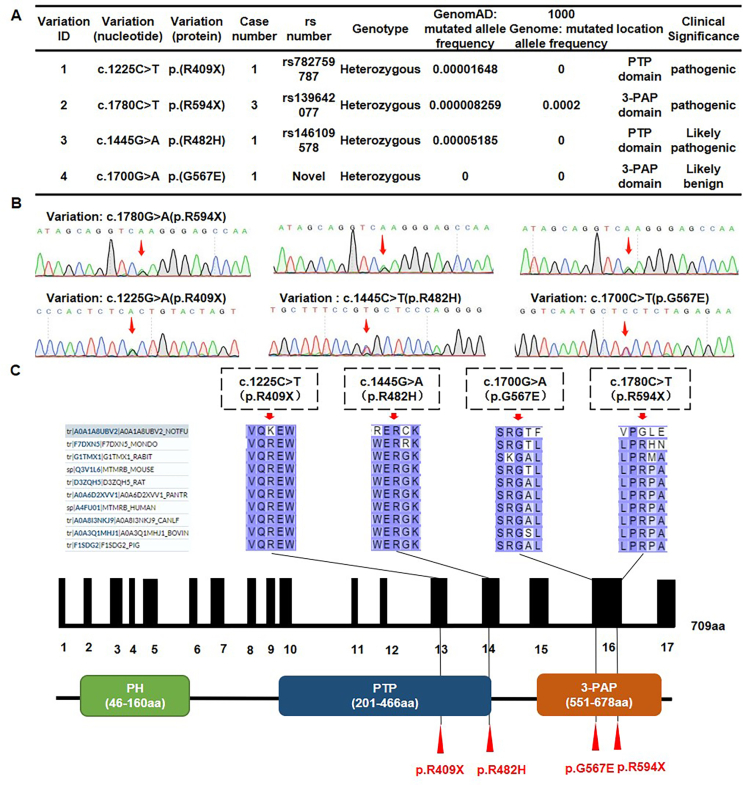 Figure 1
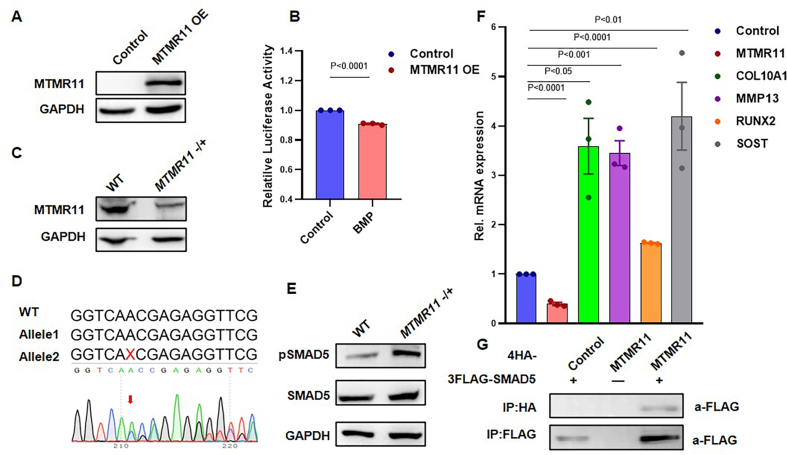 Figure 2
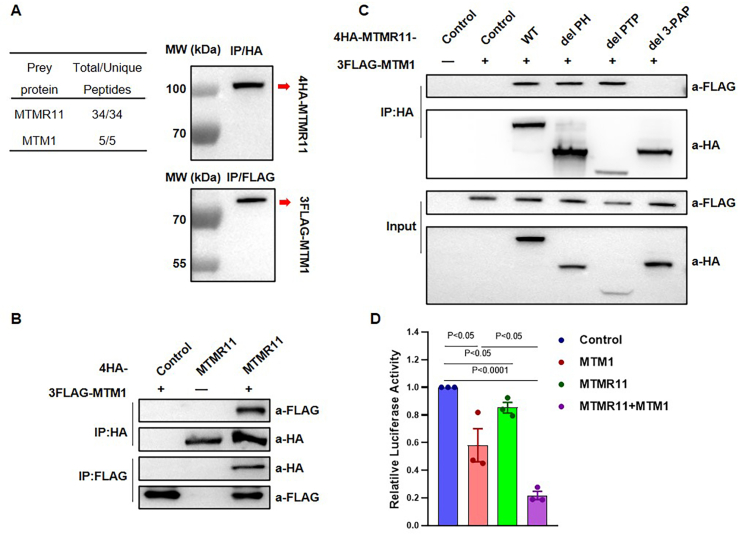 Figure 3
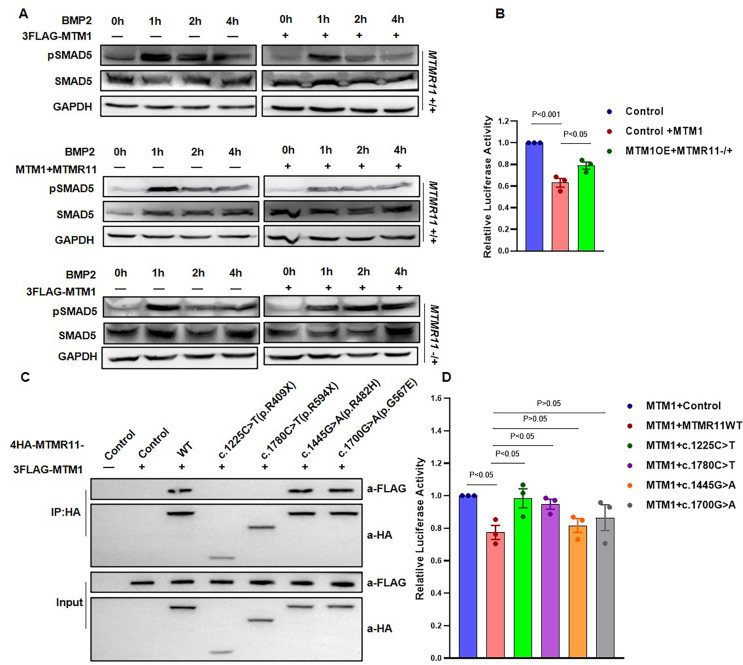 Figure 4
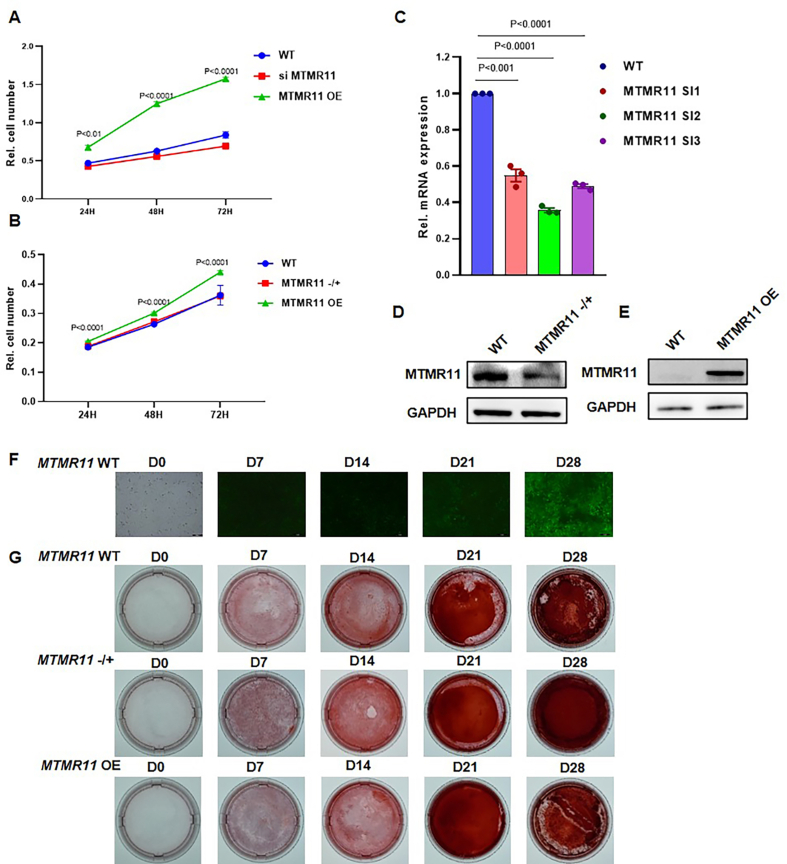 Figure 5
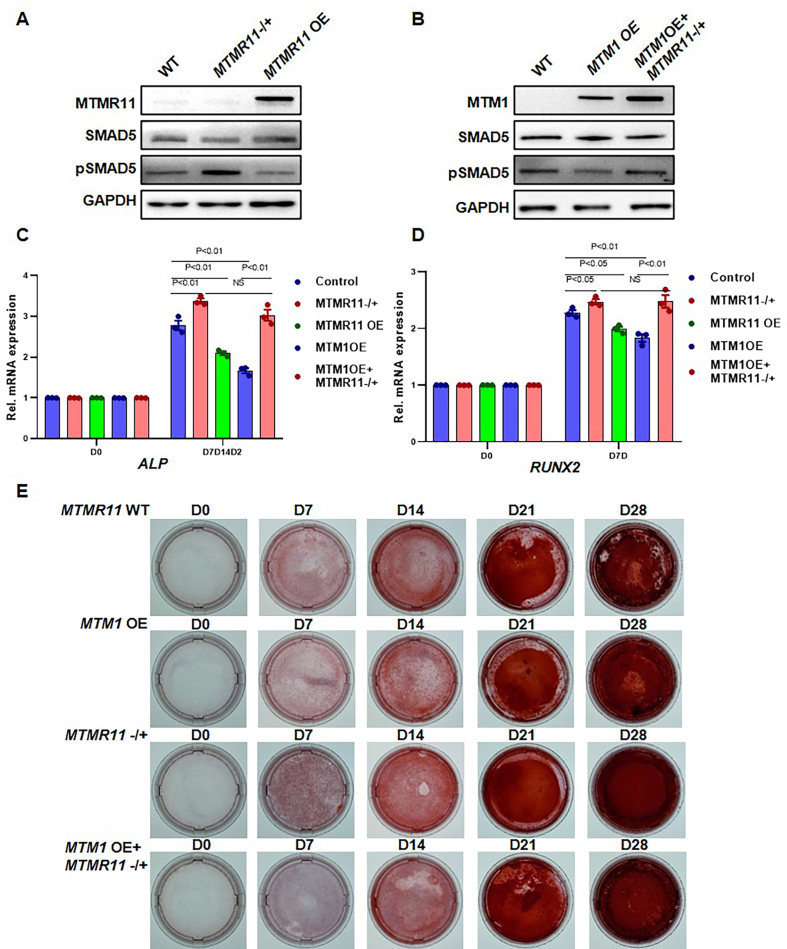 Figure 6
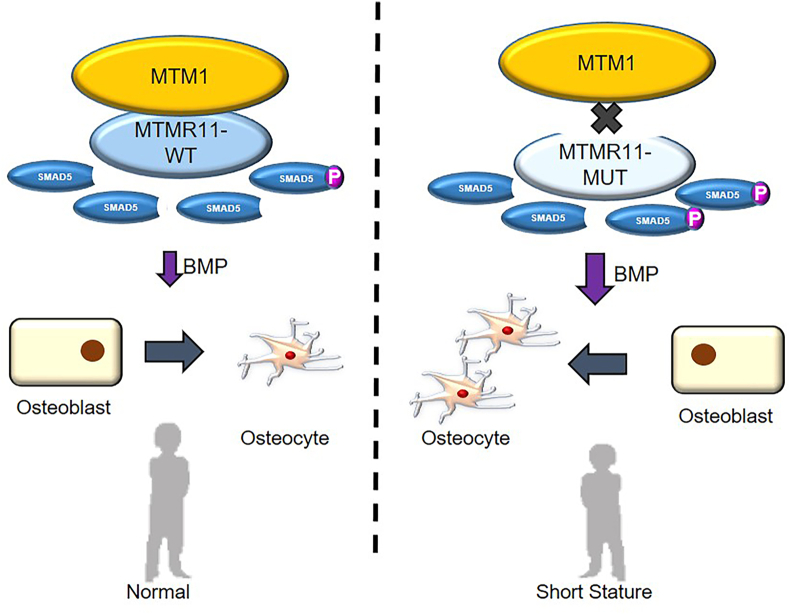 Figure 7
Peer Reviews
No public reviews on file for this paper yet. If you reviewed it on a platform where reviews are public (OpenReview, ICLR, NeurIPS, ICML), you can paste yours below so the community can read it here.
Videos
No videos yet. Explain this paper in a talk, walkthrough, or lecture? Add one.
Taxonomy
TopicsTGF-β signaling in diseases · Congenital heart defects research · Genetic Syndromes and Imprinting
Short stature is clinically defined as a standing height less than two standard deviations below the mean height at the same age, ethnicity, and sex. As a typical complex symptom, height has a high heritability of 80%, which is affected by multiple genes and gene–gene interactions. A genome-wide association study (GWAS) revealed that 23.3% of the heritability of short stature could be explained by 697 independent variants.1 Whole exome sequencing of a large sample size demonstrated that 83 rare and low-frequency variants could explain 1.7% heritability of height, and variants with minor allele frequency <5% have an average effect 10 times greater than that of common variants.2 Here, we analyzed the whole exome sequencing data of 787 short-stature children to find new genes contributing to short stature in Chinese children.
It is well known that excessive differentiation of osteoblasts leads to short stature, and the normal differentiation of osteoblasts is regulated by bone morphogenetic protein (BMP) signaling.3 As a core regulatory member, phosphorylated SMAD family member 5 (pSMAD5) is positively correlated with BMP signaling activity, but it is unclear how SMAD5 dephosphorylation is regulated during osteoblast development. Myotubularin-related protein 11 (MTMR11), which belongs to the myotubularin family, was predicted to be a dead phosphatase due to the absence of conserved cysteine residues in catalytic activity domains and loss of its phosphatase activity. To date, no data support MTMR11 as a disease-causing gene, even though the connection of myotubularin 1 (MTM1) with short stature is also unclear4 until we found that rare MTMR11 variants were enriched in our dwarfism cohort.
We identified MTMR11 heterozygous variants from short stature (Fig. S1), and found overexpression (OE) of MTMR11 inhibited the BMP signaling pathway (Fig. S2A), but knockout (KO) of MTMR11 displayed higher expression of the BMP pathway marker genes collagen type X alpha 1 chain (COL10A1), sclerostin (SOST), matrix metallopeptidase 13 (MMP13), and RUNX family transcription factor 2 (RUNX2) (Fig. S2F). Coimmunoprecipitation assays showed that MTMR11 could interact with SMAD5 in the HEK293T cell line (Fig. S2G). We next are curious about who can interact with MTMR11 to inhibit the BMP signaling pathway. Mass spectrometry analysis showed an interaction between MTM1 and MTMR11. Luciferase assay showed the inhibitory role of MTM1 on the BMP signaling pathway, which was further exaggerated by cotransfection with MTMR11 (Fig. S3A, D). Also, the 3-PAP domain was identified be the core domain for the interaction between MTM1 and MTMR11 (Fig. S3C). On the way to figure out how MTM1 and MTMR11 inhibit the BMP pathway, we found that MTMR11 could band to SMAD5, which is the core factor in the BMP pathway. Then we found MTMR11 acted as an essential co-factor to enhance MTM1 dephosphorylation of pSMAD5 (Fig. S4).
The IDG-SW3 cell line was a helpful tool for osteoblast study, whose differentiation was induced by removing interferon-gamma (IFN-γ; Invitrogen) and adding 50 μg/mL ascorbic acid and 4 mM β-glycerophosphate. We found MTMR11 accelerated proliferation and inhibited osteoblast differentiation of IDG-SW3 cells by constructing the MTMR11 OE/KO cell line (Fig. S5). However, MTM1's inhibition of osteoblast differentiation in IDG-SW3 cells was compromised by knockout of MTMR11 (Fig. S6).
To sum up, MTMR11 interacts with MTM1 to enhance SMAD5 dephosphorylation and thus inhibit the BMP pathway and maintain the balance of osteoblast differentiation. The MTMR11 variants identified in a short stature cohort compromise SMAD5 dephosphorylation for abnormally up-regulated BMP signaling, thus causing short stature.
The process of osteogenesis is finely regulated by BMP signals, which are crucial to regulating the cell proliferation and differentiation of osteoblasts into osteocytes. In this study, we identified four rare variants of MTMR11, a dead phosphatase gene, in a cohort of 787 short-stature children. Mechanistically, MTMR11 can interact with both SMAD5 and MTM1 and work as a necessary cofactor for the active phosphatase MTM1 to specifically work on SMAD5 protein dephosphorylation and to inhibit BMP signaling, and this interaction is significant for the balance of osteoblast development. The two short stature-enriched MTMR11 variants c.1225C > T (p. R409X) and c.1780C > T (p. R594X) destroyed the 3-PAP domain and lost the ability to interact with MTM1, which led to the interruption of the regular inhibition of BMP signaling. The MTMR11 variants induced overactivated BMP signaling through pSMAD5 accumulation, subsequently promoting the over-differentiation of osteoblasts, which contributed to short stature in carriers and conferred MTMR11 as a short stature likely pathogenic gene (Fig. 1).Figure 1. Abstract graphic of functional MTMR11 in short stature development.Figure 1
After we revealed the possible pathogenic role of MTMR11, a dead phosphatase, to short stature, MTM1 was further demonstrated to be the real functional phosphatase for the substrate of protein SMAD5 because it was reported that dead phosphatase members could form a dimer with members in the same family containing active phosphatase domains to enhance or inhibit their phosphatase activity. Clearly, the irreplaceable importance of MTM1 as a protein phosphatase was linked to the finding of a connection between MTMR11 and short stature. However, it remains ambiguous whether cofactors such as MTMR11 are necessary only for the protein phosphatase function of MTM1 or whether a certain cofactor is also needed for MTM1 to execute lipid phosphatase activity. Collectively, our study clarified the correlation between the regulation of MTM1 protein phosphatase activity and dwarfism occurrence.
Our definition of MTM1 as a new phosphatase for the SMAD5 protein will helpfully elucidate the sophisticated regulation of the BMP pathway and inspire more attention to protein phosphatase studies. Therefore, our findings elucidated a new dephosphorylation pathway for SMAD5 regulation that causes imbalanced BMP signal activity and subsequent short stature outcomes, which provided different insights concerning the pathogenic factors for dwarfism. Hopefully, new protein phosphatases or cofactors in the BMP signaling pathway could be potential drug targets for skeletal development and short stature therapy.
Ethics declaration
The project was approved by the Institutional Medical Ethics Review Board of the Maternal and Child Health Hospital of Guangxi Zhuang Autonomous Region (No. (2015)-4-16]. Informed consent was obtained from the parents and the patients.
Conflict of interests
There is no conflict of interest.
Funding
This work was supported by the National Key R&D Program of China (No. 2021YFC2701100 to H.W.), the National Natural Science Foundation of China (No. 81930036, 8215008 to H.W.), and the Commission for Science and Technology of Shanghai Municipality, China (No. 20JC1418500 to H.W.).
CRediT authorship contribution statement
Kai Yang: Data curation, Formal analysis, Validation, Visualization, Writing – original draft, Writing – review & editing. Hongdou Li: Writing – review & editing. Rui Peng: Writing – review & editing. Yiping Shen: Data curation, Investigation. Tongjin Zhao: Data curation. Chentao Li: Data curation. Weimin Wang: Writing – original draft, Writing – review & editing. Hongyan Wang: Project administration, Writing – original draft, Writing – review & editing.
The reference list from the paper itself. Each links out to its DOI / PubMed record.
- 1Wood A.R.Esko T.Yang J.Defining the role of common variation in the genomic and biological architecture of adult human height Nat Genet 46112014117311862528210310.1038/ng.3097 PMC 4250049 · doi ↗ · pubmed ↗
- 2Marouli E.Graff M.Medina-Gomez C.Rare and low-frequency coding variants alter human adult height Nature 542764020171861902814647010.1038/nature 21039 PMC 5302847 · doi ↗ · pubmed ↗
- 3Zou M.L.Chen Z.H.Teng Y.Y.The smad dependent TGF-β and BMP signaling pathway in bone remodeling and therapies Front Mol Biosci 8202159331010.3389/fmolb.2021.593310 PMC 813168134026818 · doi ↗ · pubmed ↗
- 4Mattei A.M.Smailys J.D.Hepworth E.M.W.Hinton S.D.The roles of pseudophosphatases in disease Int J Mol Sci 2213202169243420320310.3390/ijms 22136924 PMC 8269279 · doi ↗ · pubmed ↗