Macrophage Activation Syndrome in Adult-Onset Still’s Disease: Challenges in Early Detection and Management
Anil Regmi, Cecelia Hale, Nang Lin, Kevin K Kinduell, Sampath K Ethiraj

TL;DR
A 24-year-old woman with Adult-Onset Still’s Disease developed a severe immune complication, which was managed with steroids and biologics after delayed diagnosis.
Contribution
This case report highlights the challenges in early detection and management of macrophage activation syndrome in AOSD.
Findings
Macrophage activation syndrome in AOSD presented with high ferritin, liver dysfunction, and thrombocytopenia.
Delayed diagnosis led to worsening symptoms before treatment with intravenous steroids and biologics.
Early recognition and intervention with glucocorticoids and biologics improved patient outcomes.
Abstract
Adult-onset Still's disease (AOSD) is an immunological disorder that manifests with fever, evanescent rash, leukocytosis, and arthralgia. One of the most severe complications of AOSD is macrophage activation syndrome, a life-threatening complication characterized by hyperactivation of the immune system and multiorgan dysfunction. This case report describes a 24-year-old female who developed macrophage activation syndrome in the setting of AOSD. Initially, she developed heterogeneous and nonspecific symptoms of fever, pharyngitis, rash, lymphadenopathy, and migratory arthralgia after a trip to Mexico. Thus, the diagnosis and appropriate treatment were delayed. Although her symptoms were temporarily relieved with oral steroids, she worsened clinically. She developed a widespread rash, persistent fever, a very high ferritin level (29,972 ng/mL), and elevated liver enzymes with mild…
Genes, proteins, chemicals, diseases, species, mutations and cell lines named across the full text — each resolved to its canonical identifier and authoritative record.
Click any figure to enlarge with its caption.
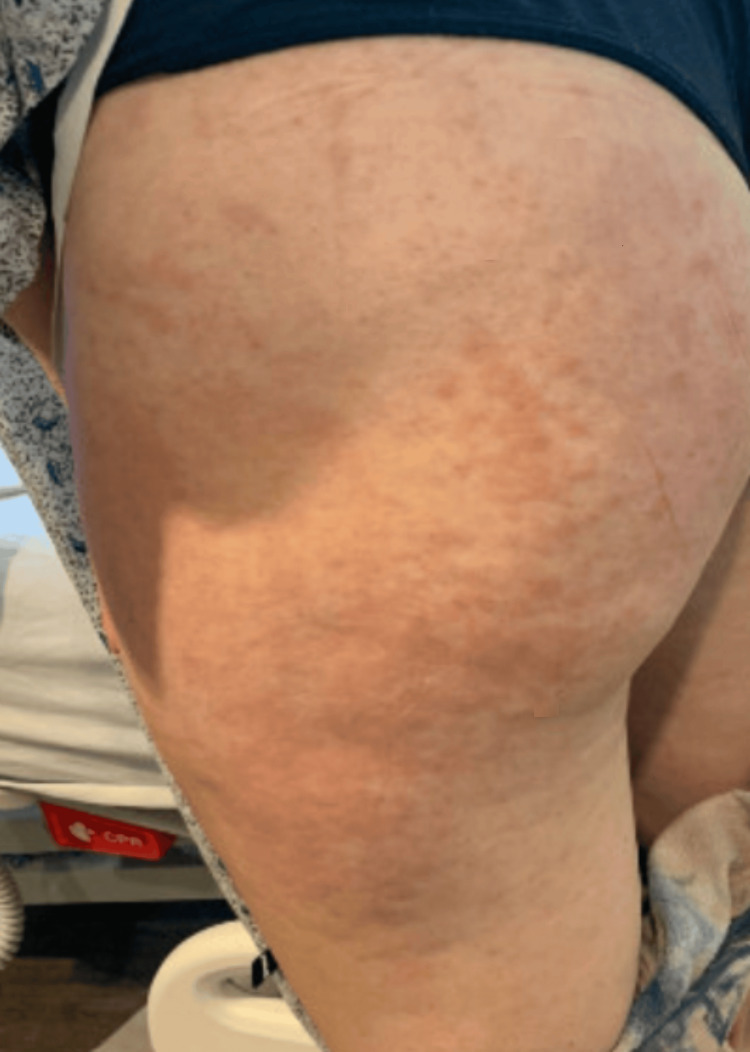 Figure 1
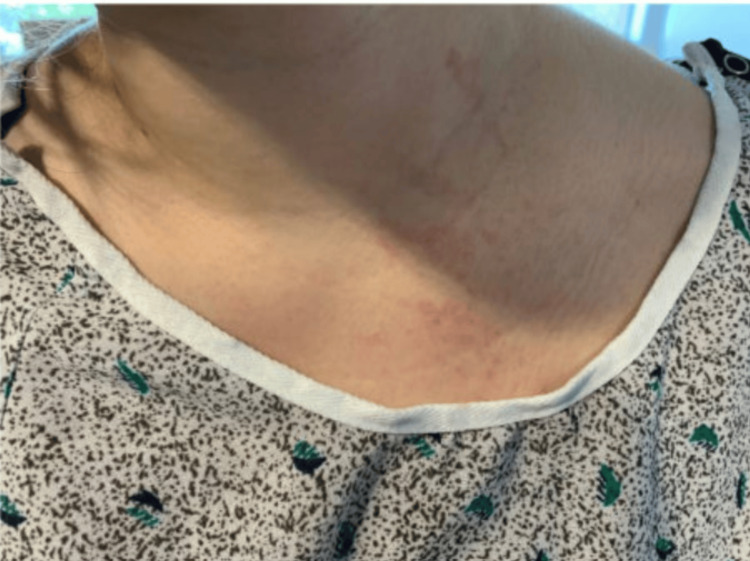 Figure 2
| Test | Value | Reference range |
| Total leukocyte count | 15,700/µL | 3400-10,500/µL |
| Neutrophils | 81.3% | 45-75% |
| CRP | 20.8 mg/dL | <0.9 mg/dL |
| ESR | 57 mm/hour | <20 mm/hour |
| RF titer | 13 IU/mL | 0-13 IU/mL |
| Ferritin | 29,972 ng/mL | 20-324 ng/mL |
| Troponin | 118 ng/L | 0-10 ng/L |
| D-dimer | 11.19 mg/l | <0.49 mg/l |
| N terminal pro-B- type natriuretic peptide | 464 pg/mL | 0-125 pg/mL |
| Albumin | 2.6 g/dL | 3.4-5 g/dL |
| AST | 407 U/L | 10-35 U/L |
| ALT | 316 U/L | 10-35 U/L |
| LDH | 913 U/L | 107-230 U/L |
| ANA screen | 0.43 ISR | <0.99 ISR |
| ANCA panel (anti-myeloperoxidase and proteinase-3) | Negative | N/A |
Peer Reviews
No public reviews on file for this paper yet. If you reviewed it on a platform where reviews are public (OpenReview, ICLR, NeurIPS, ICML), you can paste yours below so the community can read it here.
Videos
No videos yet. Explain this paper in a talk, walkthrough, or lecture? Add one.
Taxonomy
TopicsAutoimmune and Inflammatory Disorders Research · Immune Cell Function and Interaction · Family and Disability Support Research
Introduction
Adult-onset Still’s disease (AOSD) is a rare inflammatory disorder characterized by a salmon-colored maculopapular rash, quotidian fever, leukocytosis, and arthralgia [1]. AOSD is a relatively uncommon disorder and was first described in children by George Still in 1896 AD [2]. While Still’s disease is a term that describes systemic juvenile idiopathic arthritis, AOSD represents the same manifestation in patients above 16 years of age [3]. The etiology of AOSD is unknown, and it has been suggested that both genetic factors and various infectious agents contribute to its development [1]. The clinical course of AOSD is characterized by three primary patterns: monophasic, intermittent, and chronic [4]. Treatment of AOSD depends on the severity of the disease (i.e., mild, moderate, or severe) and includes NSAIDs alone, anakinra, glucocorticoids, or disease-modifying antirheumatic drugs (DMARDs) [1].
AOSD can result in several complications, including macrophage activation syndrome (MAS), amyloidosis, pulmonary arterial hypertension, disseminated intravascular coagulation, thrombotic thrombocytopenic purpura, and diffuse alveolar hemorrhage [1]. Among these, one of the most severe complications is MAS, often called a “cytokine storm.” MAS occurs in a very small proportion of patients with AOSD. It is an immunological disorder in which the immune system becomes overactive, resulting in multisystem end-organ dysfunction that can be life-threatening [5]. MAS occurs in the setting of various rheumatological diseases, most typically in patients with Still’s disease. However, it can also occur in patients with systemic lupus erythematosus and Kawasaki disease [5]. This case report describes MAS as a complication in an adult patient with Still’s disease.
Case presentation
A 24-year-old female with no known past medical history was admitted to the inpatient unit for the management of a fever of unknown origin. The patient first developed a sporadic, erythematous, nonpruritic maculopapular rash during a trip to Mexico two months before she was admitted to the hospital (Figures 1, 2). She considered them “hives” and took cetirizine, which temporarily resolved the rash. However, the rash reappeared once she was back in the United States. This time, the rash worsened and spread over her entire body.
Salmon-colored maculopapular rash in buttocks and lateral thigh
Salmon-colored maculopapular rash around the neck
In addition to the rash, she also had a fever and symptoms of pharyngitis, along with lymphadenopathy, at the same time the rash appeared. The patient also began to experience diffuse migratory arthralgias, starting in her left fingers and wrist and moving to her right ankle and left knee. She initially presented to an urgent care, where she received an intramuscular corticosteroid injection along with a tapering dose of steroids, which provided temporary relief. However, she relapsed immediately after completing the steroid course. She then worsened clinically, with the rash spreading to her trunk, back, and all four extremities, along with significant left knee pain. She subsequently developed pharyngitis with lymphadenopathy and a fever of 39.3°C, prompting evaluation in the emergency department.
She was tachycardic and febrile on presentation. Initial workup was significant for leukocytosis, elevated inflammatory markers, normal rheumatoid factor, elevated liver enzymes, and a ferritin level of 29,972 ng/mL (Table 1). After an infectious workup, including bacteriological, viral, and parasitic panels, as well as blood cultures and urinalysis, was initiated and preliminary results came back negative, the most likely diagnosis was determined to be adult-onset Still’s disease.
During the hospital stay, the patient's liver enzymes and cell counts continued to increase. A CT scan of the neck showed nonspecific, mildly prominent precarinal lymph nodes, while a CT scan of the abdomen and pelvis revealed a mildly enlarged liver and spleen, raising concern for macrophage activation syndrome. The patient was immediately started on high-dose intravenous steroids, which led to improvement in cell counts and overall symptoms. With clinical improvement, she was discharged on a tapering dose of oral steroids and instructed to follow up with the rheumatology outpatient clinic. Since then, she has been following up with rheumatology and remains in remission.
Discussion
AOSD is an inflammatory disorder characterized by quotidian fevers, arthralgias, a salmon-colored maculopapular rash, and an elevated white blood cell count [1,6]. AOSD is a diagnosis of exclusion, and in most cases, the typical features mentioned earlier are absent [7]. Although elevated ferritin is not pathognomonic, it may help diagnose the disease [1,6]. Hyperferritinemia is most helpful when present in combination with other clinical signs and symptoms of AOSD. The ferritin level in patients with AOSD typically exceeds five times the normal value and is usually > 1,000 ng/dL, which is associated with high sensitivity for the disease [1,8]. Testing for both total serum ferritin and the glycosylated fraction yields higher specificity than either test alone [9]. Due to the lack of definitive diagnostic tests, several diagnostic criteria have been proposed for the diagnosis of AOSD, among which Yamaguchi’s criteria, introduced in 1992, and the 2002 Fautrel’s criteria are the most commonly used [10,11].
The diagnosis of AOSD can be challenging, as patients may present with a variety of nonspecific symptoms. Maintaining a high clinical suspicion for AOSD is important to prevent delays in treatment and complications. One feared and potentially fatal complication of AOSD is MAS. MAS is a reactive form of hemophagocytic lymphohistiocytosis (HLH) that occurs in the setting of systemic rheumatic diseases [12]. It is a rare manifestation and can develop as a complication of Still’s disease in both children and adults. A study using the National Inpatient Sample database showed that 1.7% of patients with AOSD developed MAS [13]. Studies have shown that MAS and disseminated intravascular coagulation (DIC) are the leading causes of death in patients with AOSD [13,14]. Thus, recognizing MAS in patients with AOSD is very important [14].
Concern for MAS is particularly high in patients with ferritin levels elevated out of proportion to other inflammatory markers, lymphadenopathy, weight loss, transaminase elevation, hepatomegaly, marked elevation in D-dimer, thrombocytopenia, and/or a decreasing erythrocyte sedimentation rate despite continued elevation of C-reactive protein [14]. Notable liver dysfunction and low neutrophils are both poor prognostic factors in MAS, as are low platelets, low fibrinogen, and high ferritin levels [14]. Awareness of this complication is crucial, as the mortality rate in AOSD-associated MAS is 10-20% [14,15]. Bone marrow examination demonstrating well-differentiated macrophages (histiocytes) actively phagocytosing hematopoietic elements is the hallmark of MAS diagnosis [16].
Management of new-onset AOSD depends on disease severity. For patients with mild disease (i.e., rash, fever, mild arthralgia, and no MAS), nonsteroidal anti-inflammatory drugs (NSAIDs) are recommended [17]. Similarly, patients with moderate to severe disease who are resistant to NSAID monotherapy are treated with anakinra, glucocorticoids, or other DMARDs [18]. However, if there is concern for MAS, combination therapy with anakinra and glucocorticoids is recommended [19]. Prompt diagnosis and early treatment significantly improve morbidity and mortality.
Conclusions
In summary, clinicians need to be able to identify AOSD in its early stages to prevent patients from developing the lethal complication of macrophage activation syndrome. Early diagnosis is challenging due to the heterogeneous symptoms and multisystem involvement of the disease. However, careful evaluation and appropriate implementation of diagnostic tests can help identify the disease in a timely manner and initiate treatment. Even if a patient develops MAS, starting the right treatment regimen can reduce inflammation, and the patient may achieve remission without long-term disability from the disease.
The reference list from the paper itself. Each links out to its DOI / PubMed record.
- 1Still disease Stat Pearls [Internet] 11 2025 Bhargava J Panginikkod S Treasure Island (FL)Stat Pearls Publishing 2024 http://www.ncbi.nlm.nih.gov/books/NBK 538345/
- 2On a form of chronic joint disease in children Med Chir Trans Still GF 4760801897 https://pmc.ncbi.nlm.nih.gov/articles/PMC 2036674/pdf/medcht 00012-0212.pdf PMC 203667420896907 · pubmed ↗
- 3Adult-onset Still's disease. Twenty-year follow-up and further studies of patients with active disease Arthritis Rheum Elkon KB Hughes GR Bywaters EG 647654251982 https://onlinelibrary.wiley.com/doi/abs/10.1002/art.1780250607709296410.1002/art.1780250607 · doi ↗ · pubmed ↗
- 4Adult-onset still disease: manifestations, treatment, outcome, and prognostic factors in 57 patients Medicine (Baltimore) Gerfaud-Valentin M Maucort-Boulch D Hot A 9199932014 https://journals.lww.com/md-journal/fulltext/2014/03000/adult_onset_still_disease__manifestations,.4.aspx 2464646510.1097/MD.0000000000000021 PMC 4616309 · doi ↗ · pubmed ↗
- 5Macrophage activation syndrome Arthritis Rheumatol Nigrovic PA 2024 https://acrjournals.onlinelibrary.wiley.com/doi/10.1002/art.4305210.1002/art.4305239491365 · doi ↗ · pubmed ↗
- 6Adult-onset Still disease Best Pract Res Clin Rheumatol Fautrel B 773792222008 https://www.sciencedirect.com/science/article/abs/pii/S 1521694208000922?via%3Dihub 1902836310.1016/j.berh.2008.08.006 · doi ↗ · pubmed ↗
- 7Calm before the storm N Engl J Med Braga Neto MB Badley AD Parikh SA Graham RP Kamath PS 4794853862022 https://www.nejm.org/doi/10.1056/NEJ Mcps 21111633510847310.1056/NEJ Mcps 2111163 PMC 8830531 · doi ↗ · pubmed ↗
- 8Increased ferritin response in adult Still's disease: specificity and relationship to outcome Scand J Rheumatol Evensen KJ Swaak TJ Nossent JC 107110362007 https://www.tandfonline.com/doi/abs/10.1080/030097406009585041747661610.1080/03009740600958504 · doi ↗ · pubmed ↗