Emergence and evolution of rare ST592 bla NDM-1-positive carbapenem-resistant hypervirulent Klebsiella pneumoniae in China
Huan Zhang, Su Dong, Caiping Mao, Yuejuan Fang, Junjie Ying

TL;DR
This study characterizes two rare Klebsiella pneumoniae isolates in China and explores how they evolved into drug-resistant, highly virulent strains.
Contribution
This is the first study to fully characterize the genome of rare NDM-1-producing ST592 Klebsiella pneumoniae and propose an evolutionary model for CR-hvKp formation.
Findings
KPZM16 is an extensively drug-resistant hypervirulent Klebsiella pneumoniae strain carrying a plasmid with bla_NDM-1 and other resistance genes.
KPZM6 is a susceptible strain that may have transferred the resistance plasmid to KPZM16 via conjugation.
Both isolates share a pLVPK-like virulence plasmid containing key virulence gene clusters.
Abstract
This study aimed to characterize the genomes of two rare ST592 Klebsiella pneumoniae isolates and to explore their evolution into carbapenem-resistant hypervirulent K. pneumoniae (CR-hvKp). The minimum inhibitory concentrations (MICs) were determined using a VITEK 2 compact system. Conjugation experiments were conducted using film matings. Whole-genome sequencing (WGS) was performed using the Illumina and Nanopore platforms. The antimicrobial resistance determinants were identified using the ABRicate program in the ResFinder database. Insertion sequences were identified using ISFinder and the bacterial virulence factors identified using the Virulence Factor Database (VFDB). The K and O loci were examined using Kleborate. Multilocus sequence typing (MLST) and replicon type identification were performed by the Center for Genomic Epidemiology. Conjugation-related elements were predicted…
Genes, proteins, chemicals, diseases, species, mutations and cell lines named across the full text — each resolved to its canonical identifier and authoritative record.
Click any figure to enlarge with its caption.
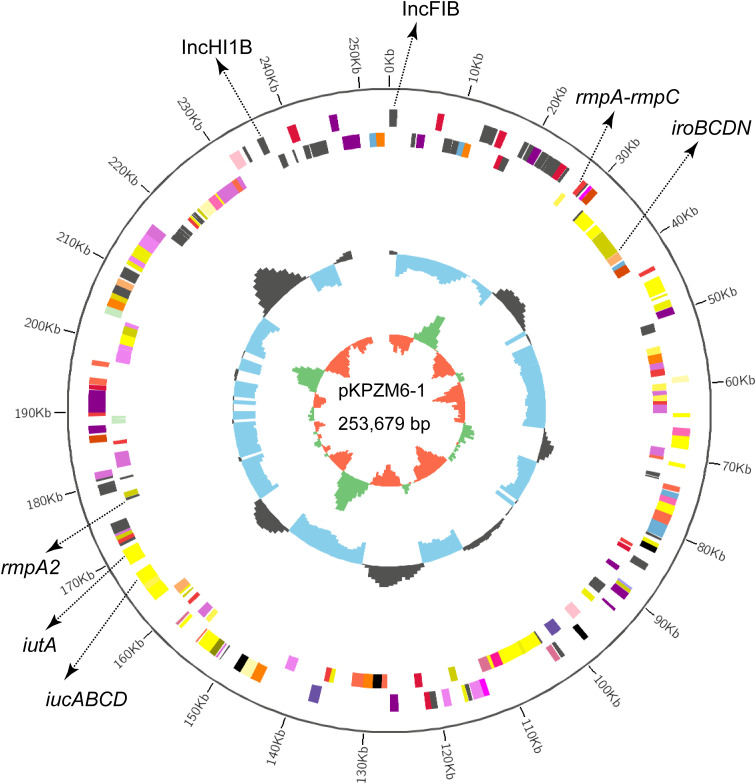 Figure 1
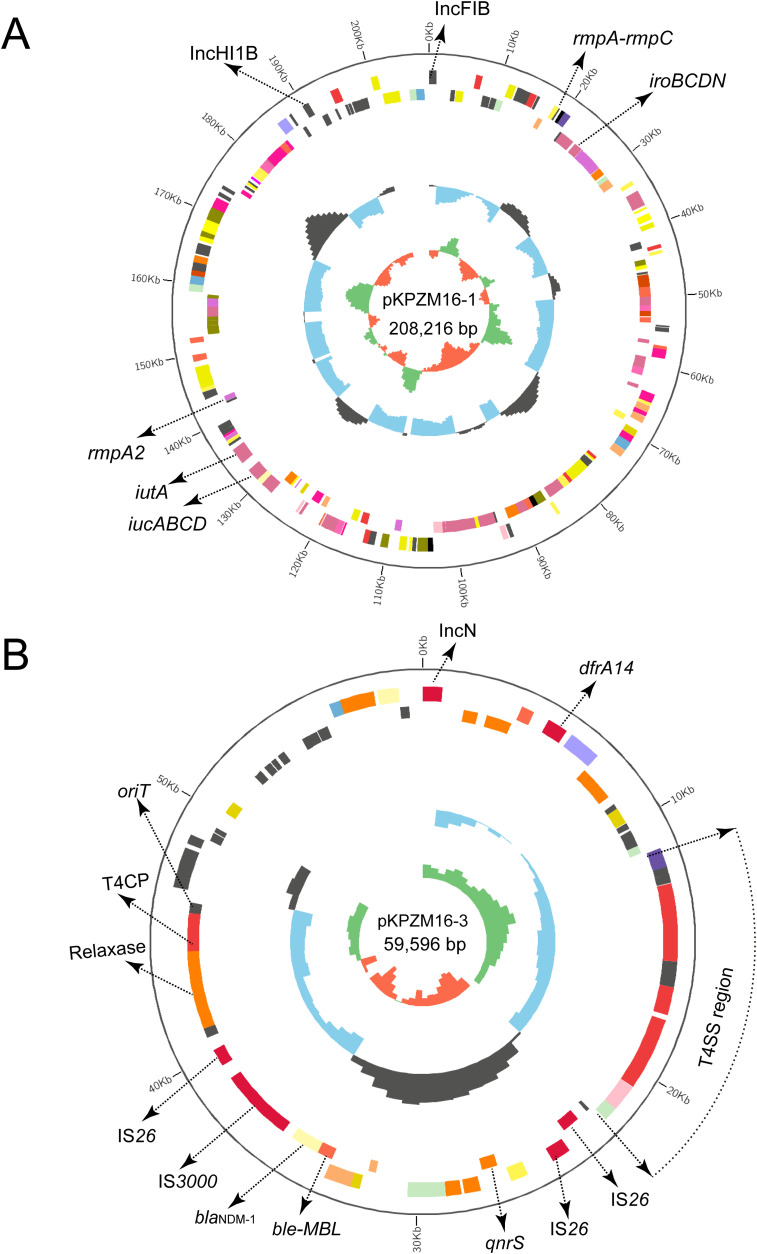 Figure 2
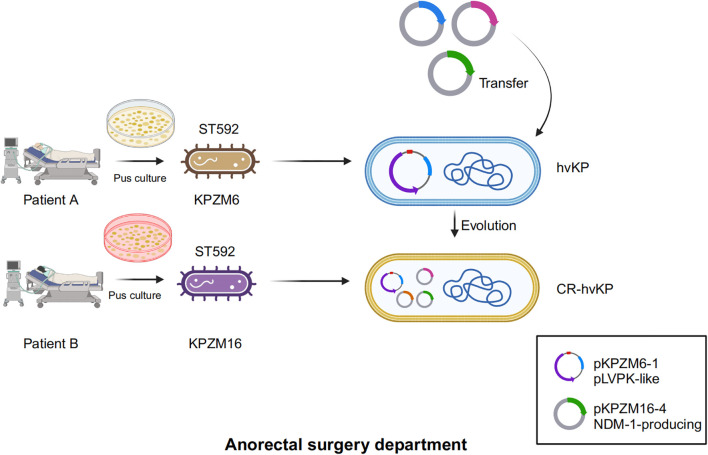 Figure 3
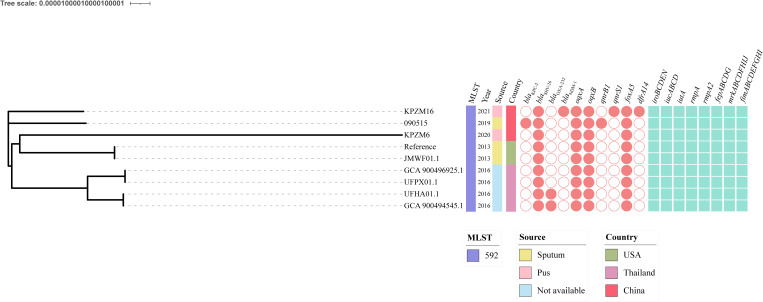 Figure 4
| Patient ID | Isolate | Collection date | Age | Department | Source | Diagnosis |
|---|---|---|---|---|---|---|
| A | KPZM6 | 16.05.20 | 51 | Anorectal surgery | Pus | Anal fistula |
| B | KPZM16 | 19.12.21 | 63 | Anorectal surgery | Pus | Perianal abscess |
| Isolate ID | Genome | Replicon | Size (bp) | Resistance gene | Accession number |
|---|---|---|---|---|---|
| KPZM6 | Chromosome | – | 5,143,477 |
| PRJNA1212823 |
| pKPZM6-1 | IncFIB(K), IncHI1B | 253,679 | – | PRJNA1212823 | |
| KPZM16 | Chromosome | – | 5,048,454 |
| PRJNA1213023 |
| pKPZM16-1 | IncFIB(K), IncHI1B | 208,216 | – | PRJNA1213023 | |
| pKPZM16-2 | IncFIB | 111,160 | – | PRJNA1213023 | |
| pKPZM16-3 | IncN | 59,596 |
| PRJNA1213023 | |
| pKPZM16-4 | – | 5,905 | – | PRJNA1213023 |
- —Shaoxing Bureau of Science and Technology 10.13039/501100011498
Peer Reviews
No public reviews on file for this paper yet. If you reviewed it on a platform where reviews are public (OpenReview, ICLR, NeurIPS, ICML), you can paste yours below so the community can read it here.
Videos
No videos yet. Explain this paper in a talk, walkthrough, or lecture? Add one.
Taxonomy
TopicsAntibiotic Resistance in Bacteria · Bacterial Identification and Susceptibility Testing · Bacterial biofilms and quorum sensing
Introduction
Carbapenem-resistant Enterobacteriaceae (CRE) are known to cause serious nosocomial infections associated with high mortality rates, posing a global public health threat (Hala et al., 2019). Of great concern is carbapenem-resistant Klebsiella pneumoniae (CRKP), which causes untreatable or nearly untreatable infections, as determined by the US Centers for Disease Control and Prevention (CDC) (Gu et al., 2018). Importantly, the carbapenem resistance rates have increased with the incidence of CRKP in China, demonstrating that CRKP remains a significant multidrug-resistant pathogen, particularly in the case of the ST11–KL64 CRKP clone, which is associated with a highly resistant and virulent epidemic in China (Zhou et al., 2023; Wang et al., 2024a). Due to its resistance to the commonly used antimicrobial drugs in the clinic, the novel β-lactamase inhibitor avibactam has been developed for the treatment of CRKP strains and has been used in combination with ceftazidime in recent years, which has exhibited excellent in vitro activity against CRKP (Qiao et al., 2024; Zhang et al., 2024). However, the widespread use of ceftazidime–avibactam has led to several K. pneumoniae carbapenemase (KPC) variants (e.g., KPC-135, KPC-33, and KPC-84) showing ceftazidime–avibactam resistance (Gong et al., 2024; Shi et al., 2024; Zhang et al., 2024).
Apart from resistance in CRKP, virulence is another important issue that requires great attention (Chen et al., 2024). There are two possible evolution pathways to becoming hypervirulent and resistant, simultaneously. Hypervirulent K. pneumoniae (hvKp) strains that acquire carbapenem resistance plasmids could be recognized as carbapenem-resistant hypervirulent K. pneumoniae (CR-hvKp). On the other hand, CRKP strains can acquire pLVPK-like virulence plasmids and are known as hypervirulent carbapenem-resistant K. pneumoniae (hv-CRKP) (Xu et al., 2021; Tian et al., 2022b). However, the specific evolutionary mechanisms remain unclear.
In this study, two ST592 K. pneumoniae isolates were obtained from the same department of one hospital in China, and their complete genetic characteristics were studied. One ST592 K. pneumoniae isolate might be an hvKp that only carries virulence genes, such as rmpA, rmpA2, iroBCDN, iucABCD, and iutA. Interestingly, the other ST592 K. pneumoniae isolate is likely a CR-hvKp that had acquired the NDM-1-producing plasmid. To the best of our knowledge, this is the first report on a clinical ST592 K. pneumoniae isolate and its evolution. This information will help in the understanding of the rare genomic characteristics of CR-hvKp bacteria and in the prevention and control of their spread in healthcare settings.
Methods
Bacterial isolation and identification
The K. pneumoniae clinical isolates KPZM6 and KPZM16 were obtained from pus samples collected from the same department of a hospital in China in 2020 and 2021 (Table 1). The pus was inoculated into a blood agar plate and incubated overnight at 37°C. Bacterial morphology was observed on the second day. A clone suspected to be K. pneumoniae was further characterized. The isolates were further identified with matrix-assisted laser desorption ionization time-of-flight mass spectrometry (MALDI-TOF MS; Bruker Daltonics GmbH, Bremen, Germany) and sequencing.
Antimicrobial susceptibility testing
The minimum inhibitory concentrations (MICs) were measured using the VITEK 2 compact system: amikacin, aztreonam, gentamicin, cefotetan, cefotaxime, cefuroxime, cefazolin, ceftazidime, ciprofloxacin, ceftriaxone, cefepime, cefoxitin, piperacillin, ciprofloxacin, imipenem, and meropenem. Escherichia coli ATCC 25922 was used as a control strain. The results were interpreted according to the recommendations of the Clinical and Laboratory Standards Institute (CLSI) 2021 guidelines.
Plasmid conjugation assays via film mating
To determine the transferability of bla NDM-1-positive plasmids, conjugation experiments using E. coli EC600 (rifampin-resistant) as the recipient strain were conducted using the film-mating method (Yang et al., 2021b; Tian et al., 2022a). Putative transconjugants were screened on Mueller–Hinton agar plates containing rifampin (150 μg/ml) and meropenem (4 μg/ml) and were further confirmed with PCR using specific primers and MALDI-TOF MS.
Whole-genome sequencing and bioinformatics analyses
Genomic DNA was extracted using a Qiagen Minikit (Qiagen, Hilden, Germany) and the Gentra® Puregene® Yeast/Bact kit (Qiagen, Germany) and further sequenced using the Illumina and Oxford Nanopore platforms. Hybrid assembly of the short and long reads was performed using Unicycler v0.4.8 (Wick et al., 2017). Genome annotation was performed using the National Center for Biotechnology Information (NCBI) Prokaryotic Genome Annotation Pipeline (PGAP) (http://www.ncbi.nlm.nih.gov/genome/annotation_prok/) (Tatusova et al., 2016) and Prokka (Seemann, 2014). Antimicrobial resistance genes were identified using ABRicate v1.0.1 and ResFinder 4.0. Virulence factors were identified using the Virulence Factor Database (VFDB; http://www.mgc.ac.cn/VFs/) (Liu et al., 2022). The capsular polysaccharide (K locus) and lipooligosaccharide (OC locus) were analyzed using Kleborate with the command line of kleborate, ASSEMBLIES-k (Lam et al., 2021, 2022). Multilocus sequence typing (MLST) was performed and the replicon types were identified using the Center for Genomic Epidemiology website (https://genomicepidemiology.org/). The conjugation transfer elements, including the origin site of DNA transfer (oriT), the type IV secretion system (T4SS) region, the type IV coupling protein (T4CP), and the relaxase, were predicted using oriTfinder (Li et al., 2018). The insertion sequences (ISs) were identified using ISfinder (Siguier et al., 2006), and the plasmid structure was visualized using Circos (Krzywinski et al., 2009). The plasmids were compared using the online tool BLAST. A possible evolutionary model was constructed using BioRender. Default parameters were used for all software packages.
Phylogenetic analysis of the ST592 K. pneumoniae strains
The ST592 genomes of the K. pneumoniae in this study and other K. pneumoniae genomes from the BIGSdb-Pasteur (https://bigsdb.pasteur.fr/klebsiella/) and BacWGSTdb (http://bacdb.cn/BacWGSTdb/) databases were used to establish phylogenetic trees. Snippy v4.4.5 (https://github.com/tseemann/snippy) was utilized to align the Illumina reads against a reference (accession no. GCA_000693075.1) and to generate a core genome alignment (Zhang et al., 2022). Core SNP alignment was used to generate a maximum likelihood (ML) phylogenetic tree using RaxML v8.2.12, with the GTRGAMMA model. The generated tree files were visualized using iTOL software.
Results
MICs and the antimicrobial resistance gene profile
Antimicrobial susceptibility testing revealed that the clinical isolate KPZM16 possesses an extensively drug-resistant (XDR) profile: it was resistant to all of the tested cephalosporins, ciprofloxacin, imipenem, and meropenem, but remained susceptible to amikacin, aztreonam, and gentamicin. However, the strain KPZM6 was found to be carbapenem-susceptible, and the results of the assays showed that it was susceptible to all of the antimicrobial agents tested.
Analysis of the genome of KPZM16 revealed that, in addition to co-harboring chromosomal bla SHV-26, a series of genes conferring resistance to β-lactams (bla NDM-1), the strain also contains genes associated with trimethoprim/sulfamethoxazole (dfrA14) and quinolones (qnrS1) (Table 2). However, in the case of KPZM6, only bla SHV-26 was detected.
Virulence factors in the two clinical strains
Numerous virulence factors were found in the clinical isolates KPZM6 and KPZM16, including the iron–enterobactin transporter-related protein gene (fepABCDG), the type 3 fimbriae (mrkABCDFHIJ), and the type 1 fimbriae (fimABCDEFGHI). Other important virulence factors, including rmpA, rmpA2, iroBCDN, iucABCD, and iutA, were further identified.
Multilocus sequence typing and the K and O loci
Based on the K. pneumoniae MLST scheme, KPZM6 and KPZM16 were classified as rare ST592. Moreover, Kleborate was used and result showed the strain contains KL57 and O3b. In addition, the results showed that Wzi, an outer membrane protein lectin, was Wzi206.
Chromosome and plasmid characterization analyses
The hybrid assembly showed that strain KPZM6 had a 5,143,477-bp circular chromosome with a GC content of 57.65% (Table 2). Moreover, a 253,679-bp pLVPK-like virulence plasmid with IncHI1B and RepB replicons was identified in strain KPZM6. In KPZM16, the plasmid pKPZM16-1, a 208,216-bp pLVPK-like virulence plasmid containing IncFIB(K)–IncHI1B replicons, was identified. In addition, three other plasmids were identified in this isolate, namely, pKPZM16-2 to pKPZM16-4, with sizes ranging from 5,905 to 111,160 bp and with GC contents ranging from 48.62% to 52.06% (Table 2). Importantly, pKPZM16-3 is an IncN plasmid that carries the carbapenem resistance genes bla NDM-1, dfrA14, and qnrS1.
Genetic features of the virulence and resistance plasmids and evolutionary insights into the formation of the CR-hvKp strain
The basic backbones of the two pLVPK-like virulence plasmids (pKPZM6-1 and pKPZM16-1) were similar, with 77% coverage and 99.98% sequence identity. The rmpA, rmpA2, and iucABCD-iutA gene clusters were found in this plasmid. The plasmid structure is shown in Figures 1 and 2A. pKPZM16-3 is a bla NDM-1-positive plasmid (Figure 2B). This plasmid is composed of several resistance genes (e.g., dfrA14, qnrS1, and bla NDM-1), the oriT, the T4SS region, T4CP, a gene encoding a relaxase, and a series of various ISs, including IS26 and IS3000. Downstream of bla NDM-1 is the bleomycin resistance-related gene ble-MBL. However, ISAba125 was not found upstream of bla NDM-1. Based on the BLASTN results using the NCBI database, the data showed similar plasmids with 100% coverage and 99.99% identity to other K. pneumoniae (pNDM1_LL34, accession no. CP025965.2), Citrobacter freundii (pNDM-Cf7308, accession no. CP092465.1), and E. coli (pNDM-BTR, accession no. KF534788.2) isolates. All plasmids had a size of approximately 59 kb. The results of the conjugation experiments demonstrated that it could be transferred to the recipient strain. However, both pLVPK-like virulence plasmids failed to transfer to the recipient strain.
Circular map of the pLVPK-like virulence plasmid pKPZM6-1 in KPZM6. The two replicons, rmpA, rmpA2, and the iucABCD–iutA gene cluster are labeled.
Circular map of the pLVPK-like virulence plasmid pKPZM16-1 and the bla NDM-1-positive plasmid pKPZM16-3 in KPZM16. (A) Circular map of the pKPZM16-1 plasmid. The two replicons, rmpA, rmpA2, and the iucABCD–iutA gene cluster were labelled. (B) Structure of the resistance plasmid pKPZM16-3. The replicon, the insertion sequences (ISs), and the resistance genes are shown. The type IV secretion system (T4SS) region, oriT, the type IV coupling protein (T4CP), and the relaxase are further labeled.
Considering that both KPZM6 and KPZM16 were collected from the same hospital department, there may have been an evolutionary process (gene flow) between them. A diagram was drawn with regard to the possible evolutionary mechanism of CR-hvKp formation based on bla NDM-1-harboring plasmid transfer (Figure 3). It is possible that the NDM-1-producing plasmid was transferred from KPZM6 (hvKp) to KPZM16 (CR-hvKp) through conjugation. This process may be accompanied by the co-transfer of two other plasmids (i.e., pKPZM16-2 and pKPZM16-4).
Diagram of the possible evolution mechanism of the formation of carbapenem-resistant hypervirulent K. pneumoniae (CR-hvKp). KPZM6 and KPZM16 were both collected from pus samples in one department. NDM-1-producing plasmid transfer from the KPZM6 (hvKp) to KPZM16 (CR-hvKp) through conjugation.
Comparative genomics analysis of the ST592 K. pneumoniae isolates
To analyze the genetic characteristics of the ST592 K. pneumoniae strains from different countries, a comparative genomics analysis was performed. The data showed that nine ST592 K. pneumoniae strains were isolated from Thailand, China, and the USA from 2013 to 2021 (Figure 4). There is a huge diversity among these strains. Two strains carrying bla OXA-232, bla KPC-2, and bla NDM-1 were identified. Importantly, all ST592 K. pneumoniae strains carried several virulence-related genes: iroBCDEN, iucABCD, iutA, rmpA, rmpA2, fepABCDG, mrkABCDFHIJ, and fimABCDEFGHI.
Phylogenetic analysis of ST592 Klebsiella pneumoniae strains. A phylogenetic tree was built using RaxML v8.2.12 under the GTRGAMMA model. The generated tree file was visualized using iTOL. The ST, sources, countries, collection year, and the resistance and virulence genes are shown.
Discussion
CRKP has attracted great attention worldwide and is increasingly considered an important nosocomial pathogen in hospitals (Jin et al., 2021). In 2020, Zhou et al. reported the emergence of rmpA/rmpA2-positive ST11-KL64 isolates, which progressively replaced ST11–KL47 to become a new hypervirulent subclone, suggesting the evolution of carbapenem-resistant and hypervirulent K. pneumoniae (Zhou et al., 2020). However, the global occurrence of ST592 K. pneumoniae remains sporadic, and no NDM-1-producing ST592 CR-hvKp has been reported to date, particularly with regard to the genetic structure and evolutionary characteristics of the ST592 K. pneumoniae clinical strains.
Mobile genetic elements (MGEs), including the ISs, the transposons (Tn), the integrative conjugative elements (ICEs), and the integrons (In), play key roles in the horizontal acquisition of antimicrobial resistance genes in various species or between chromosomes and plasmids (He et al., 2022). The oriT region, the relaxase gene, the T4CP gene, and the tra gene cluster for the T4SS are important for plasmid transfer. In a previous study, it was shown that pLVPK-like virulence plasmids are non-conjugative owing to the lack of a complete conjugative module comprising tra genes, which is consistent with our findings (Yang et al., 2021a). However, in the present study, the bla NDM-1-positive plasmid was transferred to the recipient strain, as evidenced by the fact that it contains complete conjugation elements. This type of plasmid transfer contributes to the generation of CR-hvKp from hvKp, which harbors only one pLVPK-like virulence plasmid. Based on the BLASTN results from the NCBI database, the bla NDM-1-positive plasmid pKPZM16-3 shares high similarity to the pNDM1_LL34 (CP025965.2), pNDM-Cf7308 (CP092465.1), and pNDM-BTR (KF534788.2) plasmids in the K. pneumoniae, C. freundii, and E. coli strains, respectively, suggesting the spread of the resistance plasmid in various bacterial species. This phenomenon further explains the transfer of the bla NDM-1-positive plasmid to CR-hvKp in our study.
Several biomarkers have been used to identify CR-hvKp strains, including the presence of a combination of rmpA and/or rmpA2 with iucA, iroB, or peg-344 (Liu et al., 2020; Li et al., 2023). A study by Liu et al. suggested that the apparent changing epidemiology of hvKp is the result of ST11 classic K. pneumoniae (cKp) acquiring a virulence-like plasmid to replace the cKp among nosocomial infections (Liu et al., 2020). In China, the ST11 K. pneumoniae subclone KL64 is associated with a highly resistant and virulent epidemic, and the expansion of the ST11–KL64 clone is becoming increasingly concerning. This could be caused by multiple factors involved in mutations in antimicrobial resistance, virulence, and metabolism-associated genes (Wang et al., 2024a). Importantly, researchers have shown that the virulence plasmids in the ST11–KL64 clone are derived from a sub-lineage of ST23–KL1 (Wang et al., 2024b). However, some studies have shown that another important clone, ST23, can also transform into CR-hvKp by acquiring a bla NDM-harboring or a bla KPC-2-positive plasmid (Yan et al., 2021; Gu et al., 2025). This would also appear to be the case with the strains analyzed in the present study.
There are some limitations to this study, including the lack of data concerning the virulence level of this strain. This could be assessed using insect larval or murine models. In addition, the plasmid transfer frequency of the NDM-1-positive plasmid could be measured via conjugation. Lastly, we did not obtain direct evidence of the plasmid transfer and evolution into CR-hvKp.
Conclusion
To our knowledge, this is the first study in which the complete genomic characteristics of rare ST592 K. pneumoniae clinical isolates have been investigated. This study provides a possible evolutionary hypothesis for the formation of CR-hvKp via conjugation. Considering the huge threat posed by CR-hvKp bacteria, which are prevalent in the pus of patients in healthcare settings, early detection and control should be strengthened to avoid the wide dissemination of this high-risk clone.
The reference list from the paper itself. Each links out to its DOI / PubMed record.
- 1Chen T.Wang Y.Chi X.Xiong L.Lu P.Wang X.. (2024). Genetic, virulence, and antimicrobial resistance characteristics associated with distinct morphotypes in ST 11 carbapenem-resistant Klebsiella pneumoniae. Virulence 15, 2349768. doi: 10.1080/21505594.2024.2349768 38736039 PMC 11093053 · doi ↗ · pubmed ↗
- 2Gong Y.Feng Y.Zong Z.Lv X. (2024). Characterization of a KPC-84 harboring Klebsiella pneumoniae ST 11 clinical isolate with ceftazidime-avibactam resistance. Eur. J. Clin. Microbiol. Infect. Dis. 43, 2029–2035. doi: 10.1007/s 10096-024-04910-y 39110337 · doi ↗ · pubmed ↗
- 3Gu D.Dong N.Zheng Z.Lin D.Huang M.Wang L.. (2018). A fatal outbreak of ST 11 carbapenem-resistant hypervirulent Klebsiella pneumoniae in a Chinese hospital: a molecular epidemiological study. Lancet Infect. Dis. 18, 37–46. doi: 10.1016/S 1473-3099(17)30489-9 28864030 · doi ↗ · pubmed ↗
- 4Gu Y.Wang X.Zhang W.Weng R.Shi Q.Hou X.. (2025). Dissemination of bla(NDM)-harboring plasmids in carbapenem-resistant and hypervirulent Klebsiella pneumoniae. Microbiol. Spectr. 13 (3), e 0196824. doi: 10.1128/spectrum.01968-24 39936929 PMC 11878072 · doi ↗ · pubmed ↗
- 5Hala S.Antony C. P.Alshehri M.Althaqafi A. O.Alsaedi A.Mufti A.. (2019). First report of Klebsiella quasipneumoniae harboring bla(KPC-2) in Saudi Arabia. Antimicrob. Resist. Infect. Control 8, 203. doi: 10.1186/s 13756-019-0653-9 31890159 PMC 6923860 · doi ↗ · pubmed ↗
- 6He J.Du X.Zeng X.Moran R. A.Van Schaik W.Zou Q.. (2022). Phenotypic and genotypic characterization of a hypervirulent carbapenem-resistant klebsiella pneumoniae ST 17-KL 38 clinical isolate harboring the carbapenemase IMP-4. Microbiol. Spectr. 10, e 0213421. doi: 10.1128/spectrum.02134-21 35225687 PMC 9045192 · doi ↗ · pubmed ↗
- 7Jin X.Chen Q.Shen F.Jiang Y.Wu X.Hua X.. (2021). Resistance evolution of hypervirulent carbapenem-resistant Klebsiella pneumoniae ST 11 during treatment with tigecycline and polymyxin. Emerg. Microbes Infect. 10, 1129–1136. doi: 10.1080/22221751.2021.1937327 34074225 PMC 8205050 · doi ↗ · pubmed ↗
- 8Krzywinski M.Schein J.Birol I.Connors J.Gascoyne R.Horsman D.. (2009). Circos: an information aesthetic for comparative genomics. Genome Res. 19, 1639–1645. doi: 10.1101/gr.092759.109 19541911 PMC 2752132 · doi ↗ · pubmed ↗