Transcriptome sample statistics for the sugar beet root maggot (Tetanops myopaeformis) infecting sugar beet
Sudha Acharya, Nadim W. Alkharouf, Muhammad Massub Tehseen, Chenggen Chu, Vincent P. Klink

TL;DR
This study analyzes the transcriptome of sugar beet root maggot larvae to understand their response to resistant and susceptible sugar beet plants.
Contribution
The study provides new transcriptomic data and gene expression insights into SBRM responses to sugar beet resistance.
Findings
RNA-seq data was collected at multiple time points during larval infection.
Transcripts were mapped to the newly sequenced SBRM genome to identify resistance-related genes.
The study supports improved sugar beet resistance and pest control strategies.
Abstract
The sugar beet root maggot (SBRM), Tetanops myopaeformis (von Röder) insect pathogen devastates sugar beet (SB), Beta vulgaris ssp, vulgaris (B. vulgaris), one of only two plants from which significant global raw sugar is produced, 4.6 B, globally. Larval SBRMs experiencing F1010 and L19 susceptible or F1016 and F1024 resistant SB responses are RNA sequenced, sampled at time = 0 hours post infection [hpi], 24, 48 and 72 hpi. Transcriptomic analyses determined the number of reads per sample, mapped the transcripts to the recently sequenced SBRM TmSBRM_v1.0 draft genome and identified genes that relate to the resistant and susceptible responses. The RNA-seq study provides data for generating differential expression analyses, yielding an understanding SBRM biology, control strategy development, relationship to model and non-model organisms and aiding sugar beet improvement for…
Genes, proteins, chemicals, diseases, species, mutations and cell lines named across the full text — each resolved to its canonical identifier and authoritative record.
Click any figure to enlarge with its caption.
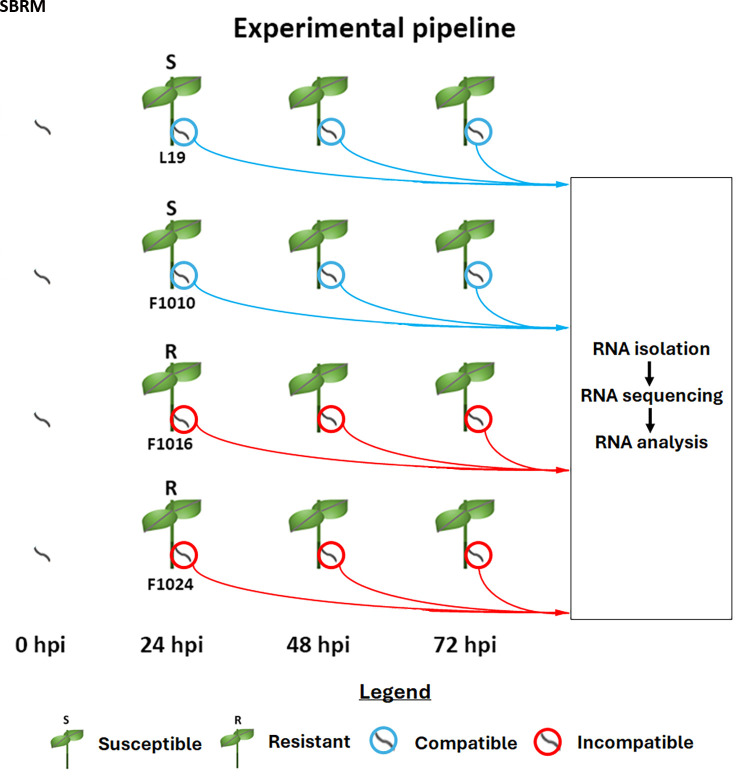 Figure 1
Peer Reviews
No public reviews on file for this paper yet. If you reviewed it on a platform where reviews are public (OpenReview, ICLR, NeurIPS, ICML), you can paste yours below so the community can read it here.
Videos
No videos yet. Explain this paper in a talk, walkthrough, or lecture? Add one.
Taxonomy
TopicsSugarcane Cultivation and Processing · Plant Disease Resistance and Genetics · Entomopathogenic Microorganisms in Pest Control
Background:
The fully referenced version of this work is available [1]. Beta vulgaris ssp, vulgaris (B. vulgaris), sugar beet (SB), Order Carophyllales, Family Amaranthaceae, is one of two plants, globally, from which sugar is widely produced with a worldwide value of 1 B U.S., harvested from 1.14 million acres of land [2]. Upon U.S. introduction, SB was encountered by the native insect pathogen T. myopaeformis (SBRM) on which it can complete its life cycle and while it can complete its life cycle on other non-native plant species, the native SBRM host has not yet been identified [3, 4]. SBRM is the most devastating SB pathogen in North America where it can decrease yield by up to 100%, locally and of further concern is its increasing geographic spread [1, 5, 6, 7, 8, 9, 10, 11, 12, 13, 14, 15, 16, 17-18]. Transcriptomic knowledge has facilitated the pathogenic nature of other insects [1]. In the presented analysis, larval SBRMs experiencing F1010 and L19 susceptible or F1016 and F1024 resistant SB responses are RNA sequenced, sampled at time = 0, 24, 48 and 72 hpi, for scientific study of its pathogenicity and stakeholder benefit [19].
Materials and Methods:
Plant infection:
SBRM larvae were collected in mid-June 2022 from a field location close to St. Thomas, ND. After cleaning all larvae using 1% Clorox Germicidal Bleach, the 1- and 2-instar larvae were used for root infestation of B. vulgaris F1016 (PI 608437) and F1024 (PI 658654) that are resistant and F1010 (PI 535818) and L19 (PI 590690) that are susceptible genotypes [1, 20, 21-22]. The infestation experiment included three replications for each genotype with three plants infested in each replication. For preparing roots for infestation, seeds were germinated using 1% hydrogen peroxide solution [23] and germinated seeds were planted in a greenhouse room under 16:8 (day: night) light regime with temperature range between 20-30°C. Roots were collected 4 weeks after planting. After being cleaned to remove the soil, three roots of each genotype as one replication were placed on a 15 cm x 10 cm, 0.8% agar plate [24]. Subsequently, fifteen 1- or 2-instar larvae were added to each plate with 5 larvae per root. All plates were then kept in dark at 28°C. Root and insect samples were collected at 0 hpi (right before infestation) and subsequently at 24, 48 and 72 hpi. All samples were immediately flash frozen into liquid nitrogen and then stored at -80°C before RNA isolation and subsequent RNA-seq data generation.
RNA isolation:
Flash-frozen SBRM larval samples were sent to Omega Bioservices Inc., 400 Pinnacle Way, Ste 425, Norcross, GA 30071 for RNA isolation, quality assurance and RNA sequencing according to Alsherhi et al. [25]. In brief, the RNA isolation implemented a well-established protocol for RNA isolation and library preparation to achieve high-quality sequencing data. The Omega Biotek E.Z.N.A. ® Total RNA Kit (Omega Bio-tek) was used to extract total RNA from the samples, following the manufacturer's protocol. The concentration and integrity of the RNA were assessed using a Nanodrop 2000c spectrophotometer (Thermo Scientific Inc.) and an Agilent 4150 TapeStation instrument (Agilent Technologies), respectively.
RNA library preparation:
For library generation, up to 1 mg of total RNA was used according to the manufacturer's instructions for the NEBNext® Poly(A) mRNA Magnetic Isolation Module E7490L and NEBNext® Ultra^TM^ II Directional RNA Library Prep Kit for Illumina® E7760L (New England Biolabs Inc.). Quality and quantity evaluation of the libraries were conducted using the High Sensitivity D1000 Screen Tape on an Agilent 4150 TapeStation instrument. Subsequently, the libraries underwent normalization, pooling and were sequenced with Illumina Novaseq X Plus instrument (Illumina, Inc.) following the manufacturer's recommendations.
RNA-seq data processing:
For the study presented here, the RNA-seq data analysis process used Geneious prime (https://www.geneious.com/), version 2024.0 with the steps of that pipeline detailed at https://www.geneious.com/series/expression-analysis. The analysis process presented here involved sequence trimming, alignment and counting. Trimming was used to increase the read's mapping rate by eliminating adapter sequences and removing poor-quality nucleotides. The alignment was performed to the SBRM TmSBRM_v1.0 draft genome. After mapping the reads, they were assigned to a gene or transcript in a process known as counting or quantification. This step was followed by a normalization procedure employed to remove possible sequencing bias.
Results:
RNA-seq data processing:
The SBRM-susceptible L19 and F1010 and SBRM-resistant F1016 and F1024 B. vulgaris genotypes have been obtained. The genotypes were used in experiments that isolated SBRM larval RNA. The SBRM larval RNA was used for RNA seq experiments. The experimental pipeline is presented (Figure 1). The RNA seq sample statistics are presented (Table 1).
The SBRM-susceptible L19 and F1010 and SBRM-resistant F1016 and F1024 B. vulgaris genotypes are shown. The respective compatible and incompatible SBRM are encircled by a blue or red ring. At t = 0 hpi, the SBRM were collected before any introduction to B. vulgaris. Thus, the SBRM are shown to not be closely associated with B. vulgaris. SBRM are subsequently shown to be in direct contact with B. vulgaris at the t = 24, 48 and 72 hpi time points. The samples were collected for transcriptomic study that involved RNA isolation, sequencing and analysis. The experimental pipeline is presented (Figure 1). The RNA-seq analysis has resulted in acquiring data for each of the 39 samples (Table 1). The reads have then been mapped to the recently sequenced SBRM TmSBRM_v1.0 draft genome. This analysis has allowed for the generation of a general assessment of gene activity on the SBRM TmSBRM_v1.0 draft genome, aided by its annotation.
Discussion:
The RNA-seq analysis has identified a range in total processed reads per sample of 37,947,020 to 46,319,624 in total assembled (used) reads per sample of 25,883,749 (66.16%) to 29,385,047 (70.67%) and a range in total unassembled reads per sample of 10,538,861 (26.64%) to 12,303,540 (29.07%). The range in average used reads per time point was 23,246 (L19 resistant, 24 hpi) to 24,525 (F1010 resistant, 72 hpi), 5.22% therefore, the sample read quantity is similar between the different samples. From these data, further processing is possible, with the advancement of science being that the research allows for an idea of differential expression of genes during the susceptible and resistant reactions, the identification of genes, gene pathways and biological processes which may or may not fall under gene pathways to be identified, scientists to devise management, control and biological assays for SBRM much in the same way that has been done for other devastating agricultural pathogens [26, 27- 28]. A preprint outlining the framework of this manuscript and more details relating to the introduction are presented [1].
Conclusion:
Transcriptomes have been generated for larval SBRMs experiencing F1010 and L19 susceptible or F1016 and F1024 resistant SB responses, sampled at time = 0 hours post infection [hpi], 24, 48 and 72 hpi. RNA sequences are identified that map or do not map to the reference genome. The sequences are a resource to understand SBRM biology during susceptible and resistant reactions for stakeholder benefit.
Ethics statement:
The authors have read and follow the ethical requirements for publication in Bioinformation and confirming that the current work does not involve human subjects, animal experiments, or any data collected from social media platforms.
Author credit statement:
[1] SA has been involved in Methodology; Software; Validation; Formal analysis; Investigation; Resources; Data Curation; Writing - Original Draft.
[2] NA has been involved in Methodology; Software; Validation; Formal analysis; Investigation; Resources; Data Curation; Writing - Original Draft.
[3] MT has been involved in Investigation; Resources.
[4] CC has been involved in Investigation; Resources, Supervision; Project administration; Funding acquisition.
[5] VK has been involved in Conceptualization; Methodology; Resources; Visualization; Supervision; Project administration; Funding acquisition; Writing - Original Draft.
Declaration of competing interests:
The authors declare that they have no known competing financial interests or personal relationships that could have appeared to influence the work reported in this paper.
The reference list from the paper itself. Each links out to its DOI / PubMed record.
- 1Acharya Sbio Rxiv. 2024110.1101/2024.11.19.624160 · doi ↗
- 2Fugate K.K Plant Genetic Resources: Characterization and Utilization. 20191751410.1017/S 1479262119000388 · doi ↗
- 3Mahrt C.G Blickenstaff C.C Ann. Entomol. Soc. Am. 19797262710.1093/aesa/72.5.627 · doi ↗
- 4Harveson R.M Compendium of beet diseases and pests. 2009 USAAPS PRESS 14010.1094/9780890546598 · doi ↗
- 5Cooke D.A Scott R.K The Sugar Beet Crop, Chapman & Hall. 1993 London Springer Dordrecht 70410.1007/978-94-009-0373-9 · doi ↗
- 6https://www.wyoextension.org/agpubs/pubs/B 1013.16.pdf
- 7Harveson R.M Sugarbeet root maggot. In: Compendium of Beet Diseases and Pests, 2nd edn. 2009 England Cambridge University Press 9710.1017/S 0021859609990311 · doi ↗
- 8Hastings J American Crystal Sugar Company Ag Notes Issue. 20226221