Development of a reverse genetics system for Getah virus and characterization of rescued strains
Rongxuan Cai, Qi He, Qing Wang, Lan Tian, Zhe Chen, XiaoFeng Wu, Jiumeng Sun, Ying Shao, Xiangjun Song, Kezong Qi, Jian Tu, Zhenyu Wang

TL;DR
Researchers developed a reverse genetics system for Getah virus, enabling the creation of infectious clones and reporter viruses for studying its biology and potential treatments.
Contribution
A DNA-launched infectious clone and EGFP reporter virus for Getah virus were developed for the first time.
Findings
The infectious clone pBR322-GETV-HuN1 was successfully constructed and rescued.
Rescued viruses showed biological activity similar to the parental virus in both in vivo and in vitro experiments.
The system supports future studies on GETV's molecular mechanisms and vaccine development.
Abstract
Getah virus (GETV), a neglected and re-emerging mosquito-borne alphavirus, has become more serious and poses a potential threat to animal safety and public health. Given the lack of antivirals and vaccines against GETV, further development of tools, including reverse genetics techniques, is crucial for combating this pathogen. Herein, we describe the design and construction of a DNA-launched infectious clone for GETV. The full-length genome of the GETV HuN1 strain, flanked by the cytomegalovirus immediate-early (CMV) promoter sequence at the 5' end and the hepatitis delta virus ribozyme along with the bovine growth hormone termination and polyadenylation signal sequences at the 3' end, was packaged in a bacterial artificial chromosome vector to establish the GETV infectious clone pBR322-GETV-HuN1. In parallel, recombinant reporter viruses carrying the reporter gene EGFP between the E1…
Genes, proteins, chemicals, diseases, species, mutations and cell lines named across the full text — each resolved to its canonical identifier and authoritative record.
Click any figure to enlarge with its caption.
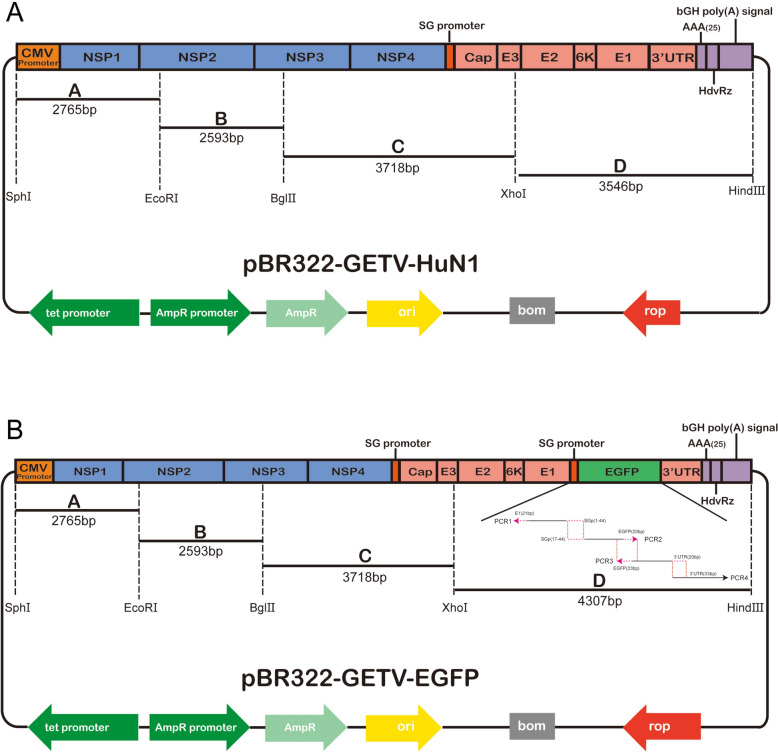 Figure 1
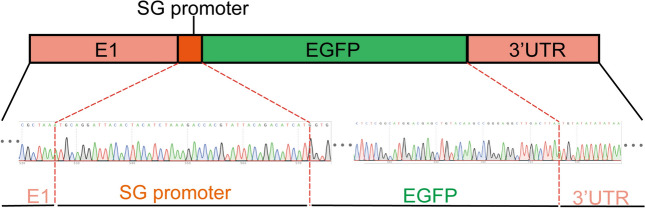 Figure 2
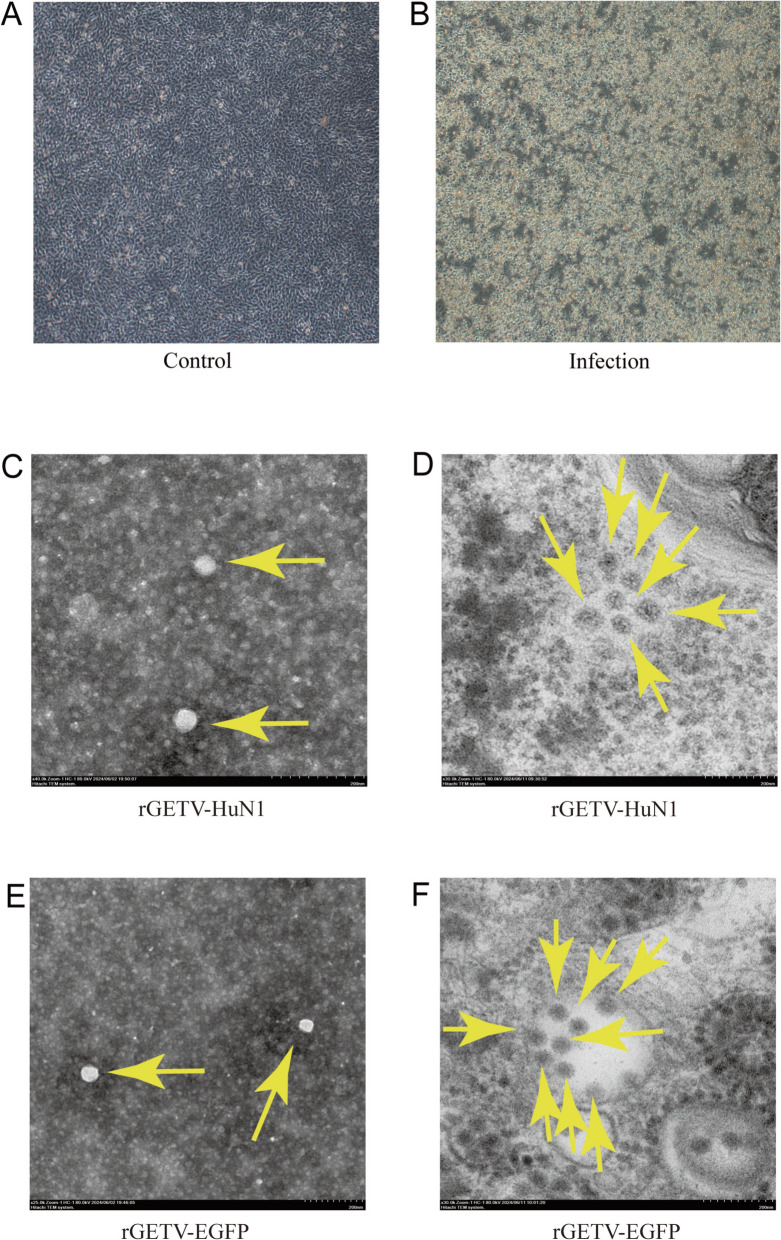 Figure 3
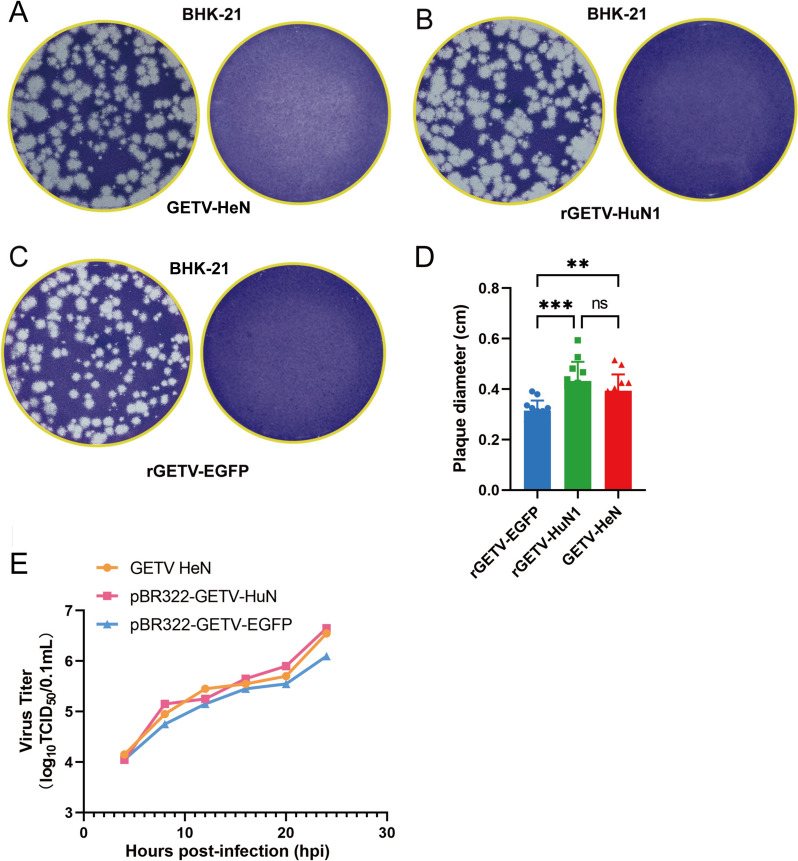 Figure 4
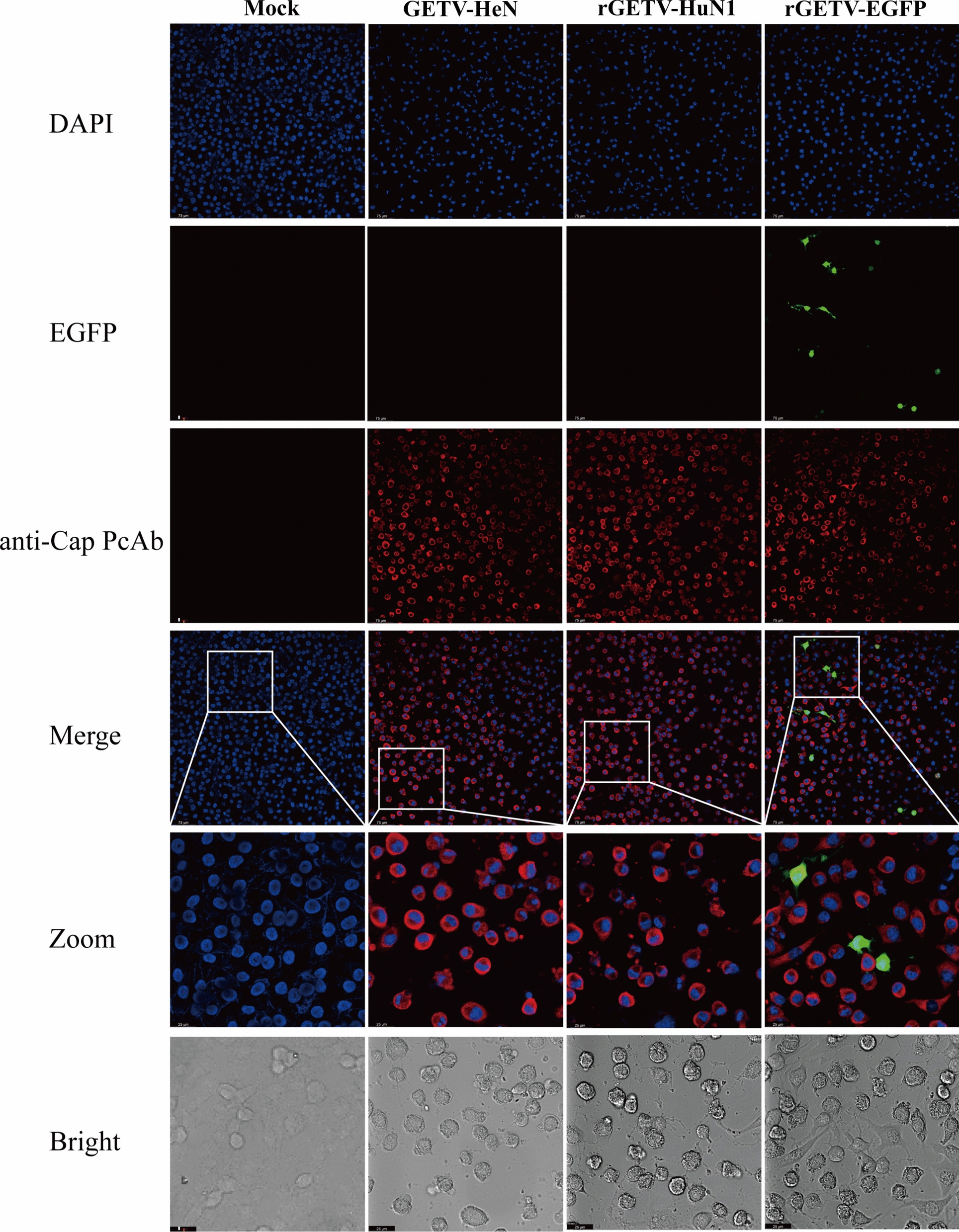 Figure 5
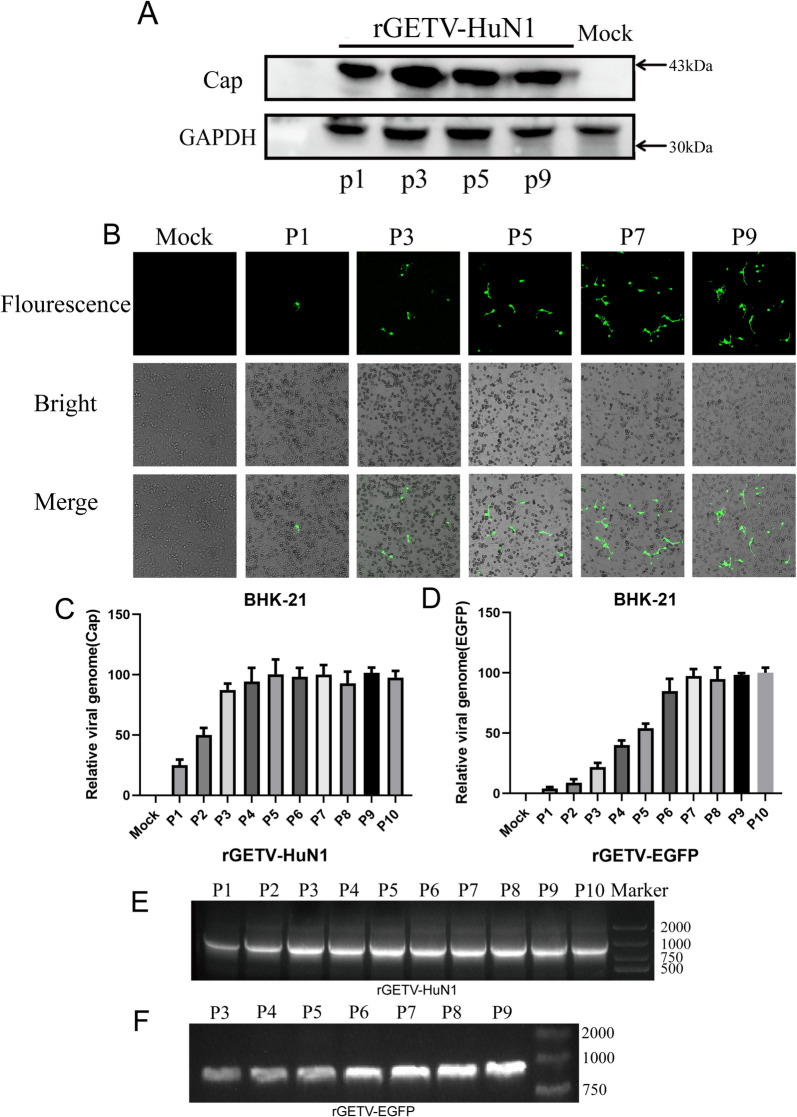 Figure 6
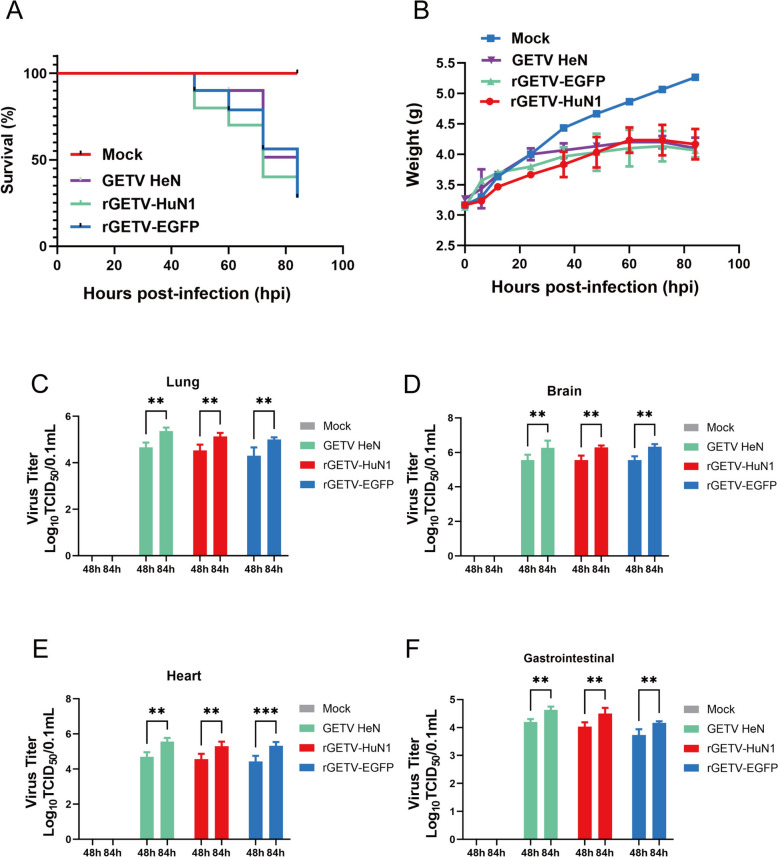 Figure 7
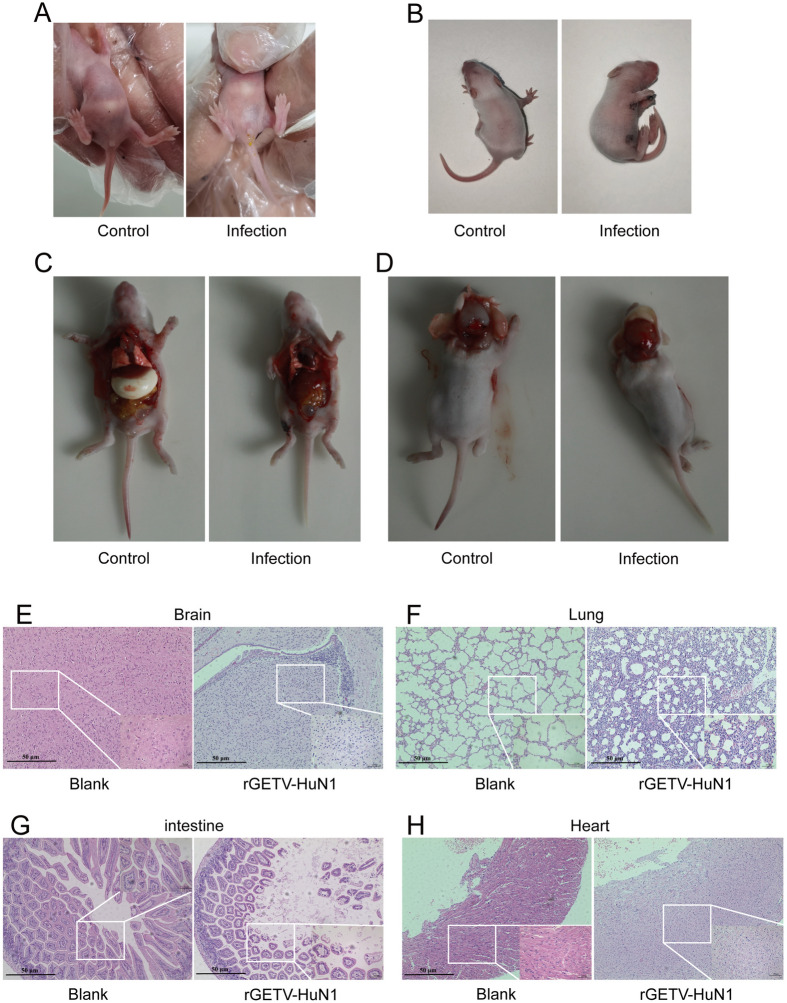 Figure 8
Peer Reviews
No public reviews on file for this paper yet. If you reviewed it on a platform where reviews are public (OpenReview, ICLR, NeurIPS, ICML), you can paste yours below so the community can read it here.
Videos
No videos yet. Explain this paper in a talk, walkthrough, or lecture? Add one.
Taxonomy
TopicsMosquito-borne diseases and control · Plant Virus Research Studies · Vector-Borne Animal Diseases