Comparison of neoadjuvant and adjuvant chemotherapy for operable triple-negative breast cancer before the era of immune checkpoint inhibitors: A retrospective study from the Japanese National Clinical Database-Breast Cancer Registry
Tomoe Taji, Hiraku Kumamaru, Yuki Kataoka, Kotaro Iijima, Hirofumi Suwa, Hiroshi Ishiguro, Naruto Taira, Takanori Ishida, Shigehira Saji

TL;DR
A study in Japan found that neoadjuvant chemotherapy for triple-negative breast cancer was linked to worse survival outcomes compared to adjuvant chemotherapy, after adjusting for key factors.
Contribution
This study provides a large-scale, retrospective comparison of neoadjuvant and adjuvant chemotherapy for TNBC in Japan with exact matching for covariates.
Findings
Neoadjuvant chemotherapy was associated with worse overall survival (HR 1.45) and recurrence-free survival (HR 1.33) compared to adjuvant chemotherapy.
The negative effect of NAC was more pronounced in patients under 65, with stage II-IIIB, and invasive ductal carcinoma.
Results may inform treatment decisions for patients not eligible for immune checkpoint inhibitors.
Abstract
While neoadjuvant chemotherapy (NAC) is recommended for stage II-III triple-negative breast cancer (TNBC), its equivalence to adjuvant chemotherapy (AdjC) has been questioned based on a retrospective study using the National Cancer Database in the United States, which lacked adjustment for important covariates. Given the unlikelihood of new randomized trials being conducted, well-designed, large-scale, retrospective studies are needed. We retrospectively analyzed operable TNBC patients from the Japanese National Clinical Database- Breast Cancer Registry (2012–2016). Inclusion criteria were clinical stage I-IIIB, estrogen receptor (ER) < 10 %, progesterone receptor (PgR) < 10 %, and HER2-negative. We excluded patients with carcinoma in situ, cT4a/T4c/T4d, cN3, cM1, bilateral breast cancer, male, non-epithelial tumor, no chemotherapy, no surgery and no follow-up. Primary and secondary…
Genes, proteins, chemicals, diseases, species, mutations and cell lines named across the full text — each resolved to its canonical identifier and authoritative record.
Click any figure to enlarge with its caption.
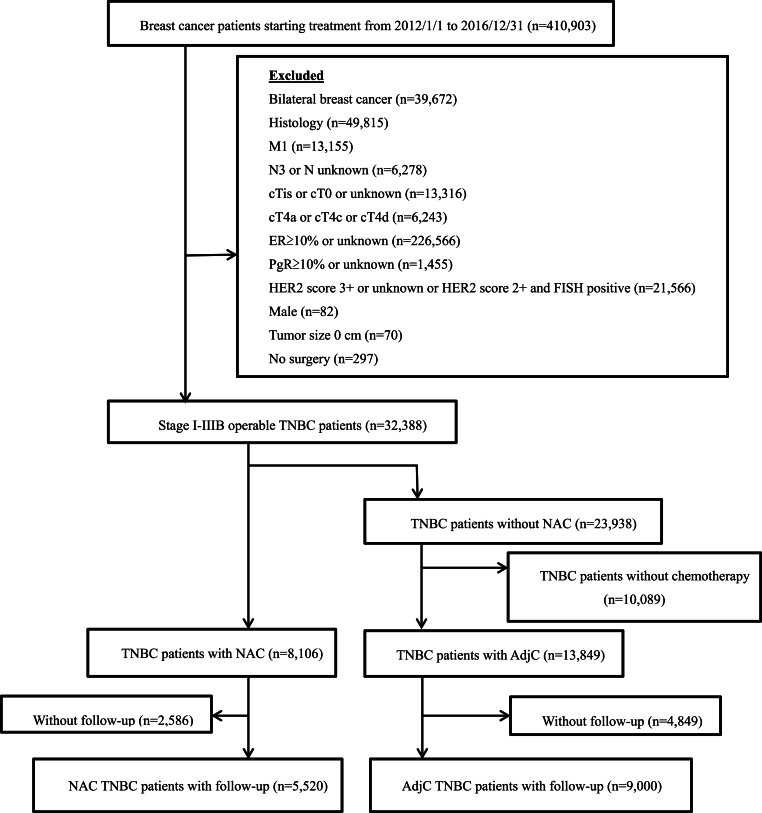 Figure 1
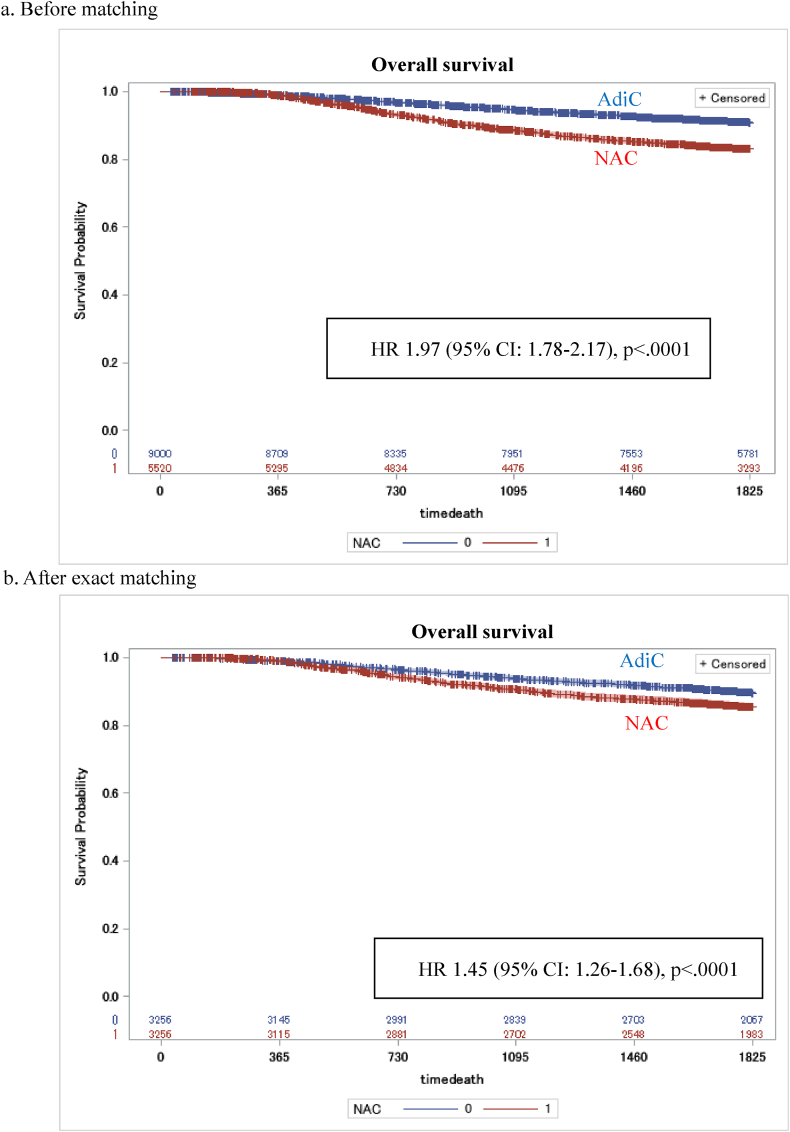 Figure 2
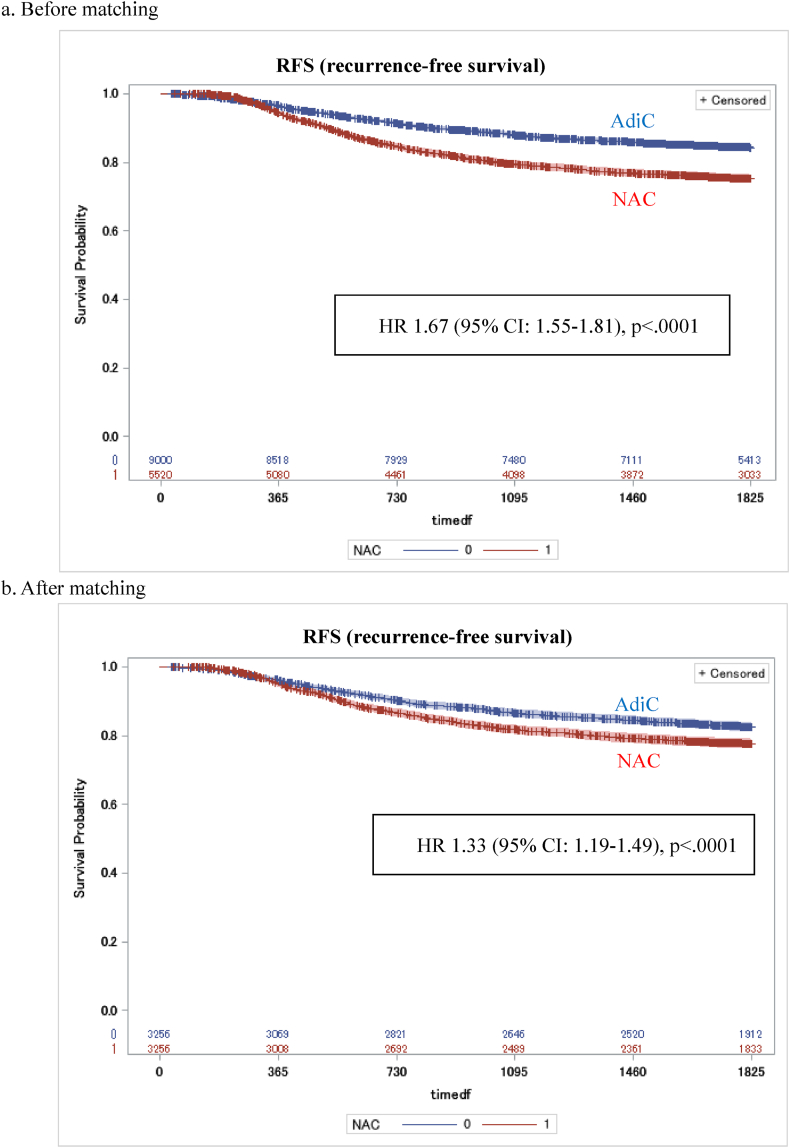 Figure 3
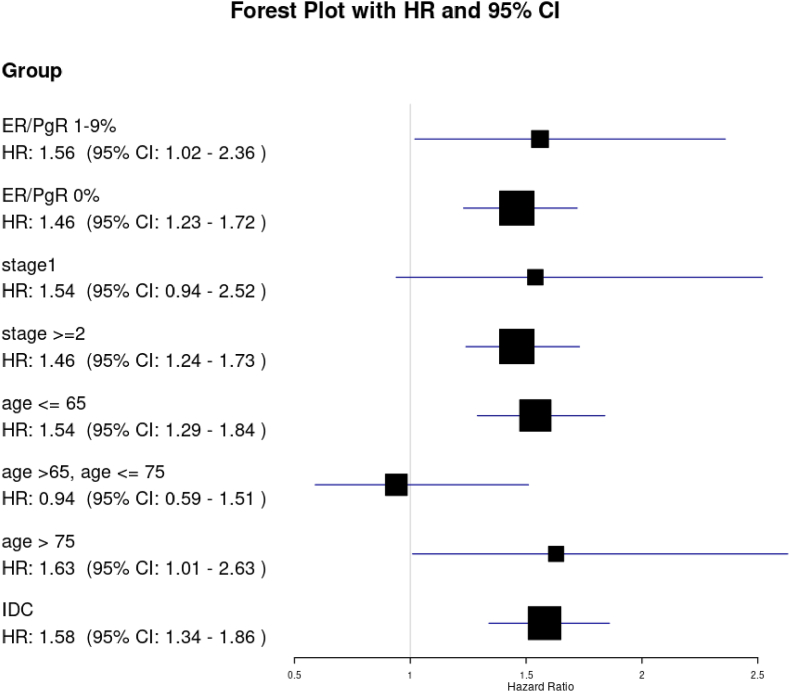 Figure 4
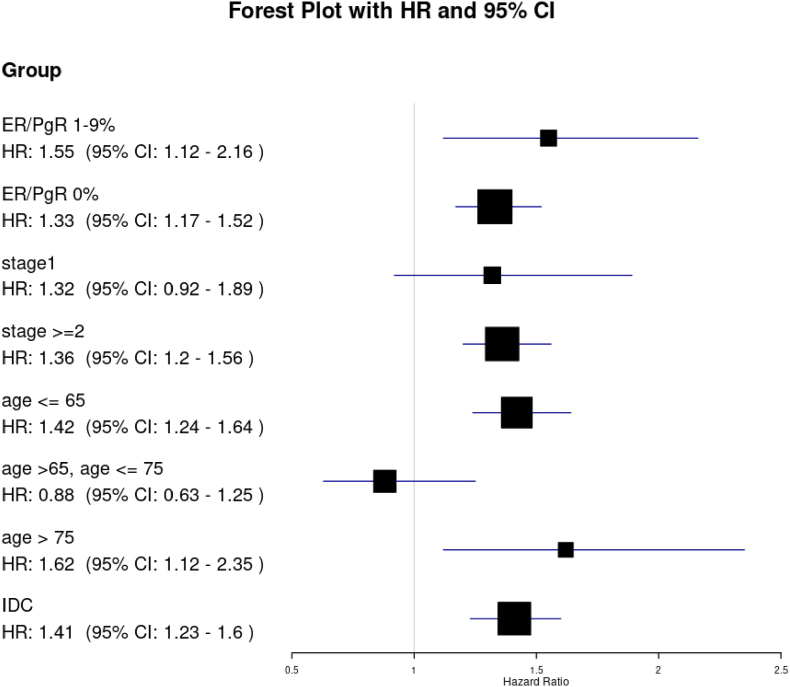 Figure 5
Peer Reviews
No public reviews on file for this paper yet. If you reviewed it on a platform where reviews are public (OpenReview, ICLR, NeurIPS, ICML), you can paste yours below so the community can read it here.
Videos
No videos yet. Explain this paper in a talk, walkthrough, or lecture? Add one.
Taxonomy
TopicsBreast Cancer Treatment Studies · Advanced Breast Cancer Therapies · HER2/EGFR in Cancer Research