Ambulance Commanders’ Reluctance to Enter Road Tunnels in Simulated Incidents and the Effects of a Tunnel-Specific e-Learning Course on Decision-Making: Web-Based Randomized Controlled Trial
Johan Hylander, Lina Gyllencreutz, Michael Haney, Anton Westman

TL;DR
A study found that an e-learning course for ambulance commanders did not improve their decision-making in simulated road tunnel emergencies, possibly due to lack of actionable information and tunnel-specific plans.
Contribution
This study introduces a novel method for assessing commander decision-making in tunnel incidents and highlights the limitations of e-learning in this context.
Findings
None of the participants correctly answered the question on entering the tunnel system in the 1-month assessment.
The e-learning course was not associated with more correct answers or faster decision-making compared to the control group.
Interviews revealed issues related to lack of information, limited risk knowledge, and the need for mitigation tools like maps.
Abstract
The optimal response to a major incident in a road tunnel involves efficient decision-making among the responding emergency services (fire and rescue services, police, and ambulances). The infrequent occurrence of road tunnel incidents may entail unfamiliarity with the tunnel environment and lead to uncertain and inefficient decision-making among emergency services commanders. Ambulance commanders have requested tunnel-specific learning materials to improve their preparedness. We aimed to assess decision-making among ambulance commanders in simulated road tunnel incidents after they had participated in a tunnel-specific e-learning course designed to support timely and correct decisions in this context. We conducted a web-based intervention study involving 20 participants from emergency medical services in Sweden who were randomly allocated to a test or control group. The control group…
Genes, proteins, chemicals, diseases, species, mutations and cell lines named across the full text — each resolved to its canonical identifier and authoritative record.
Click any figure to enlarge with its caption.
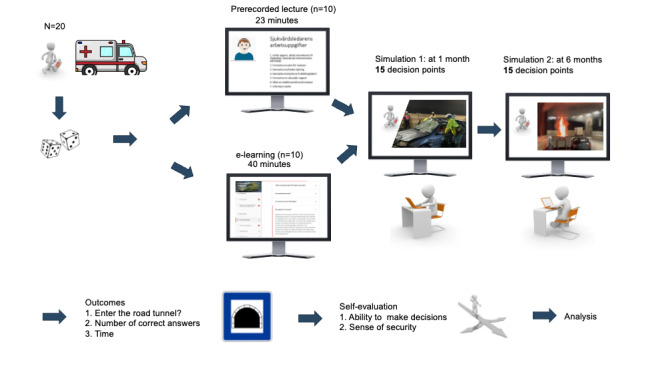 Figure 1
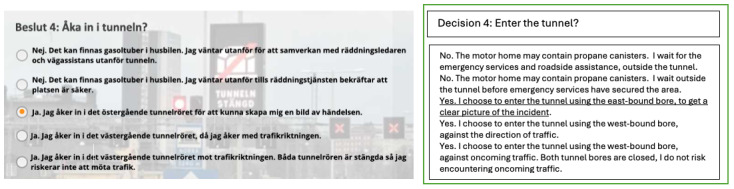 Figure 2
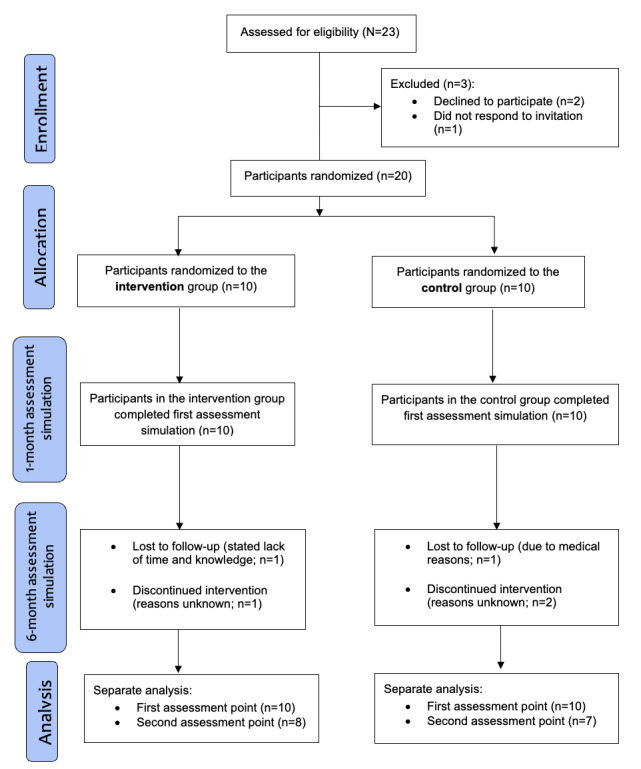 Figure 3
Peer Reviews
No public reviews on file for this paper yet. If you reviewed it on a platform where reviews are public (OpenReview, ICLR, NeurIPS, ICML), you can paste yours below so the community can read it here.
Videos
No videos yet. Explain this paper in a talk, walkthrough, or lecture? Add one.
Taxonomy
TopicsTrauma and Emergency Care Studies · Emergency and Acute Care Studies · Simulation-Based Education in Healthcare