Genetic architecture of cherry leaf spot (Blumeriella jaapii) resistance in sour cherry (Prunus cerasus L.) uncovered by QTL analyses in a biparental population genotyped with the 6 + 9 K SNP array
Ofere Francis Emeriewen, Thomas Wolfgang Wöhner, Vincent Braun, Susan Schröpfer, Mirko Schuster, Andreas Peil, Henryk Flachowsky

TL;DR
This study identifies genetic regions in sour cherry linked to resistance and susceptibility to cherry leaf spot, using a new SNP array and a cross between two cultivars.
Contribution
The study uncovers two stable QTLs for CLS resistance and susceptibility in sour cherry, offering a new two-gene model for resistance.
Findings
Two QTLs, CLSR_1f and CLSS_1f, explained 40.9% and 21.5% of CLS resistance and susceptibility variation.
The CLSR_G4 QTL from P. canescens was not found in sour cherry, suggesting a different resistance mechanism.
A two-gene model is proposed to explain CLS resistance, including a susceptibility QTL.
Abstract
Sour cherry (Prunus cerasus L.) is an economically significant species in the Rosaceae family. Hitherto, there had been limited genetic and genomic resources to elucidate important horticultural traits in this species mainly because of the complex polyploid nature of its genome, a hybrid between Prunus avium and Prunus fruticosa. An important trait that has not been well studied in sour cherry is resistance to cherry leaf spot (CLS), caused by the fungus Blumeriella jaapii. This work took advantage of the RosBREED 6 + 9 K SNP array to study the genetic basis of CLS resistance and inheritance in sour cherry. We established an F1 segregating population by crossing two cultivars, ‘Schattenmorelle’ and ‘Pc 2’ and genotyped both parents and the progeny with the cherry 6 + 9 K SNP array and SSR markers. We evaluated both parents and progeny for resistance and susceptibility to CLS under field…
Genes, proteins, chemicals, diseases, species, mutations and cell lines named across the full text — each resolved to its canonical identifier and authoritative record.
Click any figure to enlarge with its caption.
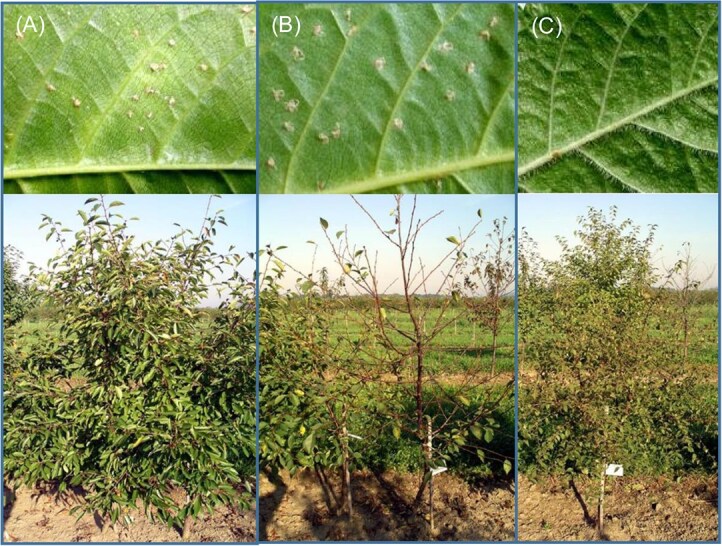 Figure 1
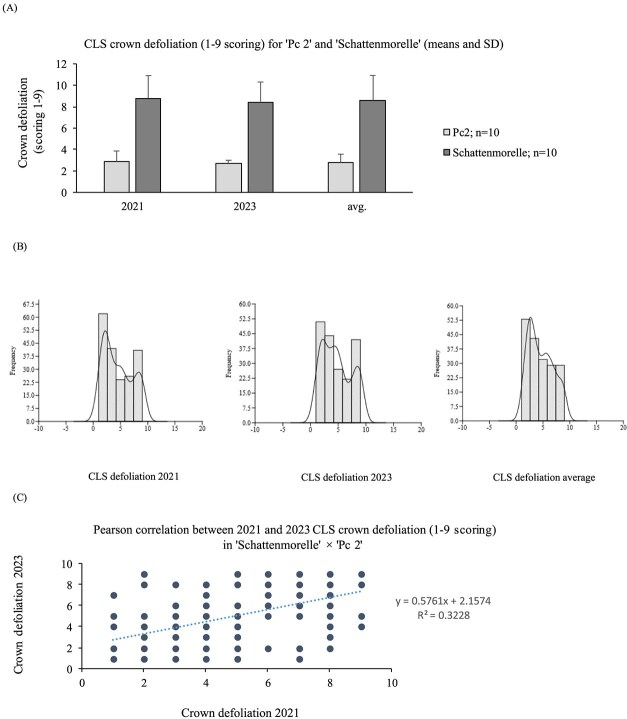 Figure 2
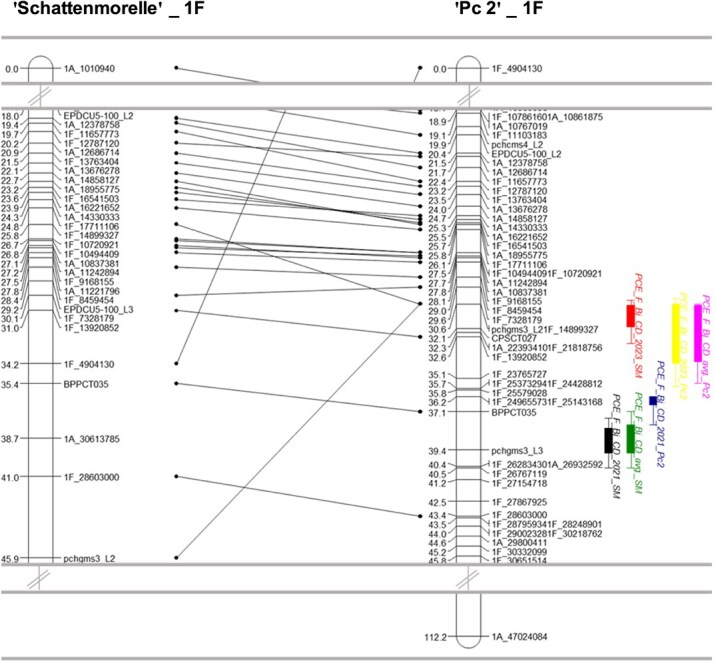 Figure 3
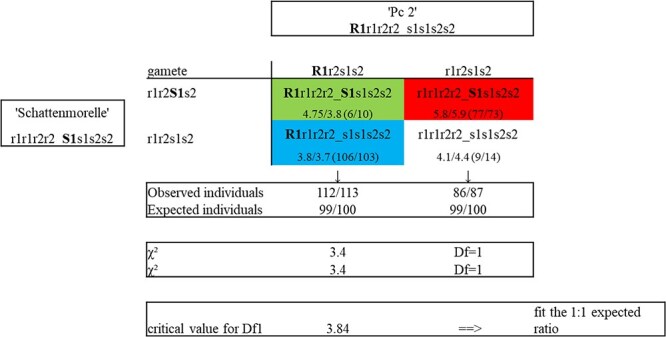 Figure 4
Peer Reviews
No public reviews on file for this paper yet. If you reviewed it on a platform where reviews are public (OpenReview, ICLR, NeurIPS, ICML), you can paste yours below so the community can read it here.
Videos
No videos yet. Explain this paper in a talk, walkthrough, or lecture? Add one.
Taxonomy
TopicsPlant Pathogens and Fungal Diseases · Plant Reproductive Biology · Plant pathogens and resistance mechanisms