Haplotype-resolved genome of Agastache rugosa (Huo Xiang) provides insight into monoterpenoid biosynthesis and gene cluster evolution
Chanchan Liu, DiShuai Li, Jingjie Dang, Juan Shu, Samuel J Smit, QiNan Wu, Benjamin R Lichman

TL;DR
This study provides a detailed genome of Agastache rugosa, revealing how it produces specific monoterpenoids and how these gene clusters evolved.
Contribution
The paper presents a haplotype-resolved genome of A. rugosa and identifies a shared origin of pulegone gene clusters in Lamiaceae.
Findings
Pulegone biosynthesis genes are organized in a gene cluster in A. rugosa.
The gene cluster shares a common origin with that in Schizonepeta tenuifolia.
Hi-C analysis suggests interactions between the gene cluster and pulegone reductases.
Abstract
Monoterpenoids are small volatile molecules produced by many plants that have applications in consumer products and healthcare. Plants from the mint family (Lamiaceae) are prodigious producers of monoterpenoids, including a chemotype of Agastache rugosa (Huo Xiang), which produces pulegone and isomenthone. We sequenced, assembled and annotated a haplotype-resolved chromosome-scale genome assembly of A. rugosa with a monoterpene chemotype. This genome assembly revealed that pulegone biosynthesis genes are in a biosynthetic gene cluster, which shares a common origin with the pulegone gene cluster in Schizonepeta tenuifolia. Using phylogenetics and synteny analysis, we describe how the clusters in these two species diverged through inversions and duplications. Using Hi-C analysis, we identified tentative evidence of contact between the pulegone gene cluster and an array of pulegone…
Genes, proteins, chemicals, diseases, species, mutations and cell lines named across the full text — each resolved to its canonical identifier and authoritative record.
Click any figure to enlarge with its caption.
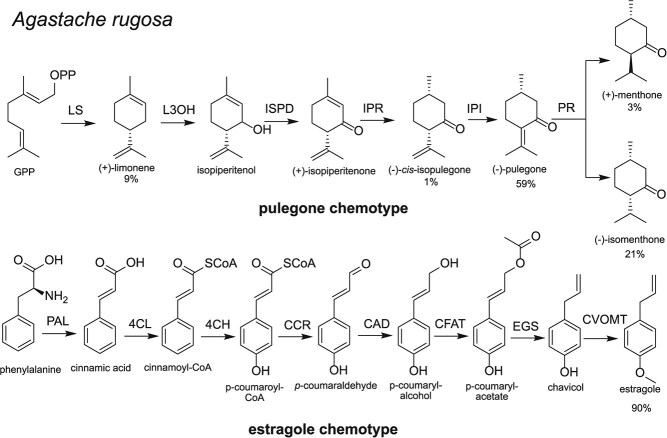 Figure 1
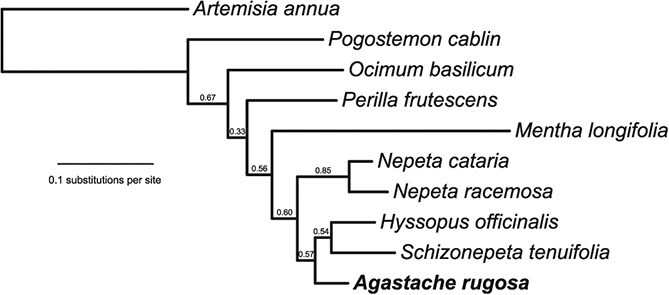 Figure 2
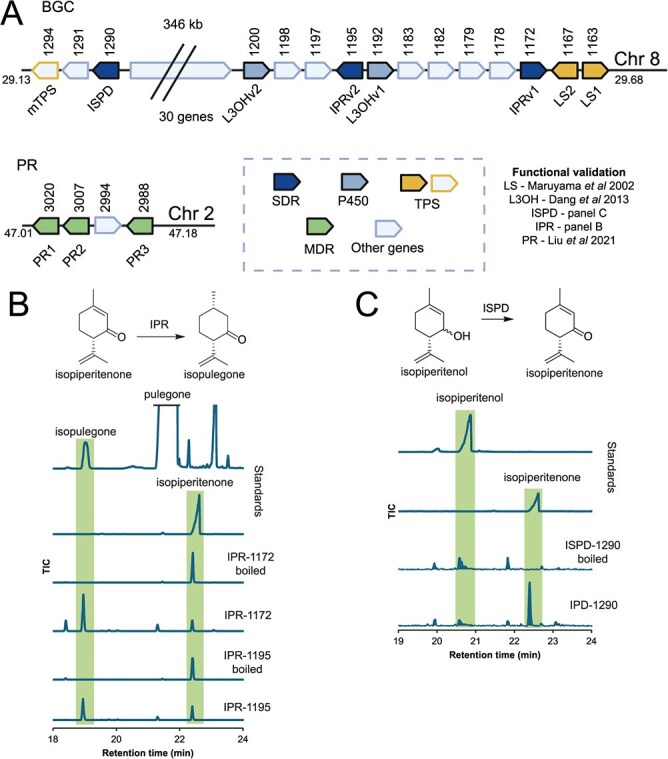 Figure 3
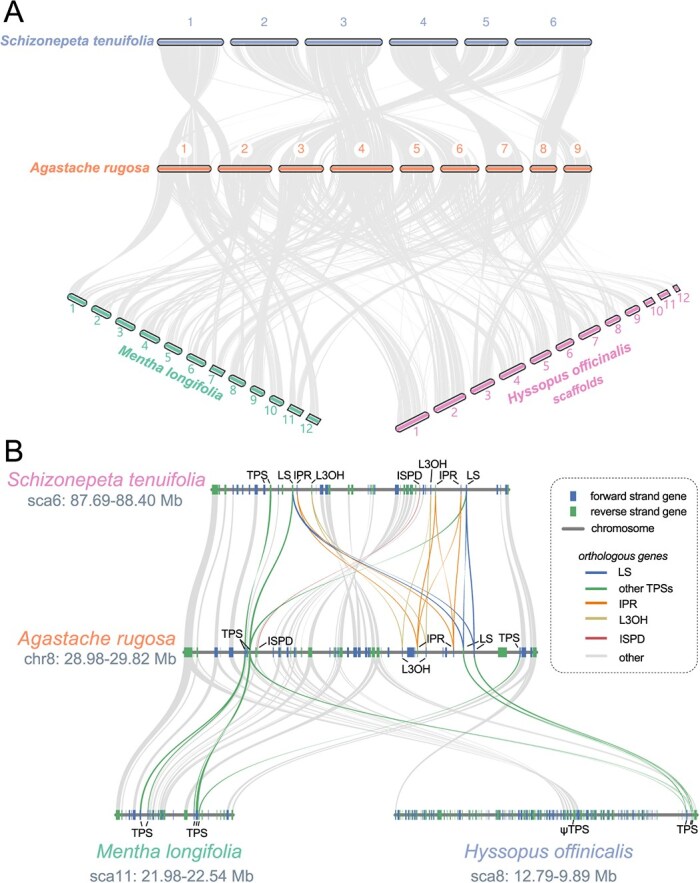 Figure 4
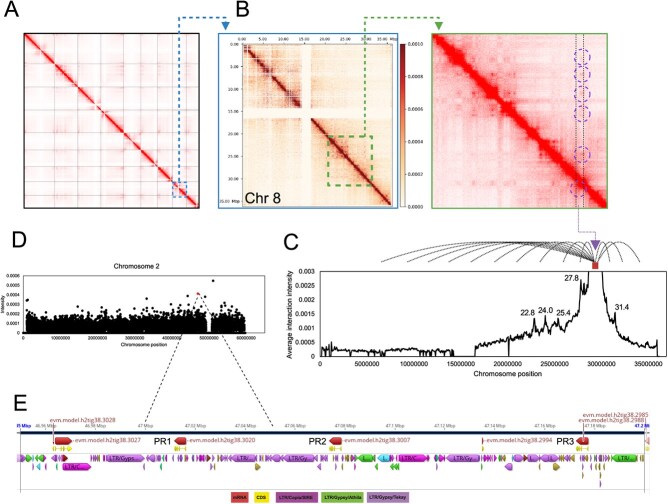 Figure 5
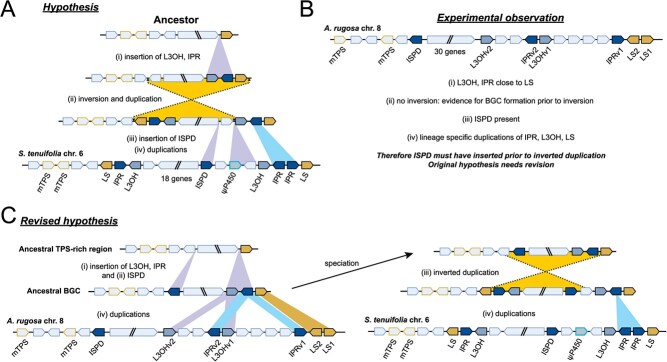 Figure 6
Peer Reviews
No public reviews on file for this paper yet. If you reviewed it on a platform where reviews are public (OpenReview, ICLR, NeurIPS, ICML), you can paste yours below so the community can read it here.
Videos
No videos yet. Explain this paper in a talk, walkthrough, or lecture? Add one.
Taxonomy
TopicsPlant biochemistry and biosynthesis · Natural product bioactivities and synthesis · Genomics and Phylogenetic Studies