Serum sphingomyelin levels define oxyhemoglobin desaturation-related metabolic threshold in symptomatic obstructive sleep apnea
Ott Kiens, Egon Taalberg, Viktoria Ivanova, Ketlin Veeväli, Triin Laurits, Ragne Tamm, Aigar Ottas, Kalle Kilk, Ursel Soomets, Alan Altraja

TL;DR
This study finds that serum sphingomyelin levels are most affected when sleep apnea patients experience significant oxygen drops, identifying a key threshold for hypoxia-related metabolic changes.
Contribution
The study identifies a novel hypoxic metabolic threshold (HMT) at Tc90% of 1.8 in obstructive sleep apnea patients, with sphingomyelins as key contributors.
Findings
A hypoxic metabolic threshold (HMT) of Tc90% = 1.8 was identified as the most significant breakpoint for metabolic changes in OSA patients.
Sphingomyelins (SM) showed the highest effect size (Cohen’s f = 0.322) at the HMT, indicating their strong association with hypoxia-related metabolic shifts.
Patients with Tc90% ≥ HMT had significantly higher concentrations of 2 phosphatidylcholines, 1 acylcarnitine, and 7 sphingomyelins compared to those with Tc90% < HMT.
Abstract
Hypoxia is a contributing factor for the morbidity and mortality in patients with obstructive sleep apnea (OSA). We aimed at identifying the percentage of sleep time with oxyhemoglobin desaturation below 90% (Tc90%) breakpoint from which the most significant changes occur in systemic metabolome of patients with OSA. In a prospective observational study on patients with polysomnography–confirmed symptomatic OSA, profiles of 186 metabolites including amino acids, biogenic amines, acylcarnitines (AC), lysophosphatidylcholines, phosphatidylcholines (PC) and sphingomyelins (SM) were analyzed with liquid chromatography-mass-spectrometry in peripheral blood, obtained at 3 time points that covered patients’ night sleep. Comparisons of rank-transformed data with general linear model for repeated measures after dichotomizing the study group at different Tc90% levels were applied to define the…
Genes, proteins, chemicals, diseases, species, mutations and cell lines named across the full text — each resolved to its canonical identifier and authoritative record.
Click any figure to enlarge with its caption.
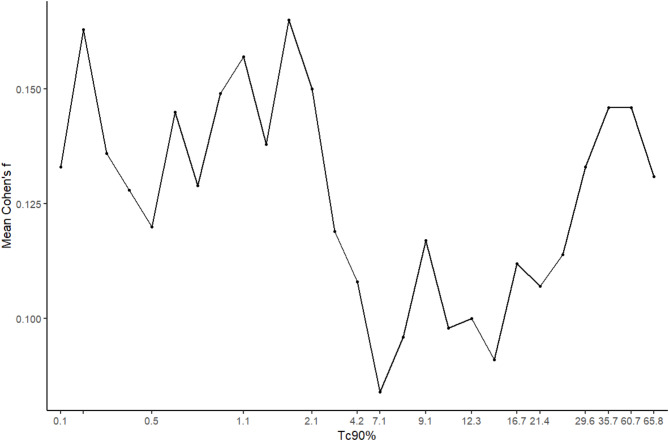 Figure 1
Peer Reviews
No public reviews on file for this paper yet. If you reviewed it on a platform where reviews are public (OpenReview, ICLR, NeurIPS, ICML), you can paste yours below so the community can read it here.
Videos
No videos yet. Explain this paper in a talk, walkthrough, or lecture? Add one.
Taxonomy
TopicsObstructive Sleep Apnea Research · Chronic Obstructive Pulmonary Disease (COPD) Research · Neuroscience of respiration and sleep