A red fluorescent lifeact marker to study actin morphology in podocytes
Eva Wiesner, Julia Binz-Lotter, Simon E. Tröder, David Unnersjö-Jess, Nelli Rutkowski, Branko Zevnik, Bernhard Schermer, Thomas Benzing, Roland Wedlich-Söldner, Matthias J. Hackl

TL;DR
A new red fluorescent marker allows detailed study of actin structures in kidney podocytes using advanced microscopy techniques.
Contribution
A novel mouse model with conditional red fluorescent Lifeact labeling of actin in podocytes is introduced.
Findings
The Lifeact.mScarlet-I fusion protein enables high-resolution visualization of actin in podocyte foot processes.
The transgenic mice show no kidney-related phenotype and allow intravital imaging of actin dynamics.
The model provides a non-invasive alternative to electron microscopy for studying podocyte actin morphology.
Abstract
F-actin is a major component of the cellular cytoskeleton, responsible for maintaining cell shape, enabling movement and facilitating intracellular transport. In the kidney, glomerular podocytes are highly dependent on their actin cytoskeleton shaping their unique foot processes. Hereditary mutations in actin-binding proteins cause focal segmental glomerulosclerosis, while other organs remain largely unaffected. So far, actin visualization in podocytes has been limited to electron microscopy or indirect immunofluorescent labeling of actin-binding proteins. However, the short F-actin-binding peptide Lifeact enables researchers to study actin dynamics in vitro and in vivo with minimal interference with actin metabolism. Here we introduce a new mouse model with conditional expression of a Lifeact.mScarlet-I fusion protein providing red labeling of actin. Cre recombinase-mediated activity…
Genes, proteins, chemicals, diseases, species, mutations and cell lines named across the full text — each resolved to its canonical identifier and authoritative record.
Click any figure to enlarge with its caption.
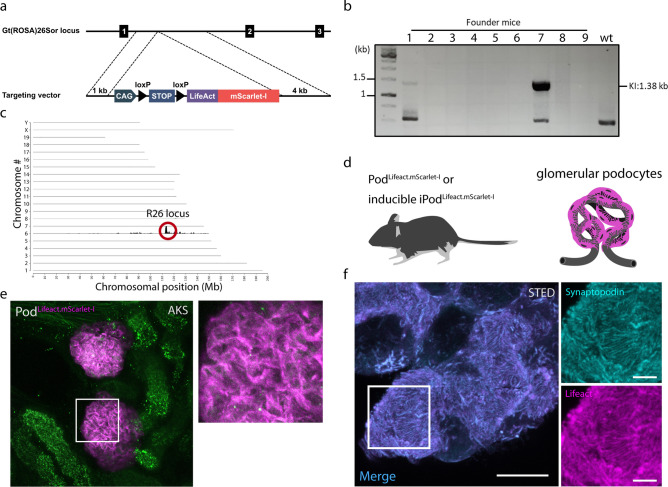 Figure 1
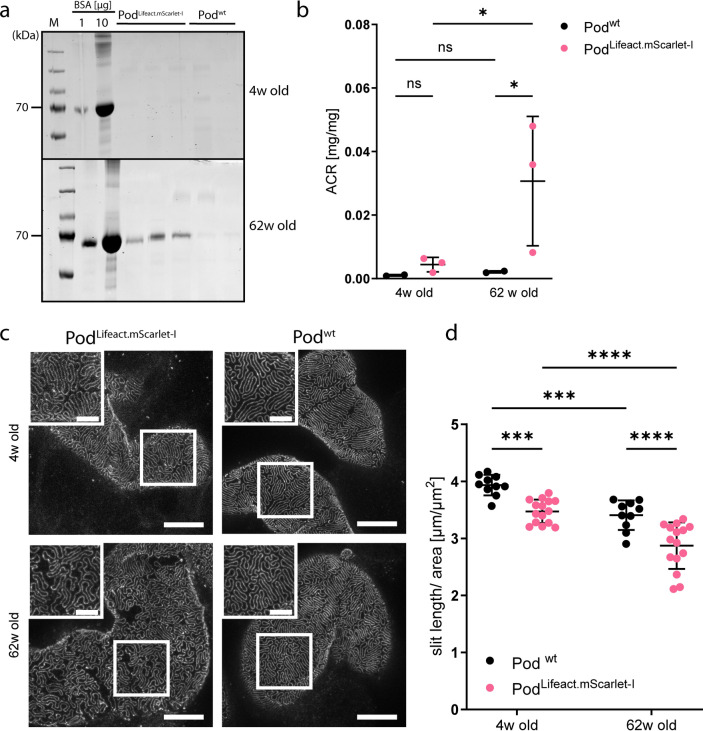 Figure 2
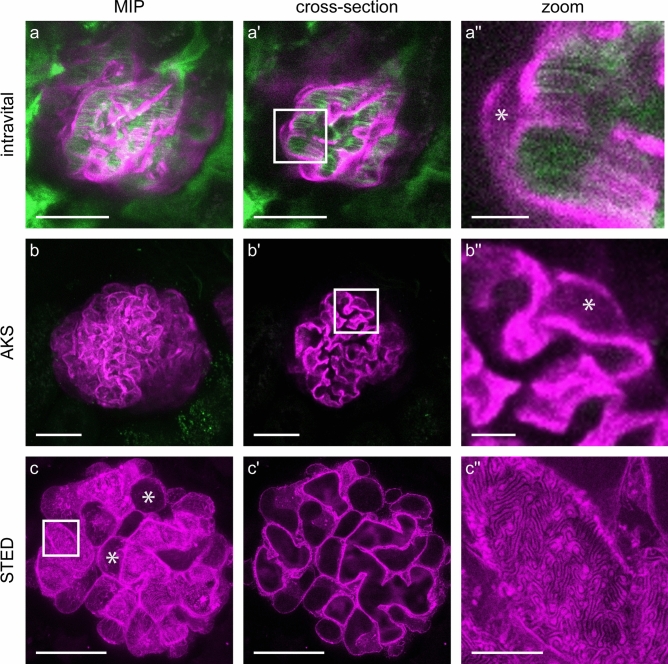 Figure 3
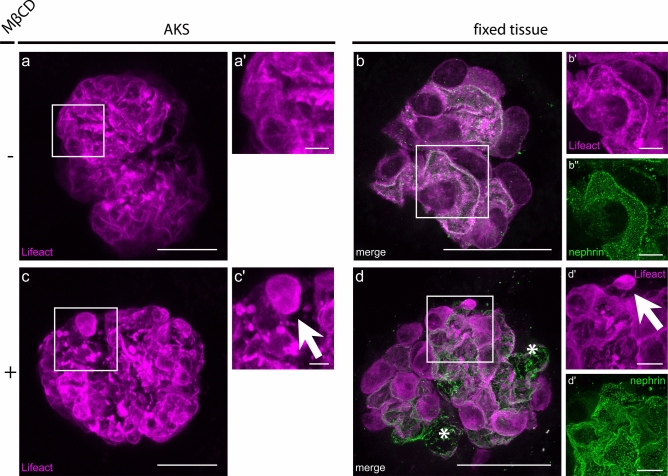 Figure 4
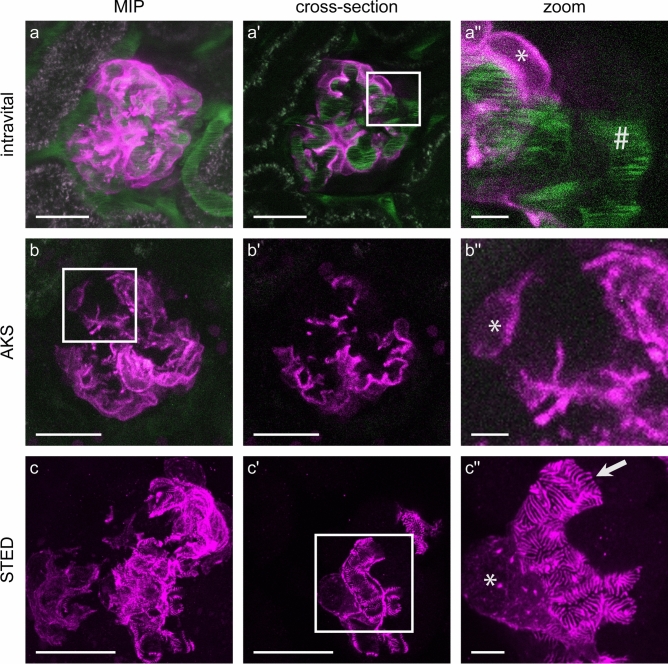 Figure 5
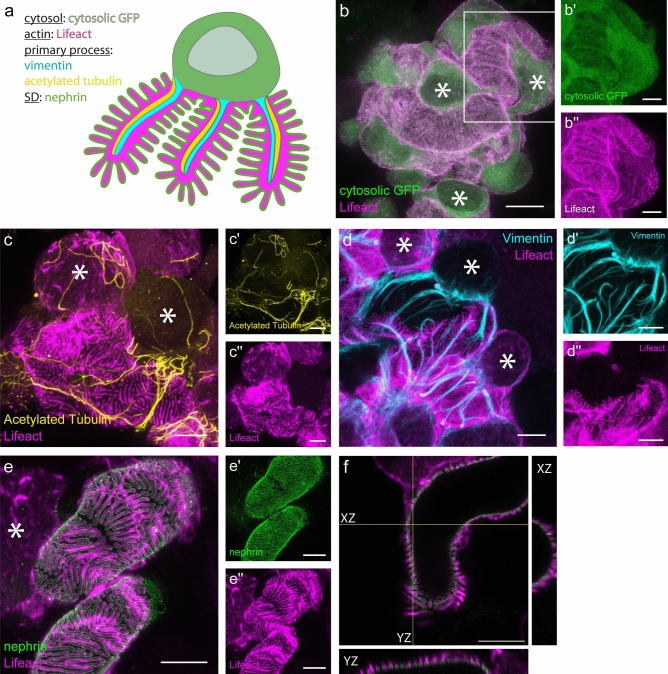 Figure 6
Peer Reviews
No public reviews on file for this paper yet. If you reviewed it on a platform where reviews are public (OpenReview, ICLR, NeurIPS, ICML), you can paste yours below so the community can read it here.
Videos
No videos yet. Explain this paper in a talk, walkthrough, or lecture? Add one.
Taxonomy
TopicsRenal Diseases and Glomerulopathies · Chronic Kidney Disease and Diabetes · Renal and related cancers