Aqueous and Ethanol Extracts of Acacia sieberiana (Fabaceae) Stem Bark Reverse the Pain–Depression Dyad in Mice Through Modulation of Catecholamines, Proinflammatory Cytokines, and Oxidative Stress
Sorelle Ngassam Mbankou, Aliance Romain Fokoua, Cedric Wamba Koho, Roger Hermann Sadie Foguieng, Sahar Mofidi Tabatabaei, Pamela Arielle Nono Nankam, Kevin Joseph Tidgewell, Télesphore Benoît Nguelefack

TL;DR
This study shows that extracts from Acacia sieberiana stem bark can reverse pain and depression in mice by affecting brain chemicals and inflammation.
Contribution
The study identifies specific plant extracts that effectively target the pain–depression dyad through modulation of catecholamines, cytokines, and oxidative stress.
Findings
Aqueous and ethanol extracts reversed reserpine-induced pain and depression in mice.
Extracts increased dopamine levels and reduced oxidative stress in the brain and spinal cord.
Phytochemical analysis identified five compounds, including piperine and asperphenamate, with high certainty.
Abstract
Rationale and Objective: The pain–depression dyad is highly prevalent and has reciprocal psychological and behavioral effects, leading to poor quality of life, increased disability, and challenging therapeutic outcomes. In an attempt to find better substances that can target pain–depression comorbidity, we examined the effect of aqueous (AE) and ethanol (EE) extracts from Acacia sieberiana (A. sieberiana) stem bark on reserpinized mice (female and male Swiss albino mice aged 2-3 months). Methods: The dyad was induced with 3 injections (Days 1–3) of reserpine (1 mg/kg/day, s.c.). Then, animals were treated (Days 4–8) with plant extracts (25, 50 and 100 mg/kg/day, p.o.) or L-tryptophane (100 mg/kg/day, i.p.). Pain-like (tactile and cold allodynia) and depression-like (pole, tail suspension, and force swimming tests) behavioral parameters were evaluated on Days 4 and 8. On Day 9, animals…
Genes, proteins, chemicals, diseases, species, mutations and cell lines named across the full text — each resolved to its canonical identifier and authoritative record.
Click any figure to enlarge with its caption.
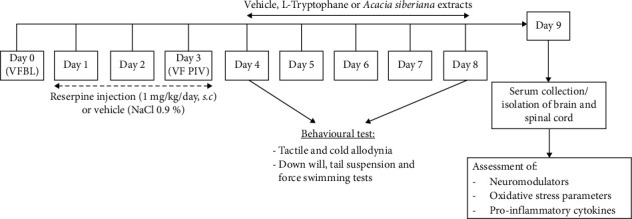 Figure 1
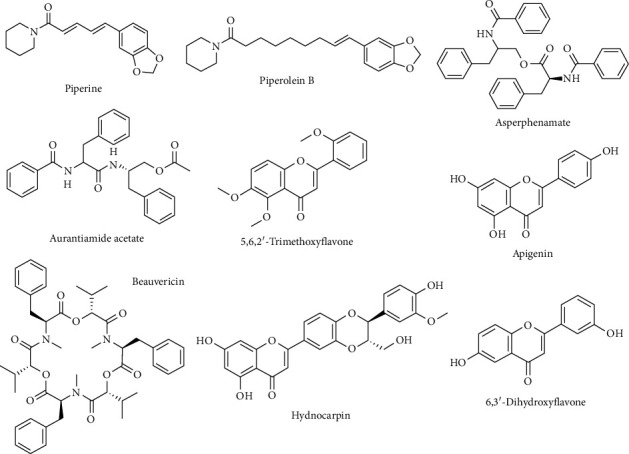 Figure 2
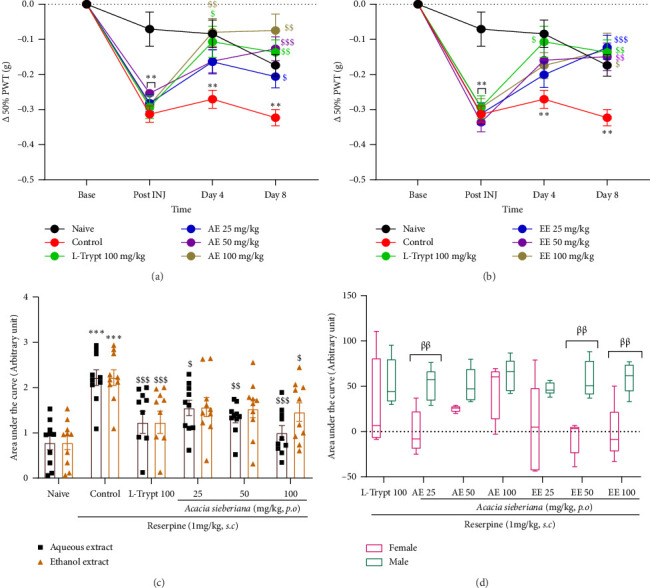 Figure 3
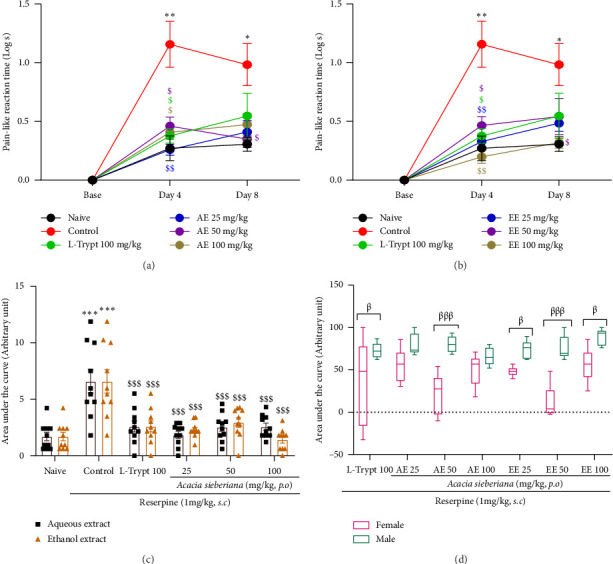 Figure 4
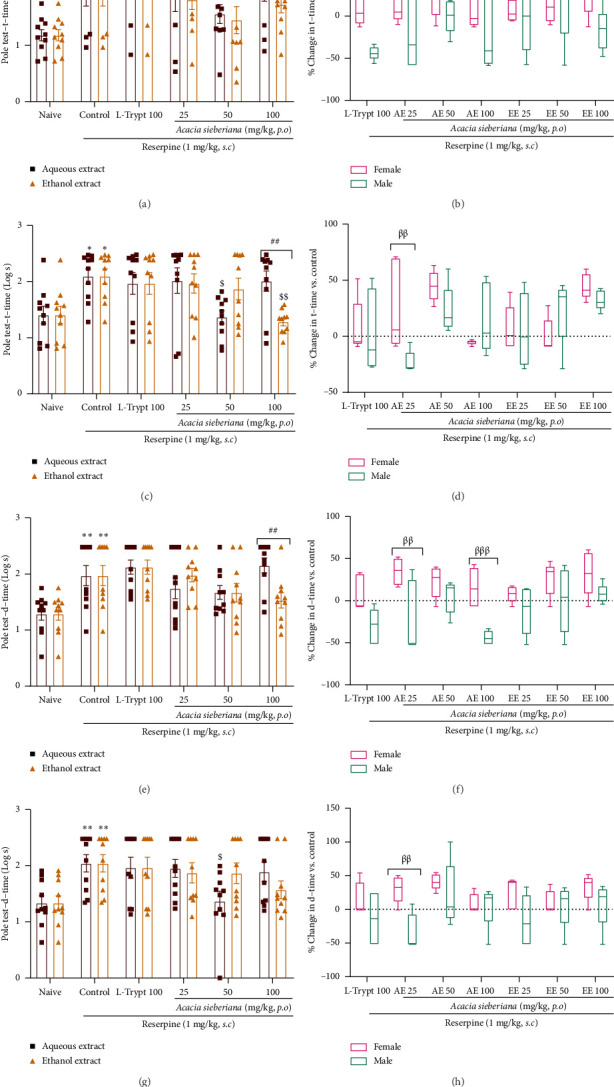 Figure 5
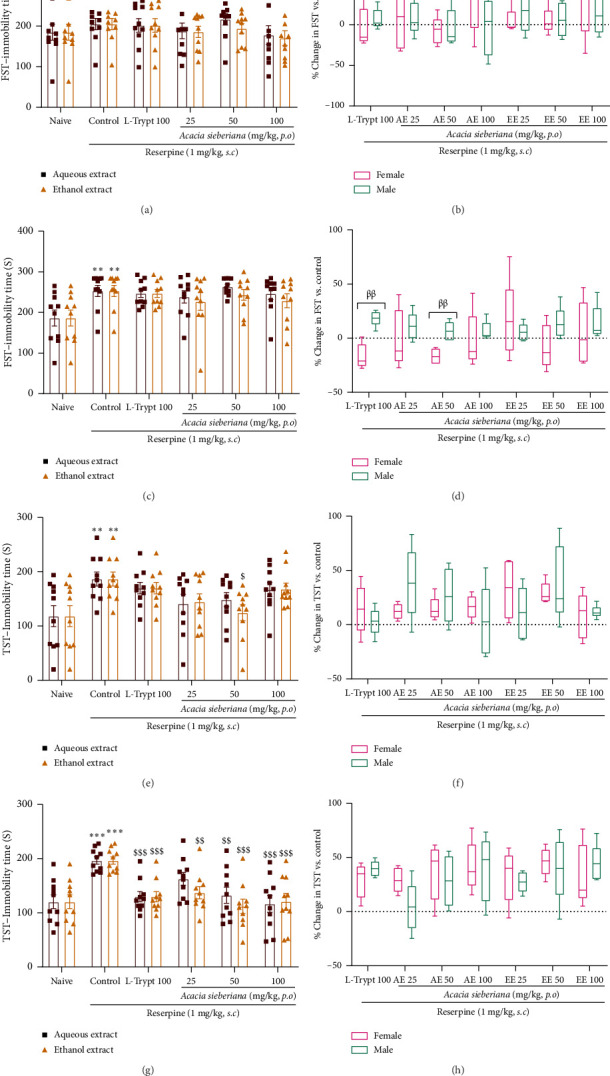 Figure 6
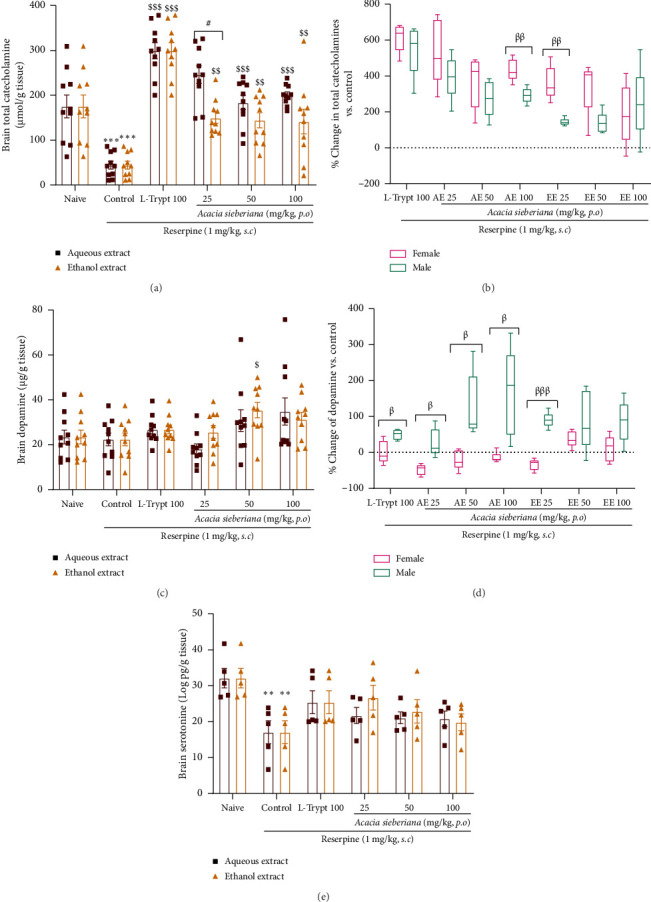 Figure 7
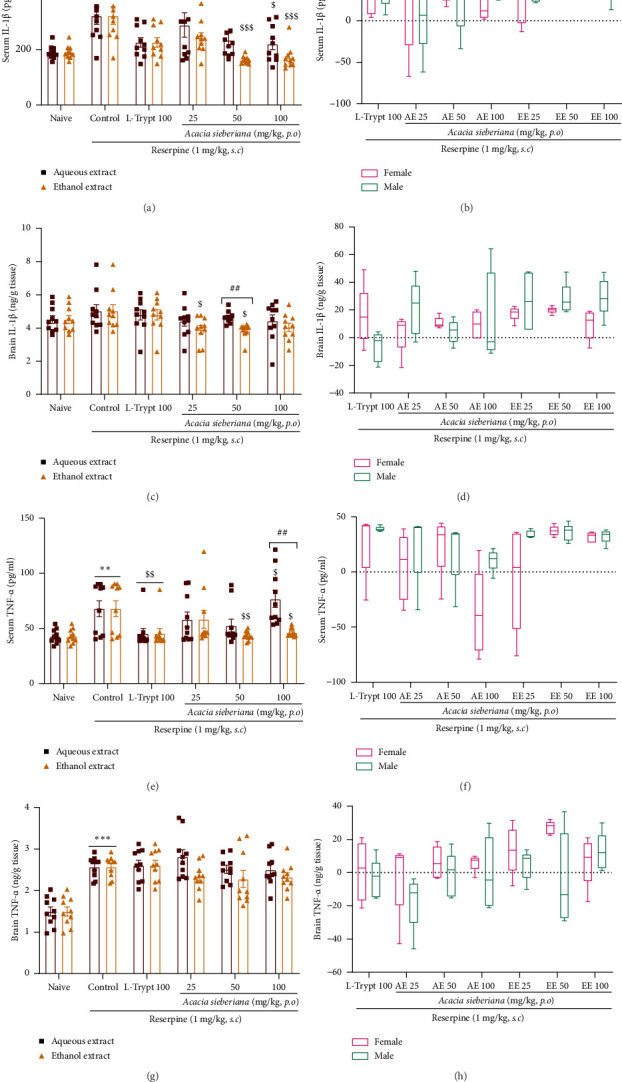 Figure 8
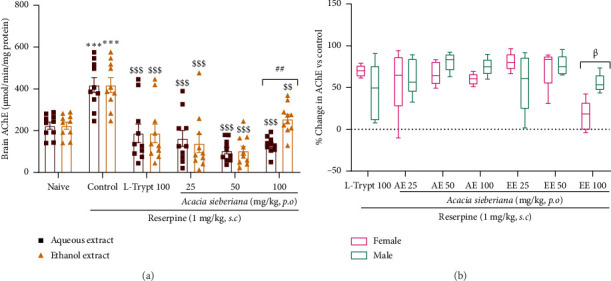 Figure 9
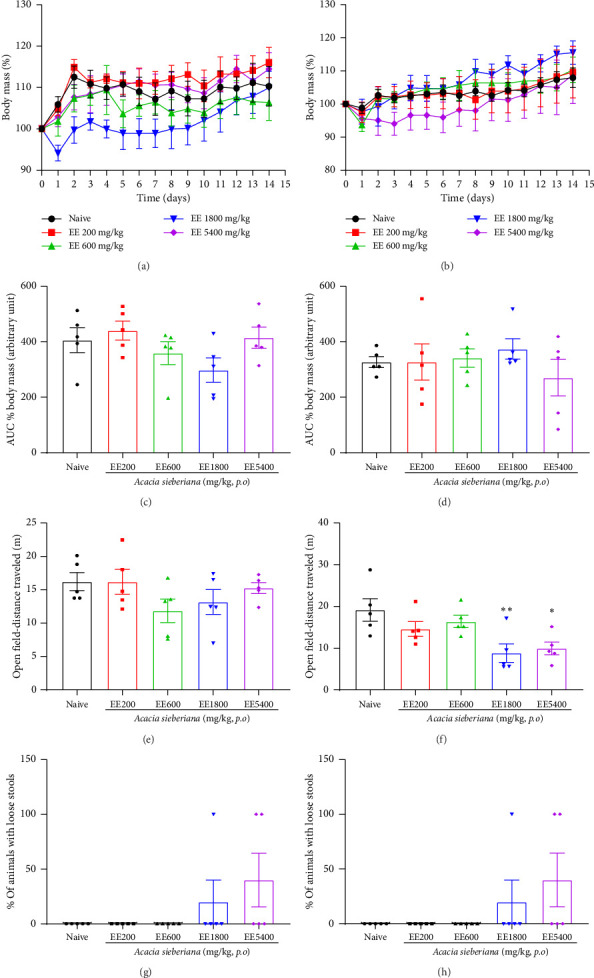 Figure 10
Peer Reviews
No public reviews on file for this paper yet. If you reviewed it on a platform where reviews are public (OpenReview, ICLR, NeurIPS, ICML), you can paste yours below so the community can read it here.
Videos
No videos yet. Explain this paper in a talk, walkthrough, or lecture? Add one.
Taxonomy
TopicsTryptophan and brain disorders · Medicinal Plants and Neuroprotection · Pharmacological Effects of Natural Compounds