Infectivity of Aflagellar Epimastigotes of Trypanosoma caninum in the DH82 Cell Line and Mouse Peritoneal Macrophages
Kátia Cristina Silva Nascimento, Sandra Maria de Oliveira Souza, Aline Fagundes, Roger Magno Macedo Silva, Francisco Odencio Rodrigues de Oliveira Junior, Samanta Cristina das Chagas Xavier, Gilbert Q. Santos, Suzana Corte-Real, Juliana Helena da Silva Barros

TL;DR
This study shows that aflagellar epimastigotes of Trypanosoma caninum can infect mouse macrophages and transform into amastigotes, offering new insights into the parasite's life cycle.
Contribution
The study demonstrates for the first time that aflagellar epimastigotes of T. caninum can infect macrophages and transform into amastigotes.
Findings
Aflagellar epimastigotes of T. caninum infect macrophages and transform into amastigotes.
Amastigotes proliferate within parasitophorous vacuoles in macrophages within 15 minutes.
Some parasites revert to the flagellar epimastigote form after 48 hours.
Abstract
Background: Trypanosoma caninum presents aflagellar and flagellar epimastigote, trypomastigote, and spheromastigote forms in axenic cultures. Attempts to utilize trypomastigote forms of T. caninum to develop in vitro and in vivo infection models have failed. To investigate the infection potential of aflagellar epimastigotes, T. caninum interaction studies were performed using DH82 cells and BALB/c mouse peritoneal macrophages in Dulbecco's modified Eagle medium (DMEM)/F-12 medium supplemented with fetal bovine serum and bovine serum albumin. Light-field microscopy, scanning electron microscopy, and transmission electron microscopy were used to analyze these interactions. Regarding T. caninum–macrophage interactions, the following previously unseen results were obtained: (1) the aflagellar epimastigote form of T. caninum infects macrophages, and (2) T. caninum epimastigotes transformed…
Genes, proteins, chemicals, diseases, species, mutations and cell lines named across the full text — each resolved to its canonical identifier and authoritative record.
Click any figure to enlarge with its caption.
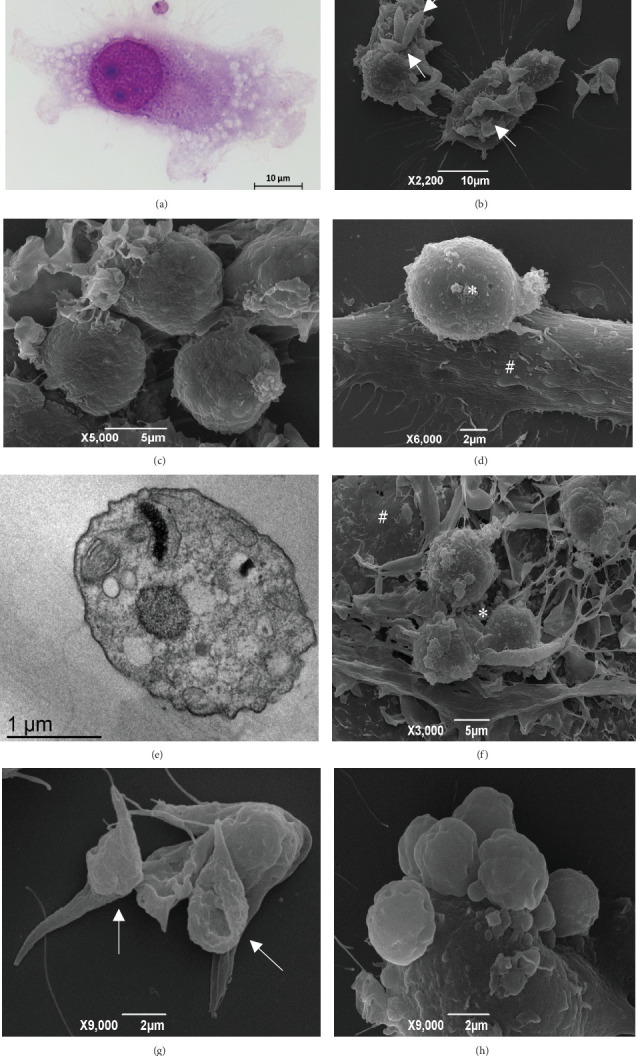 Figure 1
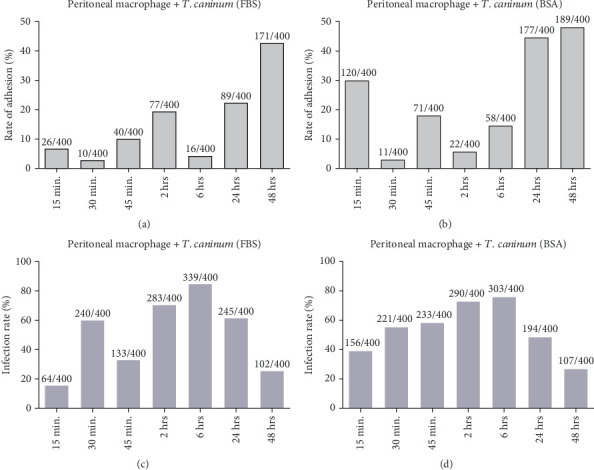 Figure 2
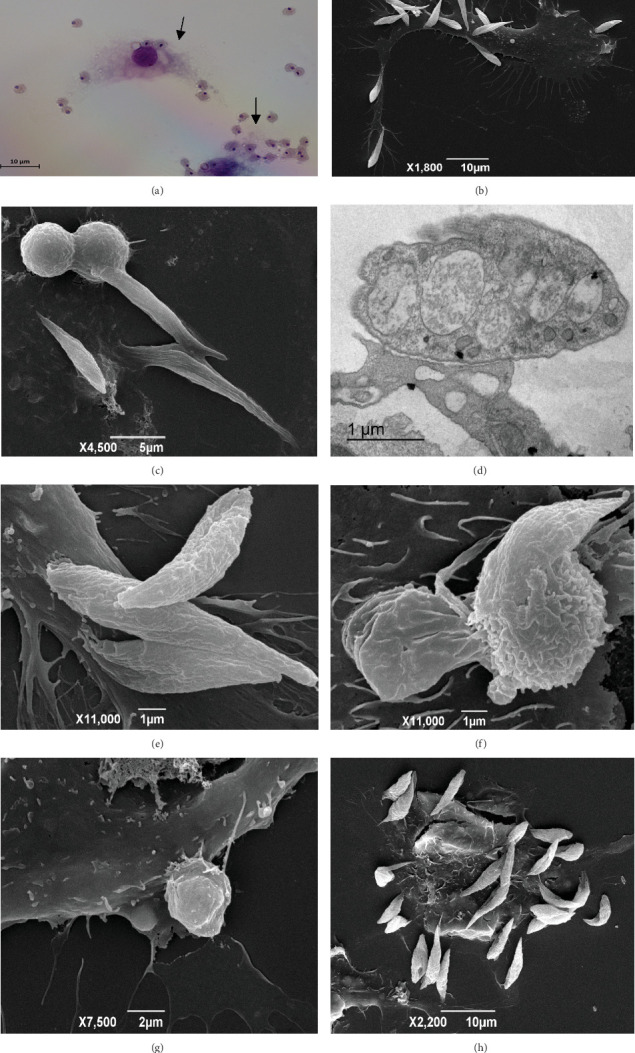 Figure 3
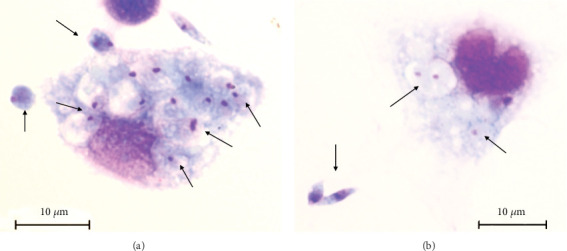 Figure 4
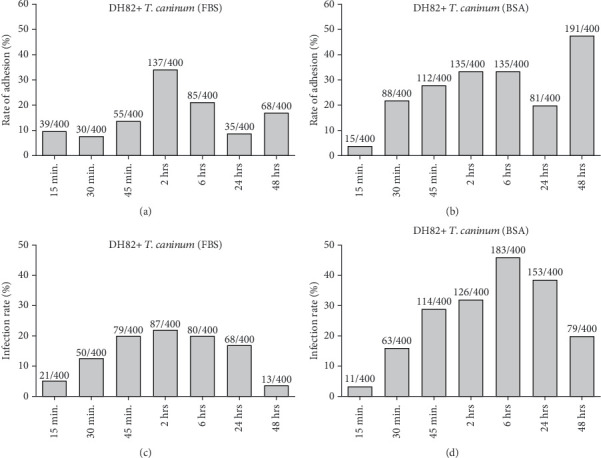 Figure 5
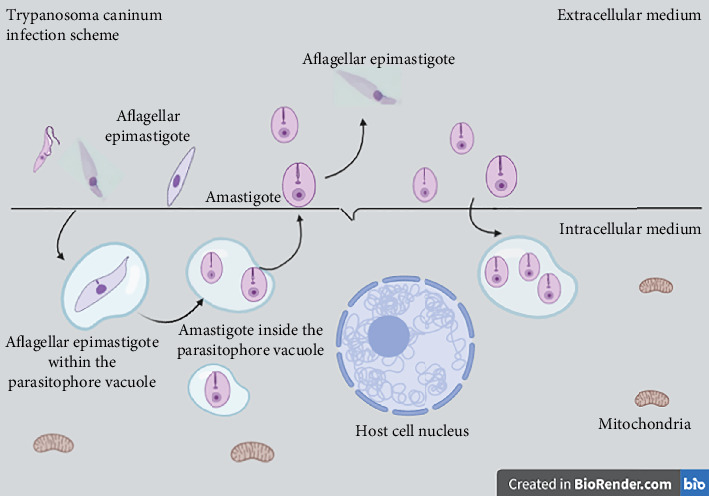 Figure 6
Peer Reviews
No public reviews on file for this paper yet. If you reviewed it on a platform where reviews are public (OpenReview, ICLR, NeurIPS, ICML), you can paste yours below so the community can read it here.
Videos
No videos yet. Explain this paper in a talk, walkthrough, or lecture? Add one.
Taxonomy
TopicsTrypanosoma species research and implications · Parasitic Diseases Research and Treatment · Insect symbiosis and bacterial influences