Cloning and Recombinant Expression of the Caspase-Activated DNase Orthologous Gene of Giardia lamblia
María Cristina Villa-Medina, Cecilia Díaz-Gaxiola, Roberto Rosales-Reyes, Sergio Alonso Durán-Pérez, Ulises Vega-Castillo, Jesús Alberto Rodríguez-Rochín, Claudia del Rosario León-Sicairos, Evangelina Beltrán-López, Héctor Samuel López-Moreno

TL;DR
This study identifies and characterizes a caspase-activated DNase in Giardia lamblia, a protozoan lacking mitochondria, suggesting a mitochondria-independent apoptosis-like process.
Contribution
The paper reports the cloning and characterization of an orthologous caspase-activated DNase in Giardia lamblia, a first for this organism.
Findings
A 42 kDa protein with properties similar to human CAD was identified in Giardia lamblia.
The gCAD gene was cloned, expressed, and purified as a recombinant protein in E. coli.
gCAD is predicted to have a CIDE-N domain and a putative catalytic motif, similar to hCAD.
Abstract
In eukaryotic cells, mitochondria play a key role in apoptosis; however, ancestral eukaryotic cells such as Giardia lamblia only possess a mitochondrial remnant, the mitosome. Interestingly, this protozoan still undergoes an apoptosis-like process; therefore, we focused primarily on the search for the mitochondria-independent executor DNase. Here, we identified, cloned, expressed, and characterized the caspase-activated DNase (CAD) from Giardia lamblia. Using a commercial polyclonal antibody that recognizes mouse, rat, and human caspase-activated DNase (hCAD), we developed an immunoproteomic analysis using a crude extract of curcumin-treated Giardia lamblia trophozoites (CEGl) and detected a spot of 42 kDa and pI 9.4, similar to hCAD and sequenced by LC-MS. The proteomic profile matched a novel protein of 383 residues, with a predicted 42 kDa, pI 9.4, a CIDE-N domain, and putative H-K-H…
Genes, proteins, chemicals, diseases, species, mutations and cell lines named across the full text — each resolved to its canonical identifier and authoritative record.
Click any figure to enlarge with its caption.
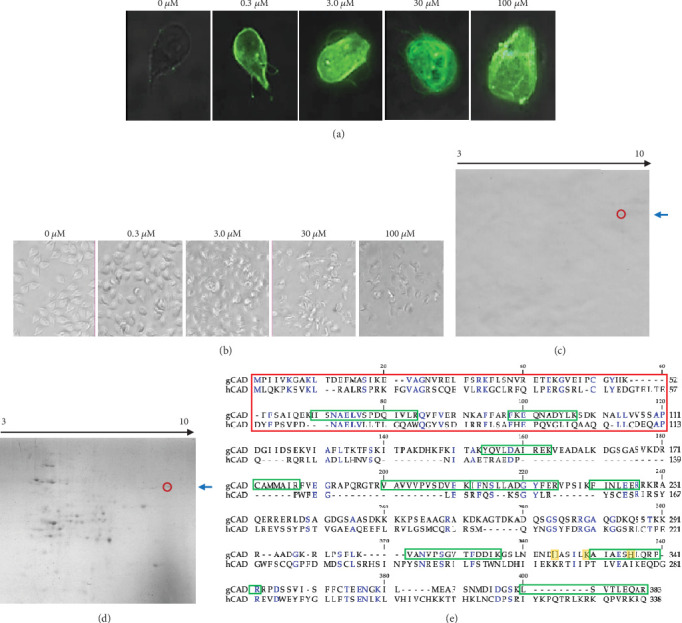 Figure 1
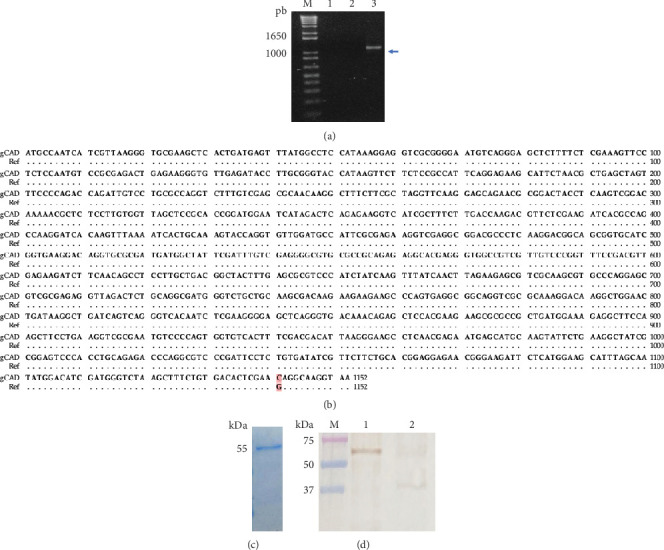 Figure 2
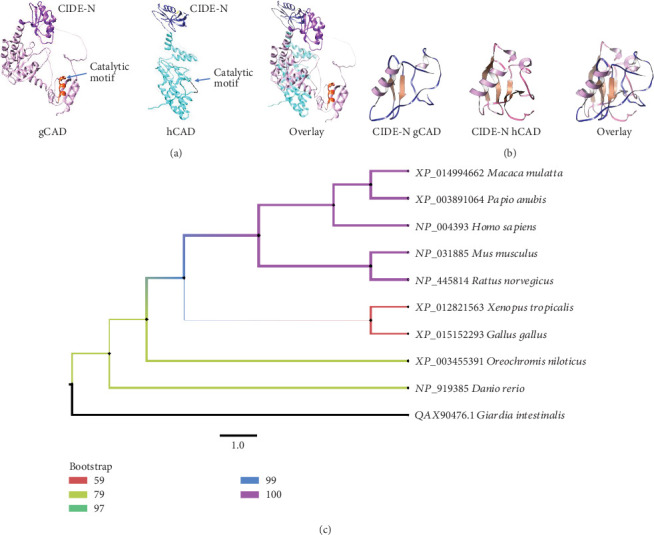 Figure 3
Peer Reviews
No public reviews on file for this paper yet. If you reviewed it on a platform where reviews are public (OpenReview, ICLR, NeurIPS, ICML), you can paste yours below so the community can read it here.
Videos
No videos yet. Explain this paper in a talk, walkthrough, or lecture? Add one.
Taxonomy
TopicsParasitic Infections and Diagnostics · RNA modifications and cancer · Signaling Pathways in Disease