Examining Sleep-Disordered Breathing Events Using Latent Profile Analysis
Marina Weinberger, Anwar E. Ahmed, Ahmed Almuttari, Abdullah Al-Harbi, Hani A. Alsaigh, J. Kent Werner, Hamdan Al-Jahdali

TL;DR
This study identifies four distinct subtypes of sleep-disordered breathing based on sleep patterns and clinical features in a large patient group.
Contribution
The study introduces a novel classification of sleep-disordered breathing subtypes using latent profile analysis.
Findings
Four distinct subtypes of sleep-disordered breathing were identified in the study cohort.
Class IV showed strong associations with older age, high BMI, and multiple clinical risk factors.
The subtypes may help improve clinical management by guiding treatment based on disease subtype.
Abstract
The clinical utility of the ratio of the apnea–hypopnea index (AHI) occurring during rapid eye movement (REM) and non-REM (NREM) sleep (AHIREM/AHINREM ratio) has been debated. We investigated the heterogeneity of REM and NREM sleep behaviors to identify unobserved distinct subtypes of sleep-disordered breathing (SDB) and examine their demographic and clinical features. The present study used a sample of 3626 adult patients who underwent diagnostic polysomnography evaluations at the Sleep Disorders Center of King Abdulaziz Medical City in Riyadh, Saudi Arabia. Latent profile analysis was performed to categorize subjects into distinct profiles of SDB based on AHIREM, AHINREM, and AHIREM/AHINREM ratio. A multinomial logistic model estimated the odds ratio of SDB profiles. Four distinct subtypes of SDB were identified: Class I (low AHIREM; 75.9%) included patients with normal SDB events…
Genes, proteins, chemicals, diseases, species, mutations and cell lines named across the full text — each resolved to its canonical identifier and authoritative record.
Click any figure to enlarge with its caption.
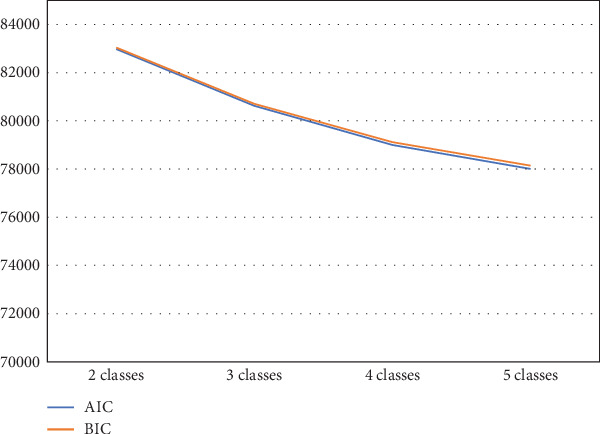 Figure 1
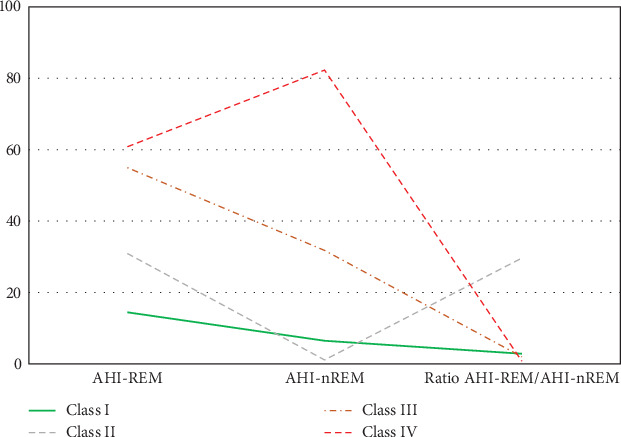 Figure 2
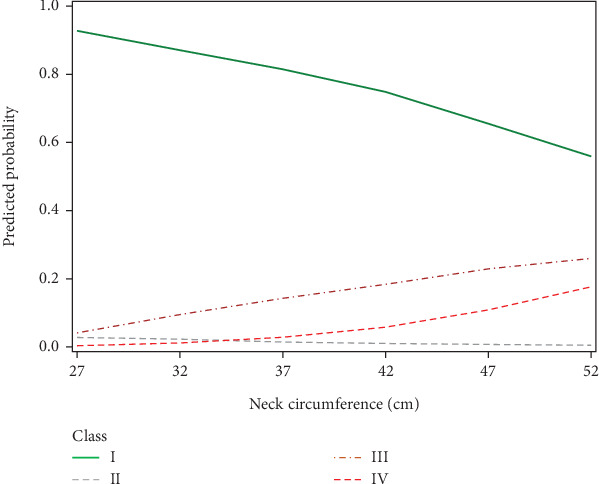 Figure 3
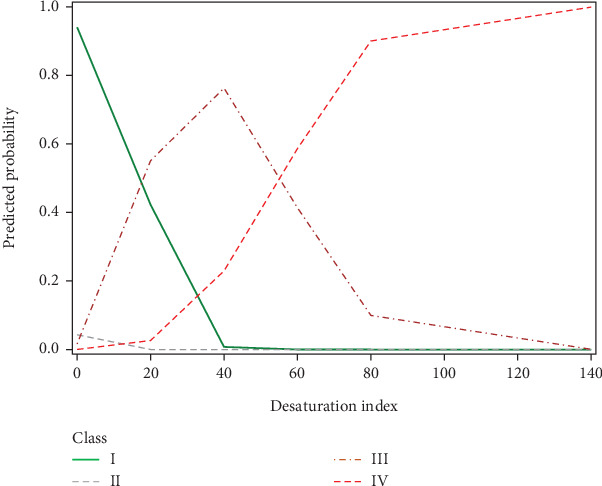 Figure 4
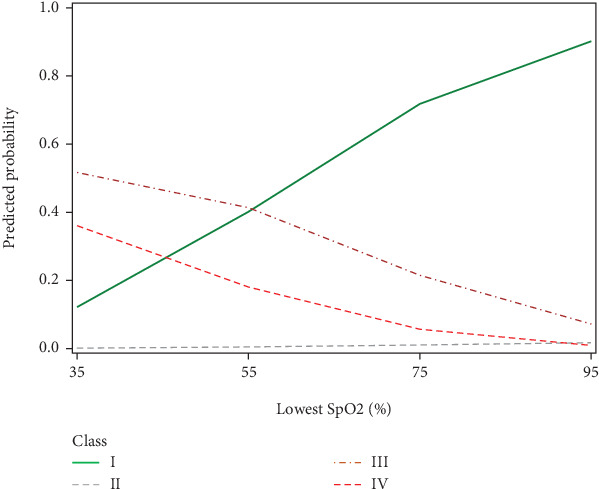 Figure 5
Peer Reviews
No public reviews on file for this paper yet. If you reviewed it on a platform where reviews are public (OpenReview, ICLR, NeurIPS, ICML), you can paste yours below so the community can read it here.
Videos
No videos yet. Explain this paper in a talk, walkthrough, or lecture? Add one.
Taxonomy
TopicsObstructive Sleep Apnea Research · Neuroscience of respiration and sleep · Sleep and related disorders