Gestational Age–Specific Prevalence of Preeclampsia Among Pregnant Women in Ghana: A Hospital-Based Retrospective Observational Study
Wina Ivy Ofori Boadu, Enoch Odame Anto, Akua Benewaah Asamoah, Ezekiel Ansah, Godfred Yawson Scott, Emmanuel Ekow Korsah, Joseph Frimpong, Valentine Christian Kodzo Tsatsu Tamakloe, Michael Nyantakyi, Agartha Odame Anto, Emmanuel Timmy Donkoh, Kwame Ofori Boadu

TL;DR
This study found that preeclampsia is most common at full-term in Ghanaian pregnancies and is linked to maternal age, prior C-sections, and early gestation.
Contribution
The study reports the first gestational age–specific prevalence of preeclampsia in Ghana and identifies key risk factors.
Findings
The overall preeclampsia prevalence was 10.5% among 619 pregnant women.
Preeclampsia was most prevalent at 39–40 weeks (4.0%) and least at ≥42 weeks (0.5%).
Maternal age 30–39 years, prior C-section, and gestation <37 weeks were significant risk factors.
Abstract
Background: Preeclampsia is responsible for a significant rate of maternal morbidity and mortality worldwide. Gestational age as a risk factor has a significant impact on fetal outcomes in pregnancies affected by preeclampsia. However, to our knowledge, no study has identified the gestational age–specific prevalence of preeclampsia in Ghana. Thus, this study ascertained the gestational age–specific prevalence of preeclampsia as well as its associated factors. Methods: A hospital-based retrospective observational study was conducted by reviewing data collected from the maternal birth register on 619 pregnant women who delivered at the facility from 1st January 2021 to 31st December 2021. Results: Out of 619 pregnant women, the overall prevalence of preeclampsia among the study participants was 10.5% whereas 80.5% were normotensive pregnant women. The gestational age–specific prevalence…
Genes, proteins, chemicals, diseases, species, mutations and cell lines named across the full text — each resolved to its canonical identifier and authoritative record.
Click any figure to enlarge with its caption.
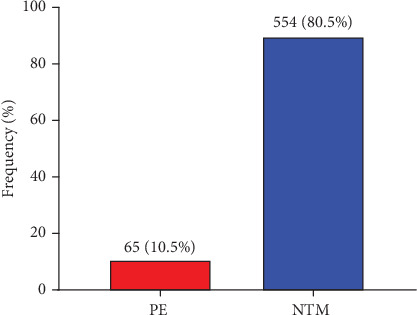 Figure 1
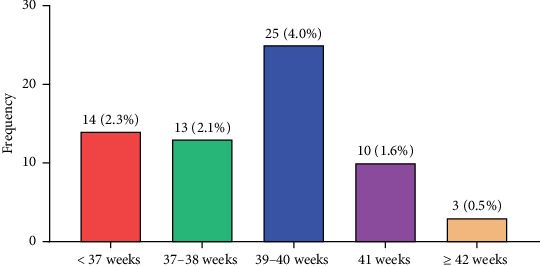 Figure 2
Peer Reviews
No public reviews on file for this paper yet. If you reviewed it on a platform where reviews are public (OpenReview, ICLR, NeurIPS, ICML), you can paste yours below so the community can read it here.
Videos
No videos yet. Explain this paper in a talk, walkthrough, or lecture? Add one.
Taxonomy
TopicsPregnancy and preeclampsia studies · Birth, Development, and Health · Maternal and fetal healthcare