Comparison and Analysis of the Drug-Resistance Mechanism of Osimertinib- and Almonertinib-Resistant Cell Lines
Chuangjie Zheng, Yingfang Ren, Ke Wang, Xinrong Chen, Jiahao Tao, Cuifen Zhang, Zeyu Liu, Lingling Sun, Linzhu Zhai

TL;DR
This study compares the resistance mechanisms of two third-generation EGFR inhibitors in lung cancer cells and identifies genes like IGFBP7 that may help predict prognosis and treatment response.
Contribution
The study reveals distinct resistance mechanisms of almonertinib and osimertinib and identifies co-DEGs like IGFBP7 linked to improved lung cancer prognosis.
Findings
Almonertinib-resistant cells showed significantly higher IC50 values compared to sensitive cells.
Common differentially expressed genes like IGFBP7 and RFTN1 were associated with better survival in non–small-cell lung cancer.
Knocking down IGFBP7 reduced drug resistance and cell invasion in almonertinib-resistant cells.
Abstract
Background: Non–small-cell lung cancer remains the leading cause of cancer-related deaths globally, and epidermal growth factor receptor mutations have been identified as crucial drivers of the disease. Encouragingly, epidermal growth factor receptor tyrosine kinase inhibitors have demonstrated promising clinical outcomes. Nonetheless, the emergence of resistance to third-generation EGFR-TKIs like osimertinib and almonertinib is an inevitable challenge. Methods: In this study, we generated almonertinib-resistant cell lines from H-1975 and HCC827 lung cancer cell lines. We utilized various assays, including cell proliferation assays, hematoxylin and eosin staining, and cell cycle assays, to investigate the characteristics of drug-resistant cells. Additionally, we performed RNA transcriptome sequencing to identify differentially expressed genes (DEGs) in almonertinib-resistant cells. To…
Genes, proteins, chemicals, diseases, species, mutations and cell lines named across the full text — each resolved to its canonical identifier and authoritative record.
Click any figure to enlarge with its caption.
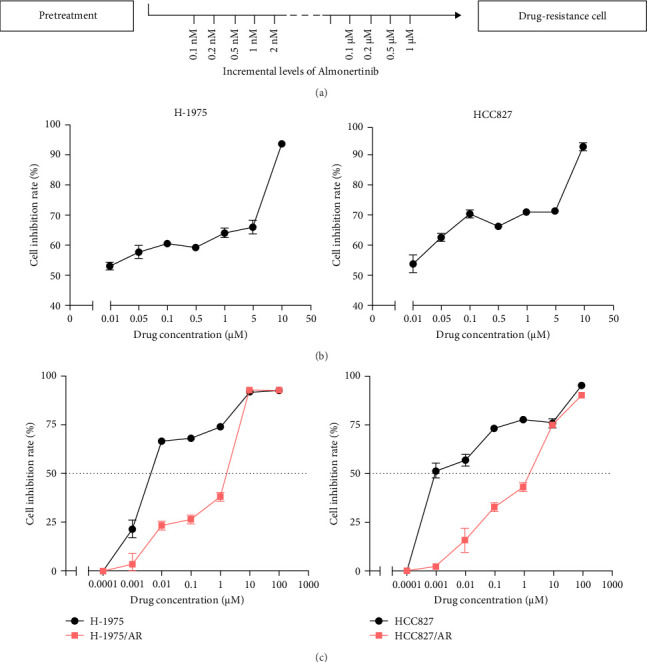 Figure 1
 Figure 2
 Figure 3
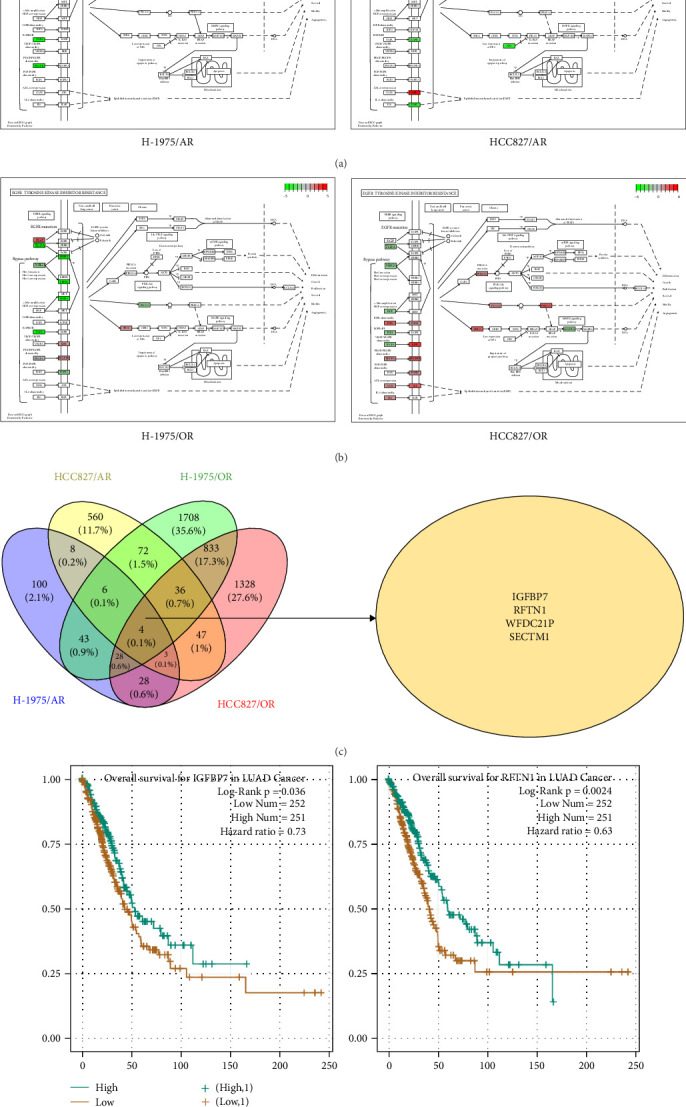 Figure 4
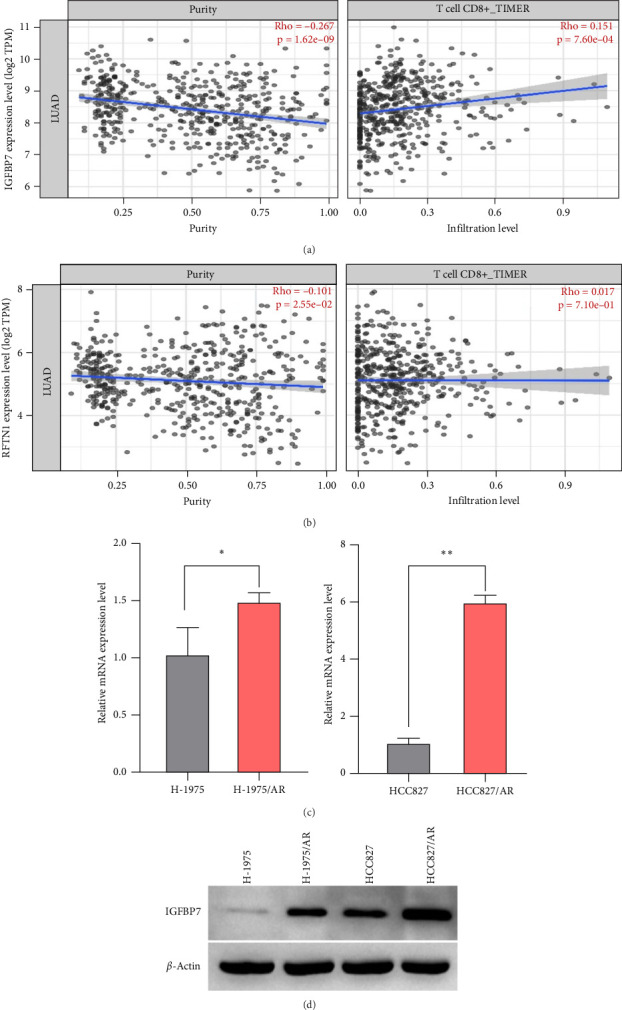 Figure 5
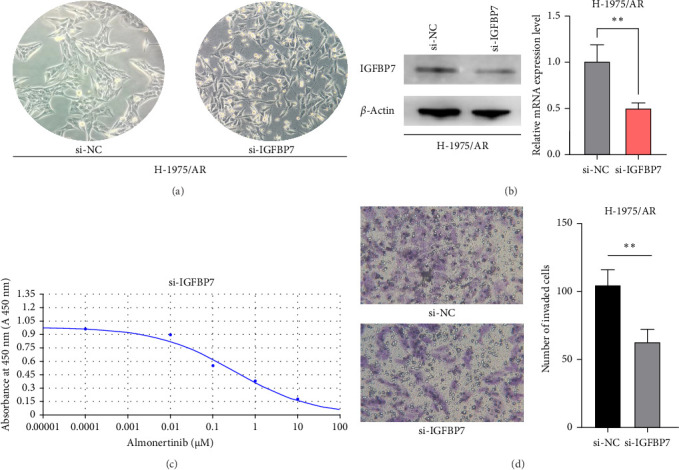 Figure 6
Peer Reviews
No public reviews on file for this paper yet. If you reviewed it on a platform where reviews are public (OpenReview, ICLR, NeurIPS, ICML), you can paste yours below so the community can read it here.
Videos
No videos yet. Explain this paper in a talk, walkthrough, or lecture? Add one.
Taxonomy
TopicsLung Cancer Treatments and Mutations · Colorectal Cancer Treatments and Studies · Cancer Genomics and Diagnostics