Using 30-s Prone Back Extension Repetition Maximum Test to Predict Concentric and Eccentric 1 Repetition Maximum Squat Strength in Young and Older Adults
Michael T. Dunn, Phuong Quach, Monica McGraw, Robert C. Barefoot, Richard I. Preus, Donald H. Lein, Harshvardhan Singh

TL;DR
This study shows that a 30-second prone back extension test can predict squat strength in young and older adults, offering a safer alternative to heavy lifting tests.
Contribution
The study introduces a safe and patient-friendly method to predict concentric and eccentric squat strength using a 30-s prone back extension test in different age groups.
Findings
The 30-s prone back extension repetition maximum significantly predicted 1RM concentric and eccentric squat strength in young and older adults.
The study found a trend toward significance for the relationship between the test and both concentric and eccentric squat strength in both age groups.
Abstract
Background: One repetition maximum (1RM) testing depends on lifting heavy loads which can put older adults at risk for injury and thus is nonfeasible. Thus, there is a great need for alternative 1RM testing methods, which are safe, patient-friendly, and clinically applicable, in older adults. Notably, aging-induced loss of muscle strength is greater for concentric than eccentric strength. However, there is a lack of information on unique 1RM for concentric and eccentric squat strength. Such information can lay the framework to design novel and effective resistive squat exercise programs in line with the principles of precision rehabilitation for various clinical populations. Purpose: To investigate if the 30-s prone back extension repetition maximum test can predict 1RM concentric and eccentric squat strength in young and older individuals. Methods: We enrolled and tested participants…
Genes, proteins, chemicals, diseases, species, mutations and cell lines named across the full text — each resolved to its canonical identifier and authoritative record.
Click any figure to enlarge with its caption.
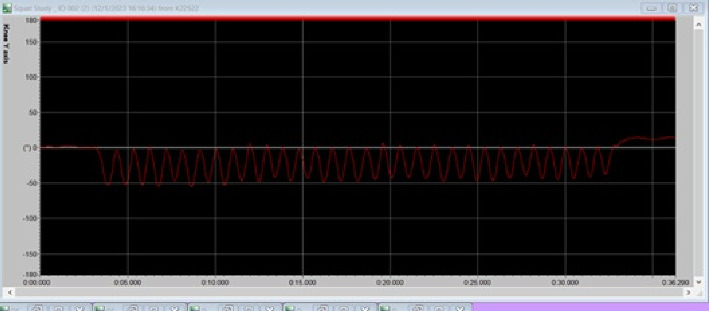 Figure 1
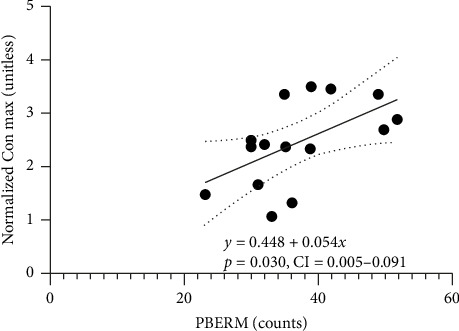 Figure 2
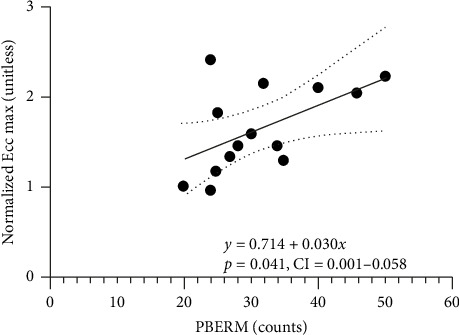 Figure 3
Peer Reviews
No public reviews on file for this paper yet. If you reviewed it on a platform where reviews are public (OpenReview, ICLR, NeurIPS, ICML), you can paste yours below so the community can read it here.
Videos
No videos yet. Explain this paper in a talk, walkthrough, or lecture? Add one.
Taxonomy
TopicsSports Performance and Training · Sports injuries and prevention · Lower Extremity Biomechanics and Pathologies