The Utility of Transperineal Template Saturation Biopsy in the Detection of Clinically Significant Prostate Cancer
Kenta Onishi, Yasushi Nakai, Tatsuki Miyamoto, Fumisato Maesaka, Mitsuru Tomizawa, Takuto Shimizu, Shunta Hori, Daisuke Gotoh, Makito Miyake, Tetsuya Tachiiri, Nagaaki Marugami, Kiyohide Fujimoto, Nobumichi Tanaka

TL;DR
This study shows that transperineal template saturation biopsy is effective and safe for detecting significant prostate cancer, even when MRI results are negative.
Contribution
The study demonstrates that TTSB can detect clinically significant prostate cancer in patients with negative MRI findings.
Findings
TTSB detected clinically significant prostate cancer in 35.5% of patients.
PI-RADS category ≥ 4 was strongly associated with csPCa detection.
TTSB had low rates of adverse events, indicating it is a safe diagnostic method.
Abstract
Aim: We investigated the role of transperineal template saturation biopsy (TTSB) in detecting clinically significant prostate cancer (csPCa). We compared the TTSB findings with multiparametric magnetic resonance imaging (mpMRI) findings in suspected prostate cancer patients. Methods: This retrospective study included 124 patients who underwent TTSB following mpMRI at our institute. We examined factors contributing to csPCa detection in these patients. We examined the association between the Prostate Imaging-Reporting and Data System (PI-RADS) Version 2.1 category and csPCa detection. Results: The median age at TTSB was 68 (interquartile range: 62–73) years, and the median prostate-specific antigen level was 9.9 (6.1–15.5) ng/mL. Herein, 61.3% (76/124) of the patients who underwent TTSB had cancer and 35.5% (44/124) had csPCa. Abnormal digital rectal examination findings (p=0.006) and…
Genes, proteins, chemicals, diseases, species, mutations and cell lines named across the full text — each resolved to its canonical identifier and authoritative record.
Click any figure to enlarge with its caption.
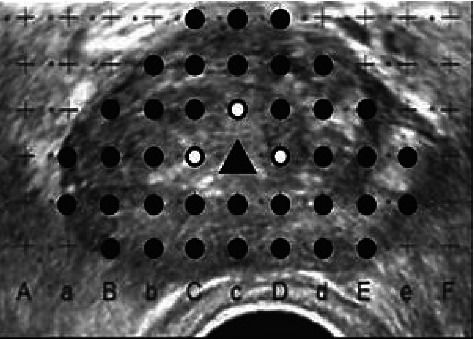 Figure 1
 Figure 2
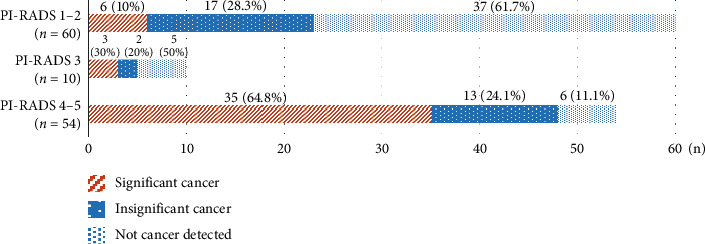 Figure 3
Peer Reviews
No public reviews on file for this paper yet. If you reviewed it on a platform where reviews are public (OpenReview, ICLR, NeurIPS, ICML), you can paste yours below so the community can read it here.
Videos
No videos yet. Explain this paper in a talk, walkthrough, or lecture? Add one.
Taxonomy
TopicsProstate Cancer Diagnosis and Treatment · Prostate Cancer Treatment and Research · MRI in cancer diagnosis