Protozoan and Helminth Contamination in Ecuadorian Agricultural Products: Dominance of Blastocystis sp
Luisa Carolina González-Ramírez, Cristian Andrés Quito López, Verónica Carolin Rojano Silva, Ximena del Rocío Robalino Flores, Silvia Paola Monar Basantes, José G. Prato, César Díaz-Godínez, Julio César Carrero

TL;DR
This study found high levels of parasitic contamination in Ecuadorian agricultural products, with Blastocystis sp. being the most common parasite, highlighting the need for better food safety practices.
Contribution
The study provides new insights into the prevalence and distribution of parasitic contamination in Ecuadorian produce, emphasizing the dominance of Blastocystis sp.
Findings
74.5% of agricultural samples were contaminated with parasites, with leafy greens showing the highest contamination rate.
Protozoa were four times more prevalent than helminths, with Blastocystis sp. being the most frequently identified parasite.
Helminths were more common in vegetables compared to fruits and leafy greens.
Abstract
Foodborne diseases, particularly those caused by parasitic infections, pose significant public health challenges globally, particularly affecting vulnerable populations such as children. In this study, we investigated the parasitic contamination in 773 samples of fruits, vegetables, and leafy greens from Ecuador's Chimborazo Province. Utilizing a cross-sectional, observational approach, samples were collected from the capital of the Guano canton, Chimborazo Province. The analysis revealed an alarming overall contamination frequency of 74.5%, with leafy greens exhibiting the highest contamination (238/275 [86.5%]), followed by vegetables (130/188 [69.1%]) and fruits (208/310 [67.1%]) (X2 = 32.793; p < 0.0001). Protozoa (71.8%) were four times more prevalent than helminths (16.9%) (X2 = 471.106; p < 0.0001), showing a higher frequency in leafy greens (228/275 [82.9%]) compared to fruits…
Genes, proteins, chemicals, diseases, species, mutations and cell lines named across the full text — each resolved to its canonical identifier and authoritative record.
Click any figure to enlarge with its caption.
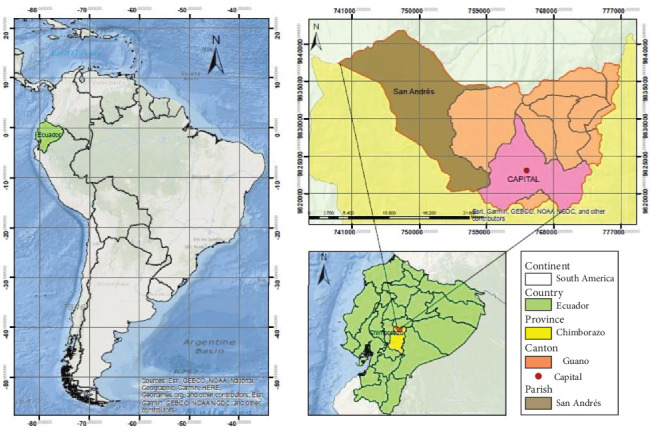 Figure 1
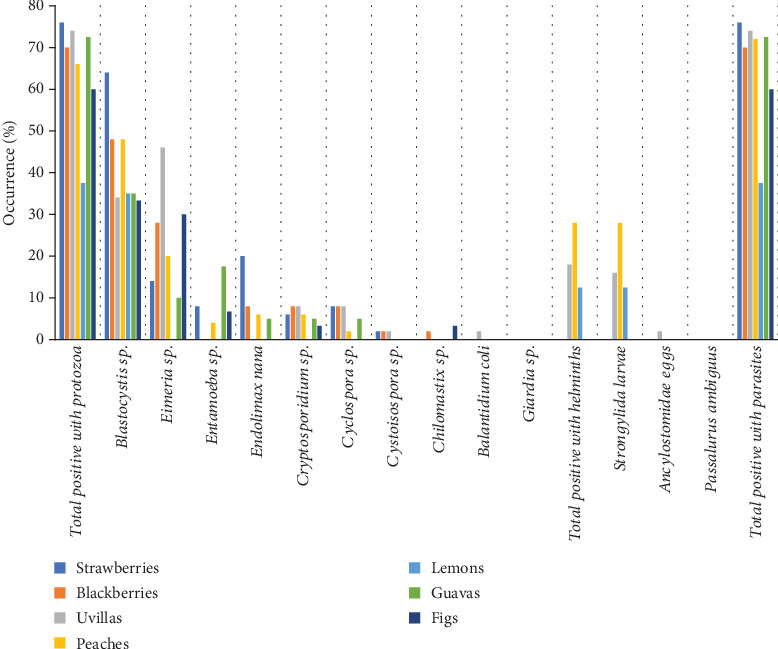 Figure 2
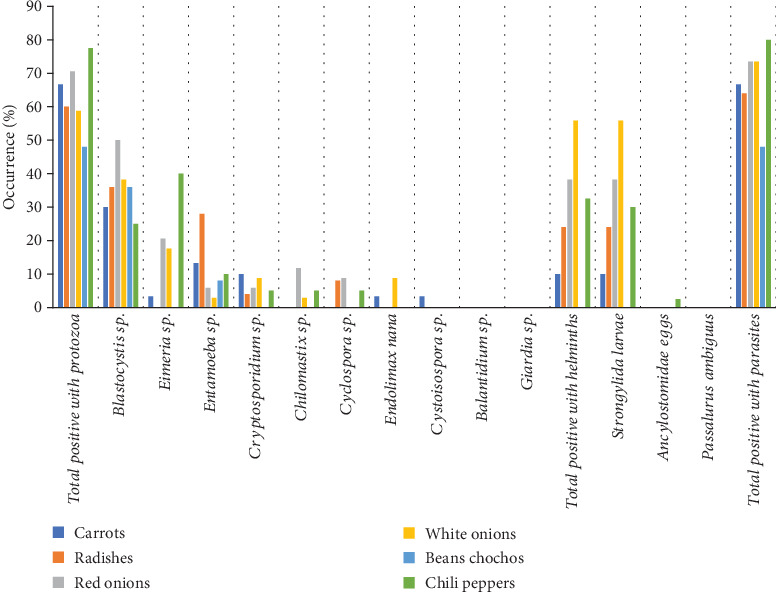 Figure 3
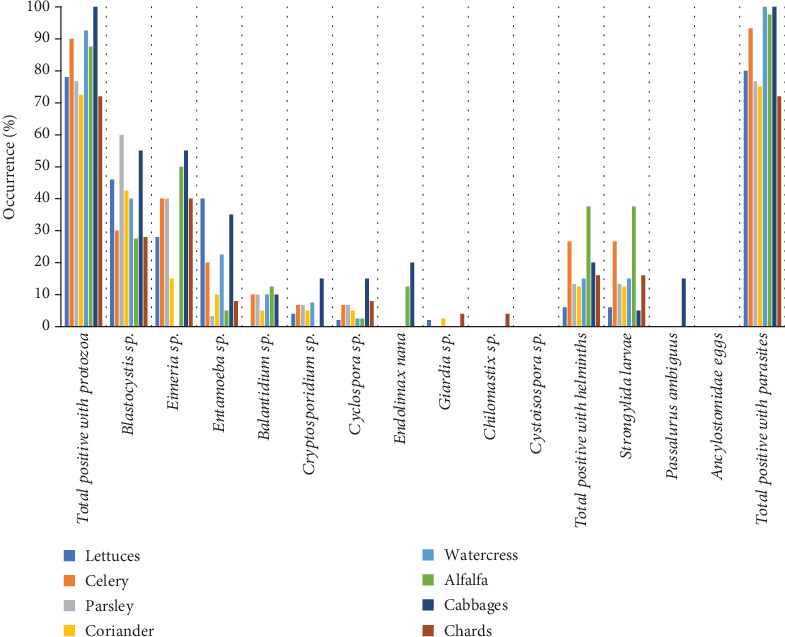 Figure 4
Peer Reviews
No public reviews on file for this paper yet. If you reviewed it on a platform where reviews are public (OpenReview, ICLR, NeurIPS, ICML), you can paste yours below so the community can read it here.
Videos
No videos yet. Explain this paper in a talk, walkthrough, or lecture? Add one.
Taxonomy
TopicsParasitic Infections and Diagnostics · Parasites and Host Interactions · Parasite Biology and Host Interactions