Knotted and Encrusted Double J Stent: A Rare Complication Managed With Advanced Endoscopic Techniques
Seyed Reza Hosseini, Fardin Asgari, Mina Rezayat, Abdolreza Mohammadi, Seyed Mohammad Kazem Aghamir

TL;DR
A rare case of a knotted and encrusted urinary stent was successfully removed using advanced endoscopic techniques, avoiding the need for surgery.
Contribution
This paper presents a unique clinical case and management approach for a rare DJ stent complication using non-surgical endoscopic methods.
Findings
A knotted and encrusted DJ stent was successfully removed using a semirigid ureteroscope and lithoclast.
Advanced endoscopic techniques can manage complex stent removal cases without requiring open surgery.
Early follow-up and patient compliance are critical in preventing rare stent complications.
Abstract
Complications related to double J (DJ) stent placement are well documented, but DJ stent knotting remains an exceedingly rare event. We present a unique case of a knotted and encrusted DJ stent, alongside a review of the literature on this rare complication. A 55-year-old man with a history of ureteral obstruction due to stones was managed initially with percutaneous nephrostomy (PCN) and DJ stent placement. The patient presented after a delayed follow-up for stent removal. Despite imaging showing no evidence of encrustation or knotting, cystoscopic attempts to remove the stent failed. Further evaluation, including ureteroscopy, revealed significant encrustation and knotting of the DJ stent at the renal pelvis. The stent was successfully removed using a semirigid ureteroscope and lithoclast without open surgery. This case highlights the importance of early follow-up and patient…
Genes, proteins, chemicals, diseases, species, mutations and cell lines named across the full text — each resolved to its canonical identifier and authoritative record.
Click any figure to enlarge with its caption.
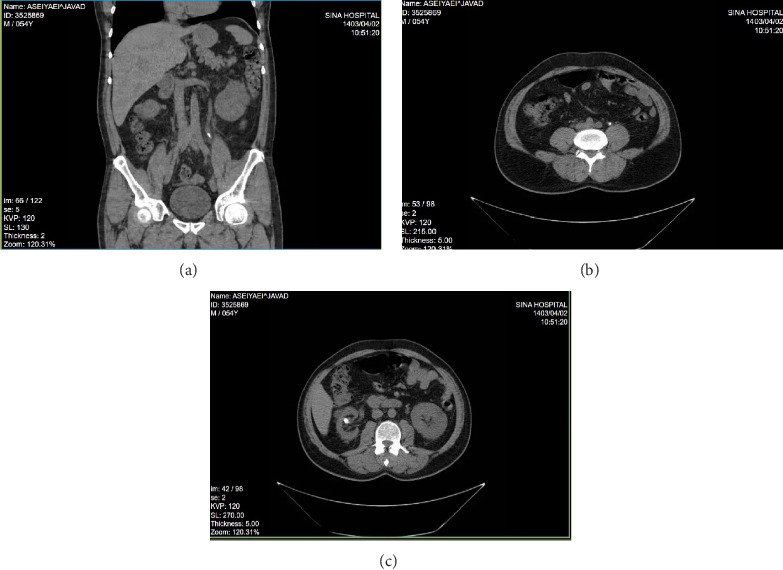 Figure 1
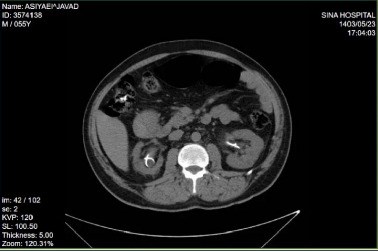 Figure 2
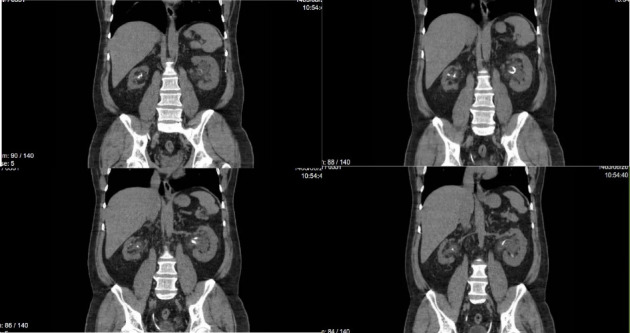 Figure 3
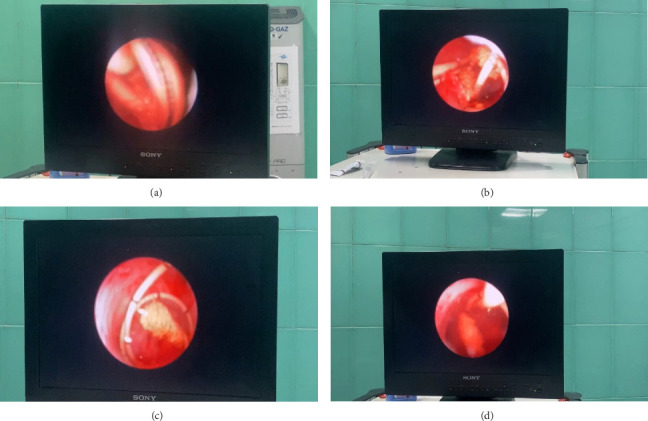 Figure 4
Peer Reviews
No public reviews on file for this paper yet. If you reviewed it on a platform where reviews are public (OpenReview, ICLR, NeurIPS, ICML), you can paste yours below so the community can read it here.
Videos
No videos yet. Explain this paper in a talk, walkthrough, or lecture? Add one.
Taxonomy
TopicsEsophageal and GI Pathology · Gallbladder and Bile Duct Disorders · Radiation Dose and Imaging