Determining physiological responses of mussels (Mytilus edulis) to hypoxia by combining multiple sensor techniques
Emily Adria Peterson, Marinus Cornelis Keur, Michael Yeboah, Thomas van de Grootevheen, Luke Moth, Pauline Kamermans, Tinka Murk, Myron A Peck, Edwin Foekema

TL;DR
Blue mussels survive longer without oxygen when exposed to air during low tide than in hypoxic water, due to different physiological responses.
Contribution
The study combines multiple biosensors to monitor mussels' physiological responses to aerial and aqueous hypoxia in real time.
Findings
Mussels close their valves and reduce heart rate during aerial exposure, suggesting a shift to anaerobic metabolism.
Most mussels open their valves during aqueous hypoxia, increasing filtration activity to collect more oxygen.
Mussels show less interindividual variation in responses during aerial exposure compared to aqueous hypoxia.
Abstract
Intertidal bivalves survive longer without oxygen when aerially exposed during low tide than when submerged in hypoxic water. To understand this, we combined three biosensors to continuously monitor responses of individual blue mussels (Mytilus edulis) to aerial exposure in simulated low-tide conditions and during aqueous hypoxia. A valve sensor, heart rate monitor, and an in-shell oxygen microsensor simultaneously recorded behavioural and physiological responses. During aerial exposure, which often occurs in the intertidal, all individuals immediately closed their valves, rapidly depleted in-shell oxygen, and decreased their heart rate. This suggested a shift to anaerobic metabolism and reduced activity as mechanisms to save energy and survive in-shell anoxia during ‘low-tide’ conditions. At the onset of exposure to hypoxic (<1 mg O2/L) water, however, all mussels fully opened their…
Genes, proteins, chemicals, diseases, species, mutations and cell lines named across the full text — each resolved to its canonical identifier and authoritative record.
Click any figure to enlarge with its caption.
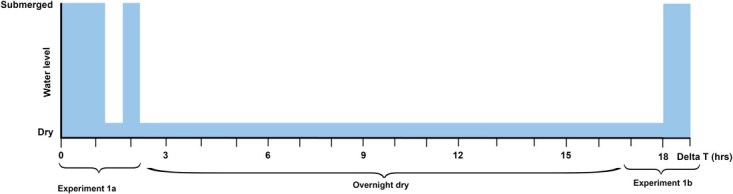 Figure 1
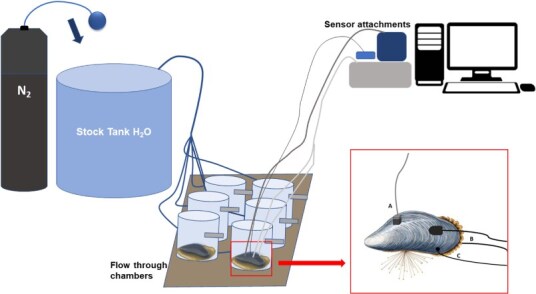 Figure 2
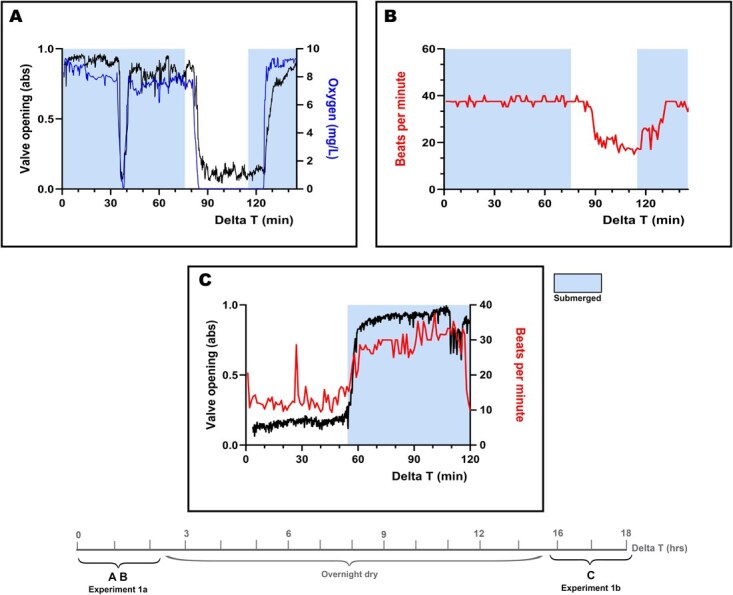 Figure 3
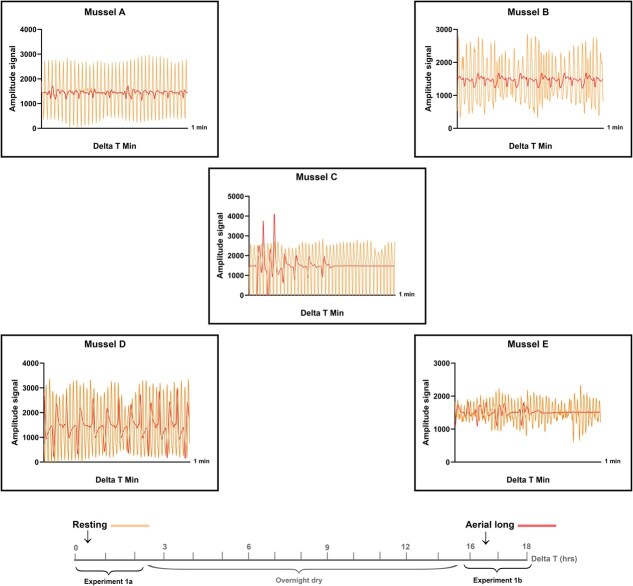 Figure 4
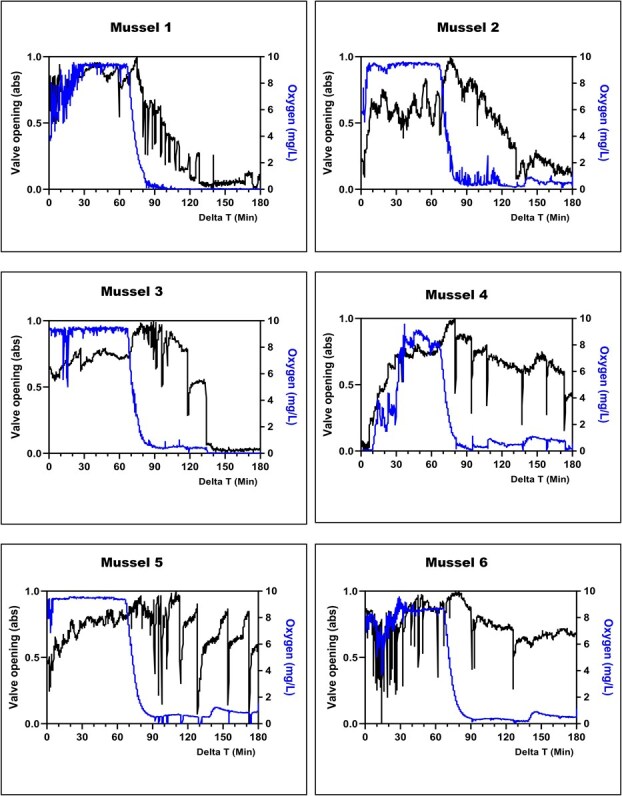 Figure 5
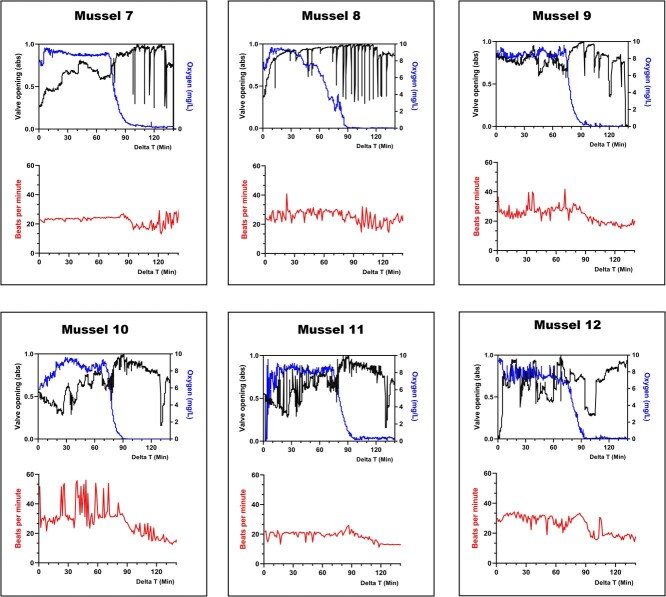 Figure 6
Peer Reviews
No public reviews on file for this paper yet. If you reviewed it on a platform where reviews are public (OpenReview, ICLR, NeurIPS, ICML), you can paste yours below so the community can read it here.
Videos
No videos yet. Explain this paper in a talk, walkthrough, or lecture? Add one.
Taxonomy
TopicsMarine Bivalve and Aquaculture Studies · Ocean Acidification Effects and Responses · Aquatic Invertebrate Ecology and Behavior