AgrC biotinylation inhibits Staphylococcus aureus infection
Lijuan Qian, Yuxin He, Wenzhe Lian, Zhiyuan Ji, Ziming Tian, Chuyun Wang, Chen Cao, Tyler Shern, Teagan Stedman, Yujun Sun

TL;DR
A new method using biotinylation inhibits the growth and toxicity of Staphylococcus aureus and enhances immune clearance.
Contribution
A novel biotinylation method using TurboID to inhibit AgrC in S. aureus is developed and tested.
Findings
Biotinylated AgrC inhibits the growth of multiple S. aureus strains, including MRSA.
Biotinylation reduces virulence protein production and decreases host cell apoptosis.
Biotinylated S. aureus is more efficiently cleared by macrophages in vivo.
Abstract
Staphylococcus aureus (S. aureus) is a leading cause of nosocomial infections, particularly among antibiotic-resistant strains. S. aureus virulence is governed by the accessory gene regulator (Agr) quorum sensing (QS) system, which relies on AgrC, a two-component histidine kinase, to detect secreted auto-inducing peptides (AIPs). Emerging evidence highlights the potential of inhibiting the interaction between AgrC and AIPs as a promising therapeutic strategy. Given the limited clinic methods in inhibiting AgrC, we hereby report a novel method utilizing TurboID, an engineered biotin ligase, to inhibit Agr C on S. aureus via its biotinylation. To achieve this goal, a fusion protein named TurboID-AgrD1−2 (Agr-ID) was designed to include an AgrC binding domain (AgrID1−2) and a catalytic domain (TurboID) for AgrC biotinylation. By incubating with Alexa Fluor 647-conjugated streptavidin, the…
Genes, proteins, chemicals, diseases, species, mutations and cell lines named across the full text — each resolved to its canonical identifier and authoritative record.
Click any figure to enlarge with its caption.
 Figure 1
 Figure 2
 Figure 3
 Figure 4
 Figure 5
 Figure 6
 Figure 7
 Figure 8
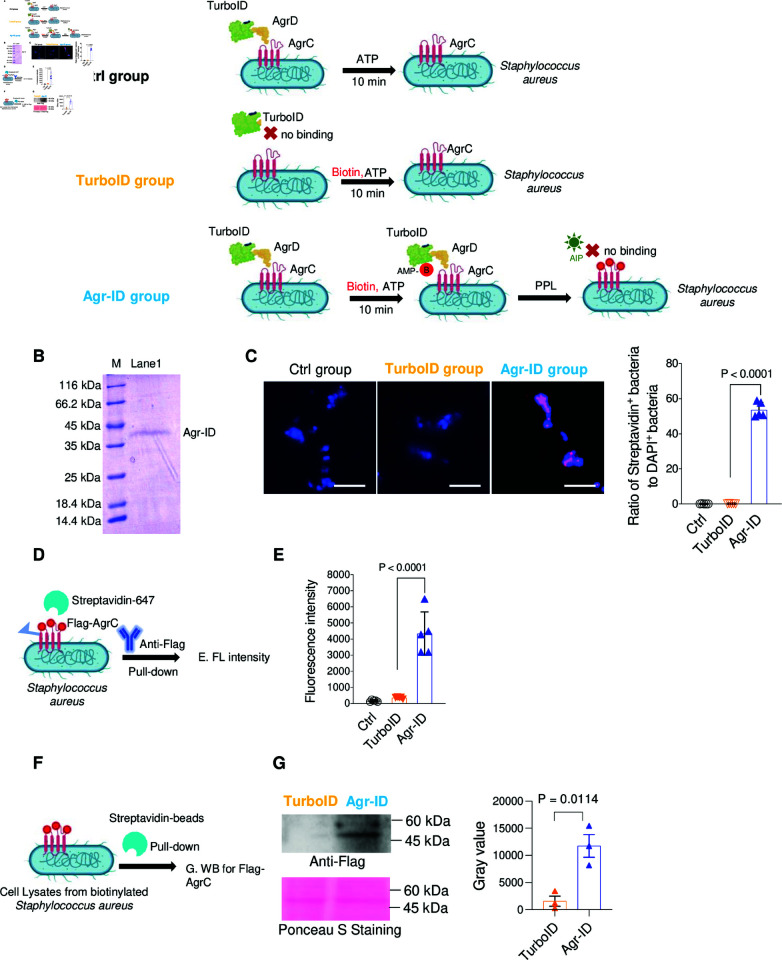 Figure 9
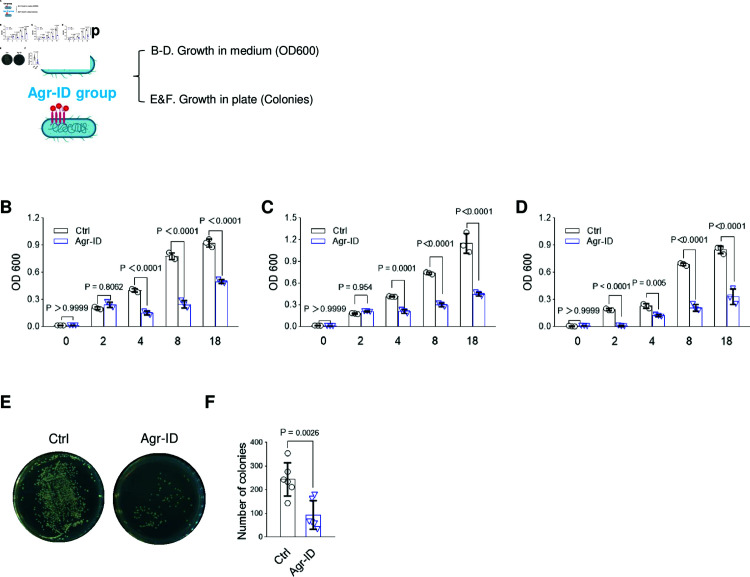 Figure 10
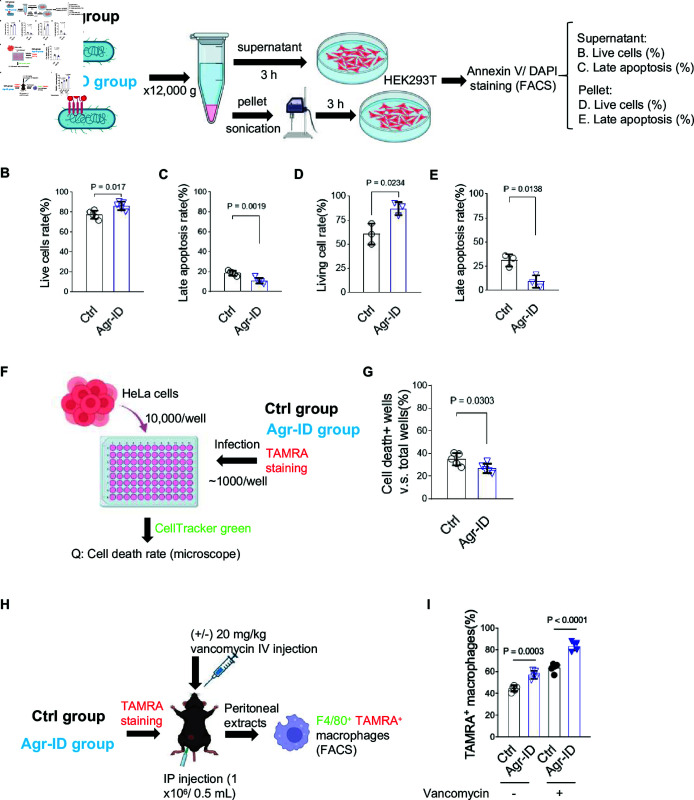 Figure 11
Peer Reviews
No public reviews on file for this paper yet. If you reviewed it on a platform where reviews are public (OpenReview, ICLR, NeurIPS, ICML), you can paste yours below so the community can read it here.
Videos
No videos yet. Explain this paper in a talk, walkthrough, or lecture? Add one.
Taxonomy
TopicsBiotin and Related Studies · Antimicrobial Peptides and Activities · Biochemical and Structural Characterization