Noninvasive Glucose Measurements in Tissue Simulating Phantoms Using a Solid-State Near-Infrared Sensor
Ariel B. Kauffman, Ruben Shakya, Shuai Yu, Mark A. Arnold

TL;DR
A new solid-state laser sensor for noninvasive glucose measurement in skin is benchmarked against a traditional FT spectrometer, showing promising results.
Contribution
A solid-state laser-based near-infrared sensor is evaluated for noninvasive glucose monitoring using tissue simulating phantoms.
Findings
The solid-state laser platform had a median RMS noise level of 327.8 µAU, higher than the FT spectrometer's 667.2 µAU.
The laser prototype achieved an SECV of 7.82 mg/dL, comparable to the FT spectrometer's 6.62 mg/dL.
Higher spectral noise in the laser prototype required two additional PLS factors for accurate glucose predictions.
Abstract
Benchmark data are reported for a solid-state laser-based near-infrared spectrometer designed for noninvasive measurements in human skin. These data were obtained using a set of aqueous phantoms composed of polystyrene beads, triton X-100, saline, and glucose. The performance of this prototype solid-state laser platform was compared to parallel results obtained with a Fourier-transform (FT) spectrometer. The fundamental spectroscopic performances of the two spectrometer systems were quantified by an analysis of 100% lines determined by ratioing back-to-back spectra collected over time for each phantom. Root mean square (RMS) noise levels were computed for each dataset and the median RMS noise levels were 327.8 µAU and 667.2 µAU for the FT spectrometer and prototype laser platform, respectively. The analytical utility of the solid-state laser platform was assessed through a series of…
Genes, proteins, chemicals, diseases, species, mutations and cell lines named across the full text — each resolved to its canonical identifier and authoritative record.
Click any figure to enlarge with its caption.
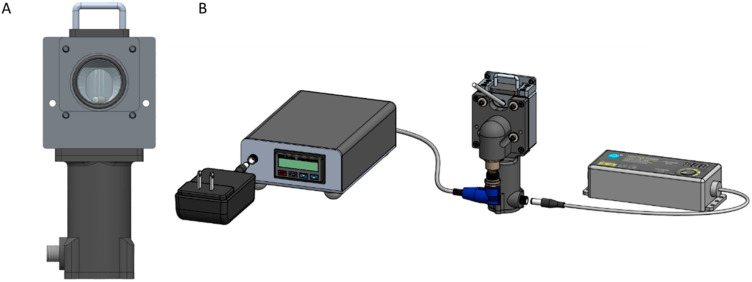 Figure 1
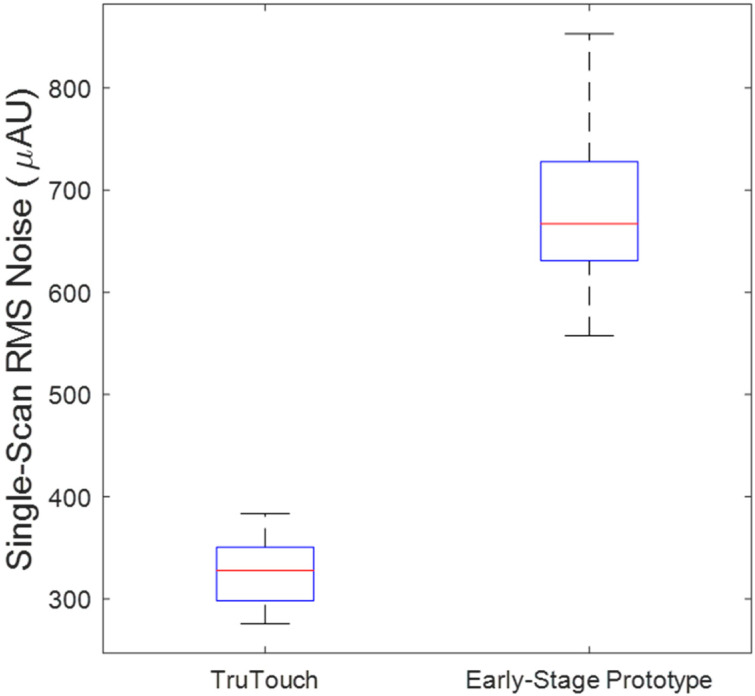 Figure 2
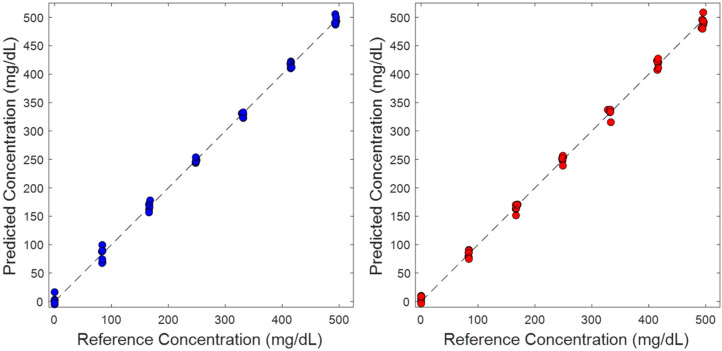 Figure 3
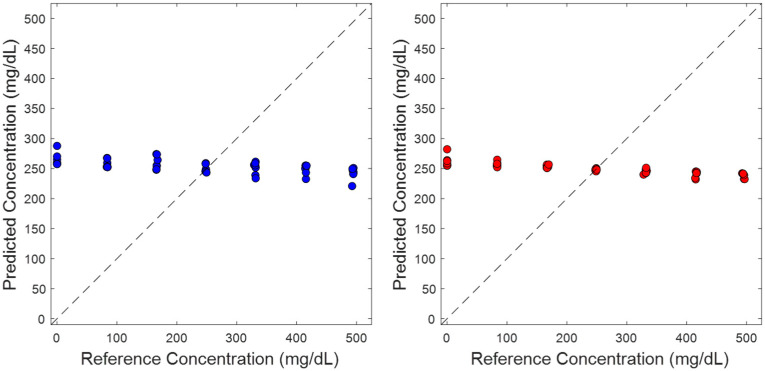 Figure 4
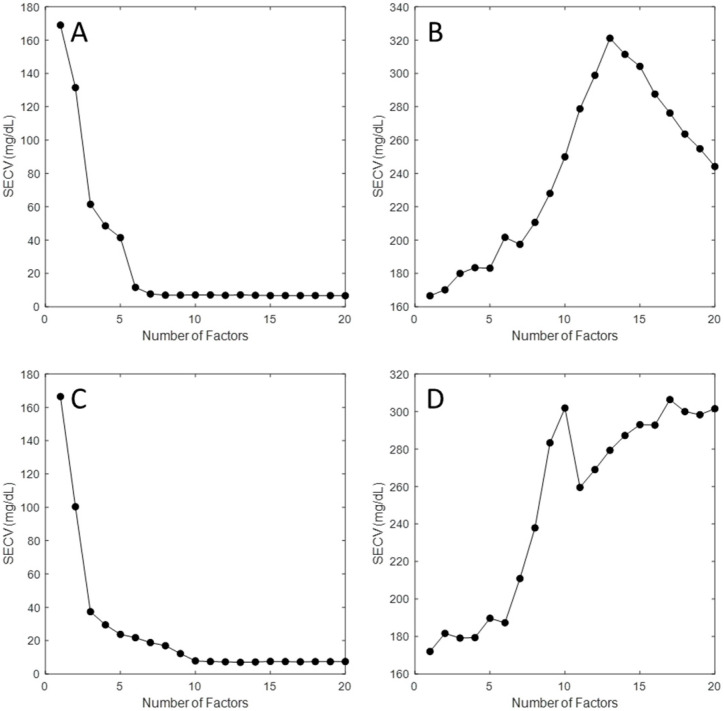 Figure 5
Peer Reviews
No public reviews on file for this paper yet. If you reviewed it on a platform where reviews are public (OpenReview, ICLR, NeurIPS, ICML), you can paste yours below so the community can read it here.
Videos
No videos yet. Explain this paper in a talk, walkthrough, or lecture? Add one.
Taxonomy
TopicsSpectroscopy Techniques in Biomedical and Chemical Research · Non-Invasive Vital Sign Monitoring · Optical Imaging and Spectroscopy Techniques