Multiple Dataset-Based Insights into the Phylogeny and Phylogeography of the Genus Exbucklandia (Hamamelidaceae): Additional Evidence on the Evolutionary History of Tropical Plants
Cuiying Huang, Qiang Fan, Kewang Xu, Shi Shi, Kaikai Meng, Heying Du, Jiehao Jin, Wei Guo, Hongwei Li, Sufang Chen, Wenbo Liao

TL;DR
This study explores the evolutionary history of the Exbucklandia genus in Southeast Asia, revealing how ancient climate changes shaped its genetic diversity and distribution.
Contribution
The study provides new phylogenetic and phylogeographic insights using multiple datasets to clarify the evolutionary relationships and hybridization patterns in Exbucklandia.
Findings
Chloroplast haplotypes grouped into three clades, with E. longipetala nested within Clades II and III.
Nuclear SSRs identified two ancestral gene pools, with distinct ancestry patterns among species.
Quaternary Glacial Cycles influenced southward expansions and hybridization in Exbucklandia.
Abstract
Southeast Asia’s biodiversity refugia, shaped by Neogene–Quaternary climatic shifts and the Tibetan Plateau uplift, preserve relict lineages like Exbucklandia (Hamamelidaceae). Once widespread across ancient continents, this genus now survives in Asian montane forests, offering insights into angiosperm diversification. Chloroplast haplotypes formed three clades—Clade I (E. tricuspis), Clade II (E. populnea), and Clade III (E. tonkinensis)—with E. longipetala haplotypes nested within II/III. Nuclear microsatellites (SSRs) identified two ancestral gene pools: E. populnea and E. tricuspis showed predominant ancestry in Pool A, while E. tonkinensis and E. longipetala were primarily assigned to Pool B. All taxa exhibited localized genetic admixture, particularly in sympatric zones. Divergence dating traced the genus’ origin to tropical Asia, with northward colonization of subtropical China…
Genes, proteins, chemicals, diseases, species, mutations and cell lines named across the full text — each resolved to its canonical identifier and authoritative record.
Click any figure to enlarge with its caption.
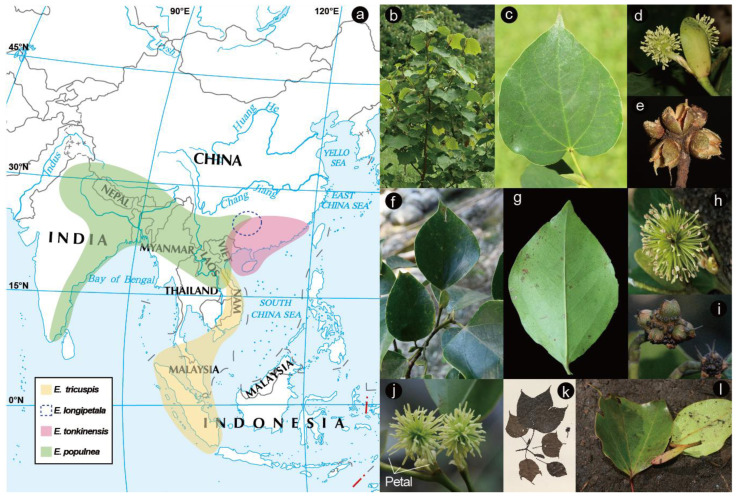 Figure 1
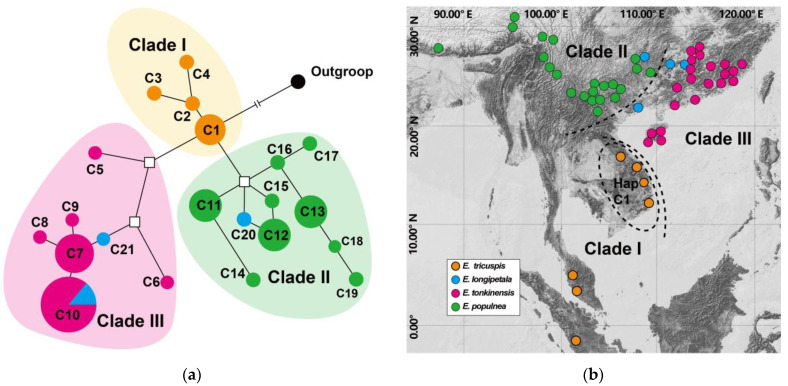 Figure 2
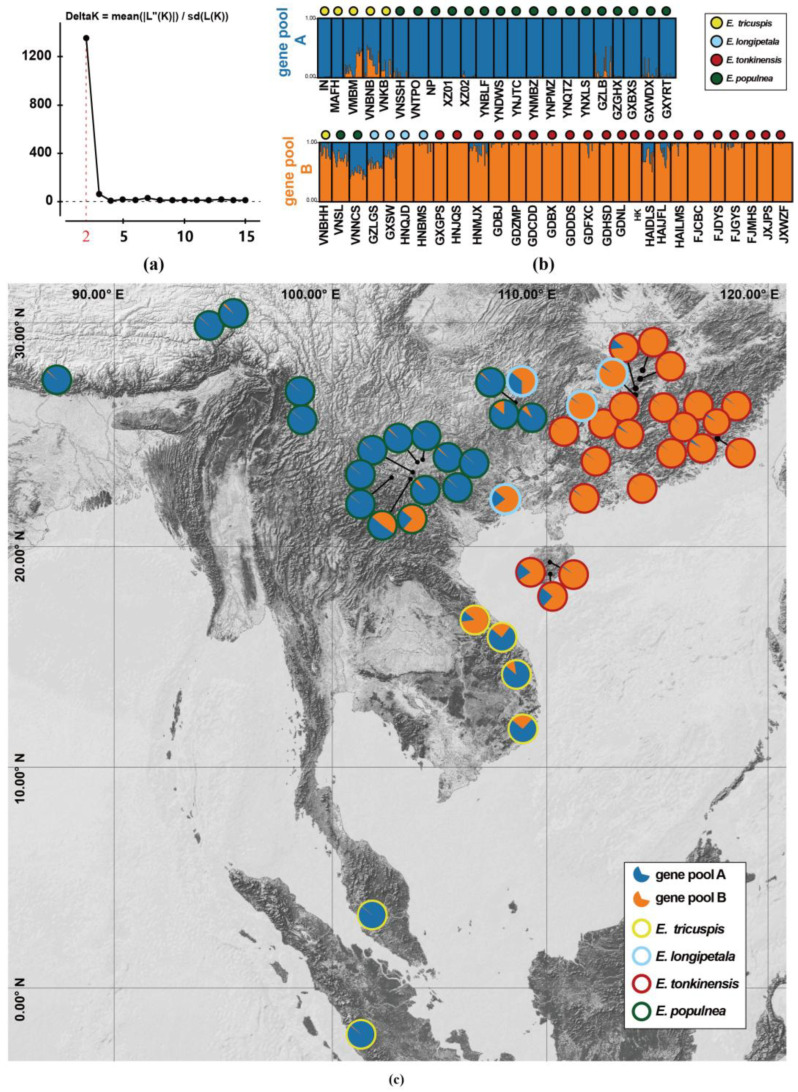 Figure 3
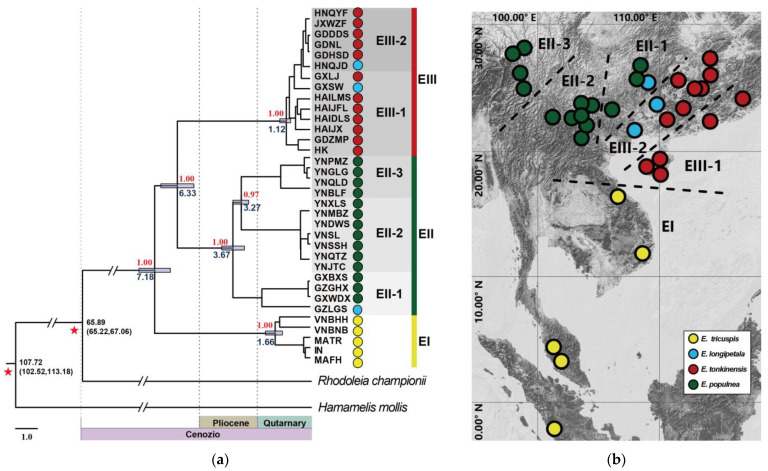 Figure 4
Peer Reviews
No public reviews on file for this paper yet. If you reviewed it on a platform where reviews are public (OpenReview, ICLR, NeurIPS, ICML), you can paste yours below so the community can read it here.
Videos
No videos yet. Explain this paper in a talk, walkthrough, or lecture? Add one.
Taxonomy
TopicsPlant and animal studies · Plant Diversity and Evolution · Plant and Fungal Species Descriptions