Acute Physiological and Perceptual Responses to Six Body-Weight Squat Exercise Variations
Daniel Santarém, Andreia Teixeira, António Amaral, Jaime Sampaio, Catarina Abrantes

TL;DR
This study compares how different body-weight squat exercises affect heart rate, muscle oxygen levels, and perceived effort in active individuals.
Contribution
The study provides a holistic comparison of physiological and perceptual responses to six squat variations during acute exercise.
Findings
Jumping squats caused the highest heart rate and lowest muscle oxygen saturation in the soleus.
Jumping squats were perceived as the most demanding at both overall and lower limb levels.
No differences were found in recovery time or SmO2 in the vastus lateralis muscle across variations.
Abstract
Adequate exercise prescription requires a deep understanding of the body’s response to exercise. This study explored the responses of heart rate (HR), muscle oxygen saturation (SmO2), and perceived exertion (RPE) during six body-weight squat exercise variations. A total of 15 recreationally active participants (age: 28.2 ± 8.0 years; body mass: 71.1 ± 11.2 kg; height: 1.73 ± 0.08 m) were recruited. Six body-weight squat variations (deep, jumping, single-leg, uneven, unstable, and wall-sit) were randomly performed for 90 s. Results revealed that the jumping squat promoted a higher average and peak HR (165.3 ± 14.5 and 146.1 ± 14.8 bpm, respectively), and a lower average SmO2 and higher deoxygenation SmO2 in the soleus muscle (40.3 ± 15.4 and 46.0 ± 11.4%, accordingly). No differences were observed in recovery time or in the same SmO2 derived-parameters in the vastus lateralis muscle. The…
Genes, proteins, chemicals, diseases, species, mutations and cell lines named across the full text — each resolved to its canonical identifier and authoritative record.
Click any figure to enlarge with its caption.
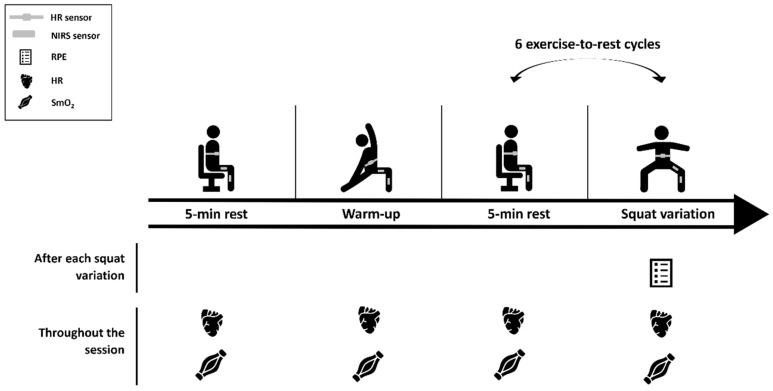 Figure 1
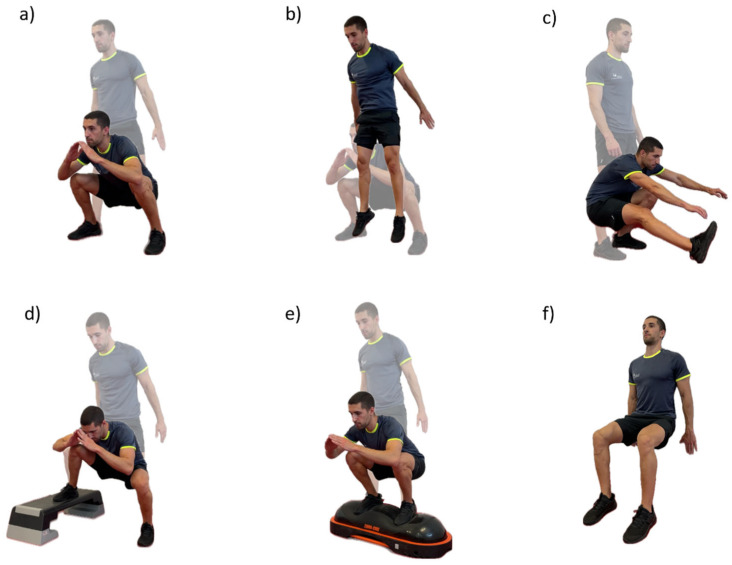 Figure 2
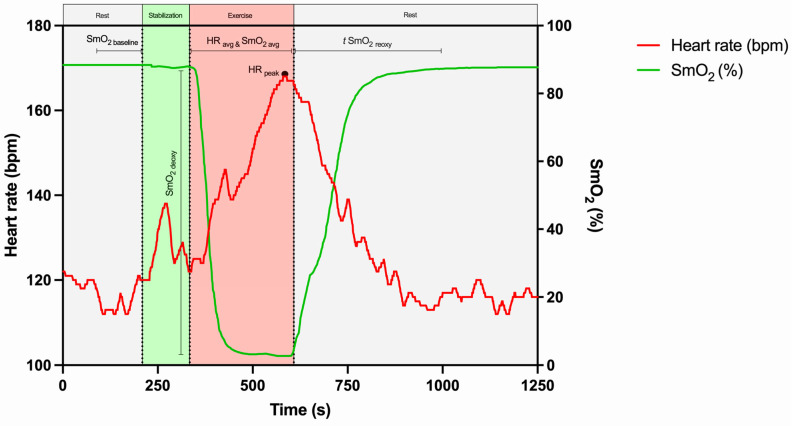 Figure 3
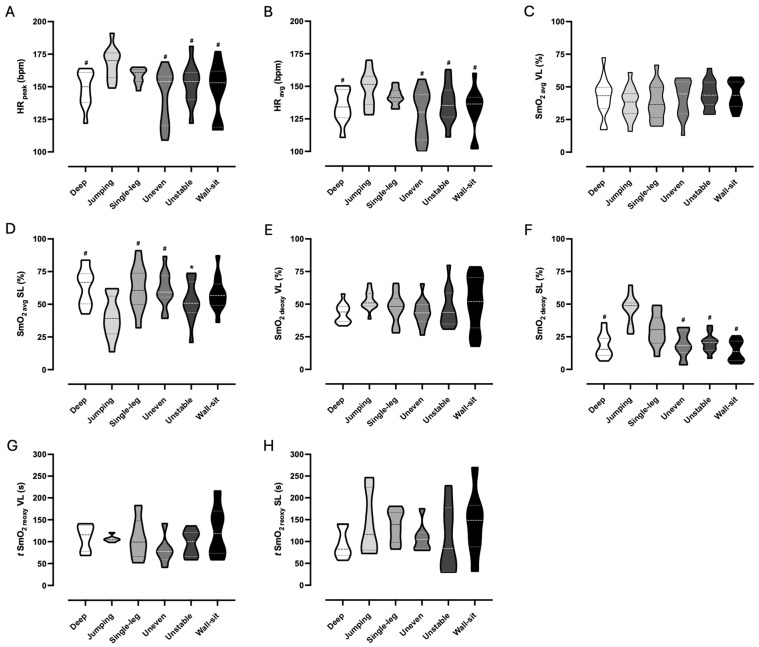 Figure 4
Peer Reviews
No public reviews on file for this paper yet. If you reviewed it on a platform where reviews are public (OpenReview, ICLR, NeurIPS, ICML), you can paste yours below so the community can read it here.
Videos
No videos yet. Explain this paper in a talk, walkthrough, or lecture? Add one.
Taxonomy
TopicsSports Performance and Training · Sports injuries and prevention · Sports Dynamics and Biomechanics