Adapting Young Adults’ In-Shoe Motion Sensor Gait Models for Knee Evaluation in Older Adults: A Study on Osteoarthritis and Healthy Knees
Chenhui Huang, Kenichiro Fukushi, Haruki Yaguchi, Keita Honda, Yusuke Sekiguchi, Zhenwei Wang, Yoshitaka Nozaki, Kentaro Nakahara, Satoru Ebihara, Shin-Ichi Izumi

TL;DR
This study shows that gait models from young adults using in-shoe sensors can be adapted to monitor knee health in older adults, including those with osteoarthritis.
Contribution
The novel adaptation of young adult gait models for knee evaluation in older adults using in-shoe motion sensors is demonstrated.
Findings
Gait models adapted from young adults effectively identified knee health differences in older adults with and without osteoarthritis.
Strong correlations were observed in key knee indicators like angles and angular jerk cost metrics between model predictions and true values.
Limitations include fixed biases and sensor placement inaccuracies that affect model precision.
Abstract
The human knee joint is crucial for mobility, especially in older adults who are susceptible to conditions like osteoarthritis (OA). Traditionally, assessing knee health requires complex gait analysis in clinical settings, which limits opportunities for convenient and continuous monitoring. This study leverages advancements in wearable technology to explore the adaptation of models based on in-shoe motion sensors (IMS), initially trained on young adults, for evaluating knee function in older populations, both healthy and with OA. Data were collected from 44 older OA patients, presenting various levels of severity, and 20 healthy older adults, with a focus on key knee indicators: knee angle measures (S1 to S3), temporal gait parameters (S4 and S5), and knee angular jerk cost metrics (S6 to S8). The models effectively identified trends and differences across these indicators between the…
Genes, proteins, chemicals, diseases, species, mutations and cell lines named across the full text — each resolved to its canonical identifier and authoritative record.
Click any figure to enlarge with its caption.
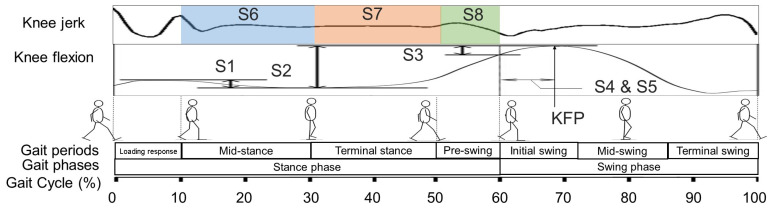 Figure 1
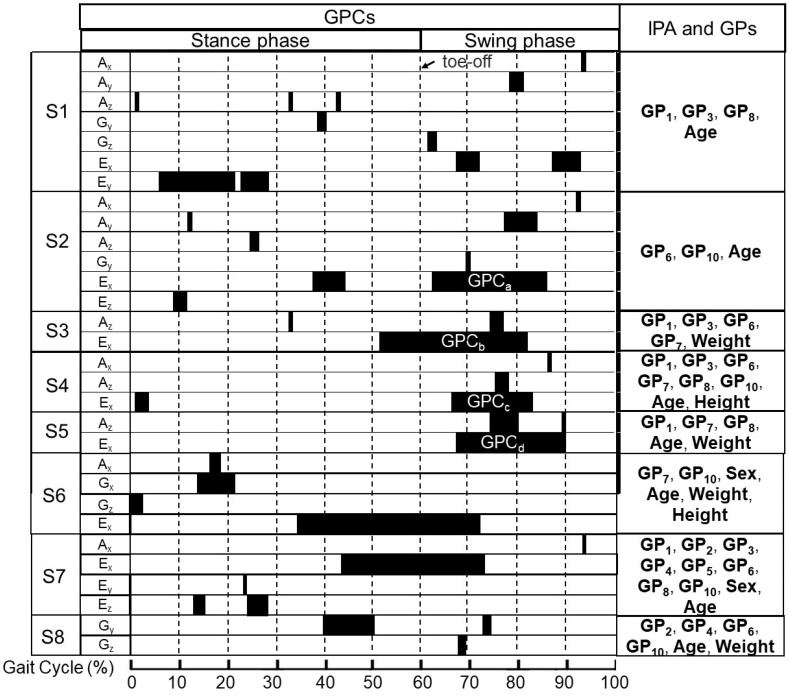 Figure 2
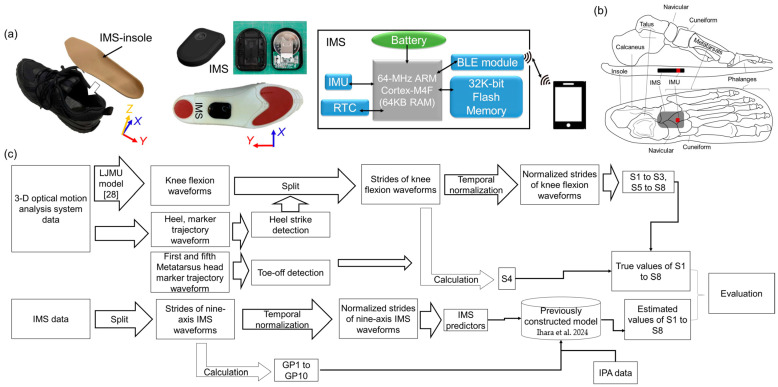 Figure 3
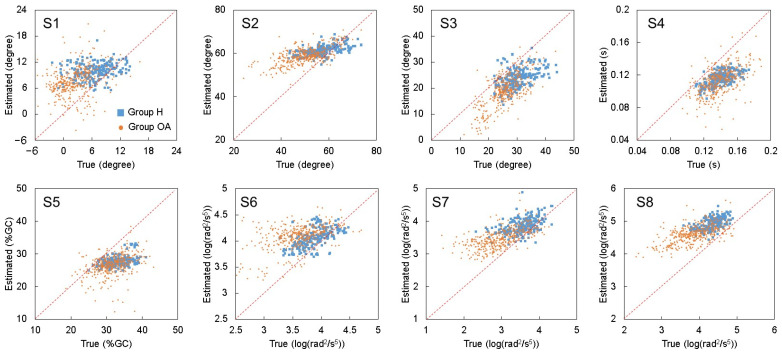 Figure 4
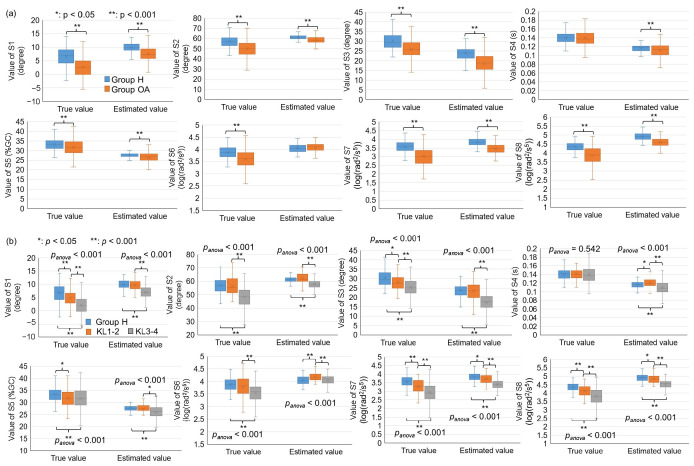 Figure 5
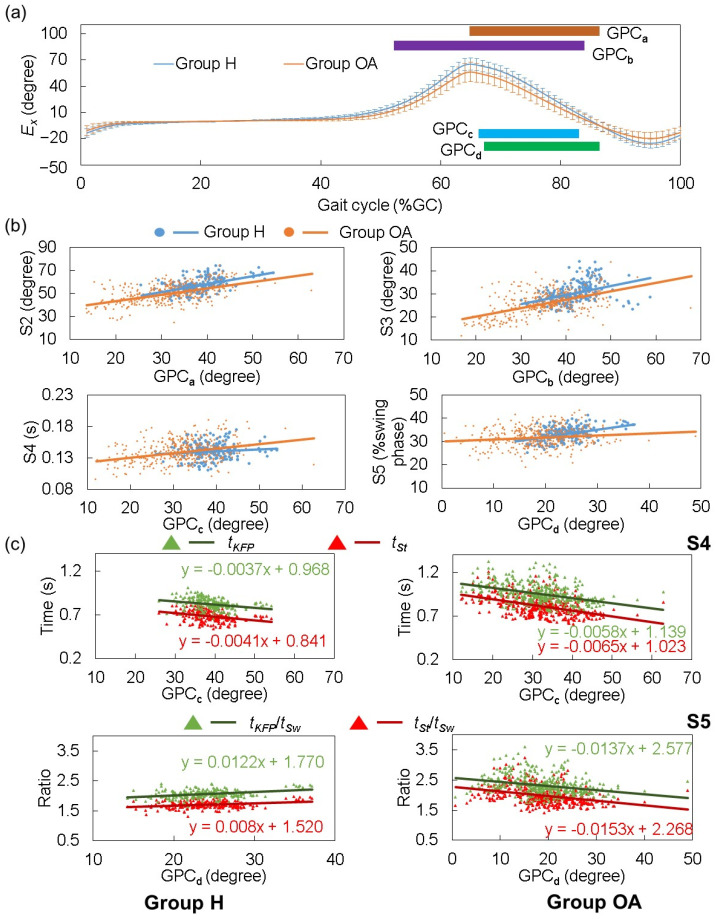 Figure 6
Peer Reviews
No public reviews on file for this paper yet. If you reviewed it on a platform where reviews are public (OpenReview, ICLR, NeurIPS, ICML), you can paste yours below so the community can read it here.
Videos
No videos yet. Explain this paper in a talk, walkthrough, or lecture? Add one.
Taxonomy
TopicsLower Extremity Biomechanics and Pathologies · Osteoarthritis Treatment and Mechanisms · Knee injuries and reconstruction techniques