First-Principles Calculations for Glycine Adsorption Dynamics and Surface-Enhanced Raman Spectroscopy on Diamond Surfaces
Shiyang Sun, Chi Zhang, Peilun An, Pingping Xu, Wenxing Zhang, Yuan Ren, Xin Tan, Jinlong Yu

TL;DR
This paper uses computational methods to study how glycine interacts with diamond surfaces, finding that certain configurations enhance Raman spectroscopy signals significantly.
Contribution
The study identifies a stable glycine adsorption configuration on diamond surfaces that strongly enhances Raman signals.
Findings
The carboxyl-terminated adsorption configuration (CAR) is the most stable and has the shortest interface distance.
Glycine's characteristic Raman peaks are enhanced over 200 times in the CAR configuration.
Metastable configurations transform into benzene-ring-like structures under thermal vibrations.
Abstract
Based on first-principles calculations, the stability of three adsorption configurations of glycine on the (100) surface of diamonds was studied, leading to an investigation into the surface-enhanced Raman scattering (SERS) effect of the diamond substrate. The results showed that the carboxyl-terminated adsorption configuration (CAR) was the most stable and shortest interface distance compared to other configurations. This stability was primarily attributed to the formation of strong polar covalent bonds between the carboxyl O atoms and the surface C atoms of the (100) surface of diamonds. These results were further corroborated by first-principles molecular dynamics simulations. Within the temperature range of 300 to 500 K, the glycine molecules in the carboxyl-terminated adjacent-dimer phenyl-like (CAR) configuration exhibited only simple thermal vibrations with varying amplitudes. In…
Genes, proteins, chemicals, diseases, species, mutations and cell lines named across the full text — each resolved to its canonical identifier and authoritative record.
Click any figure to enlarge with its caption.
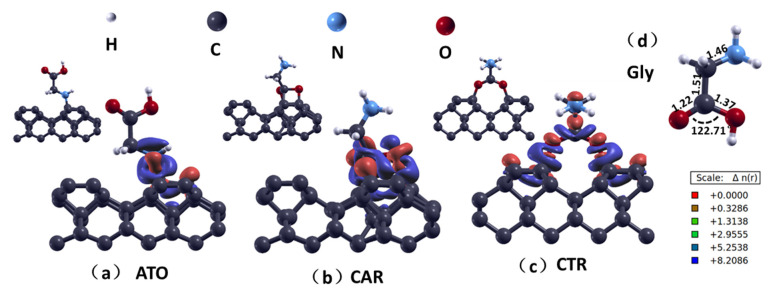 Figure 1
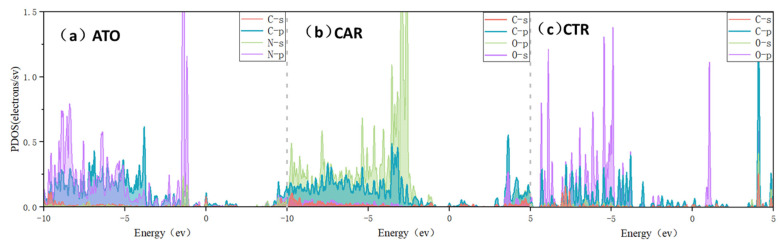 Figure 2
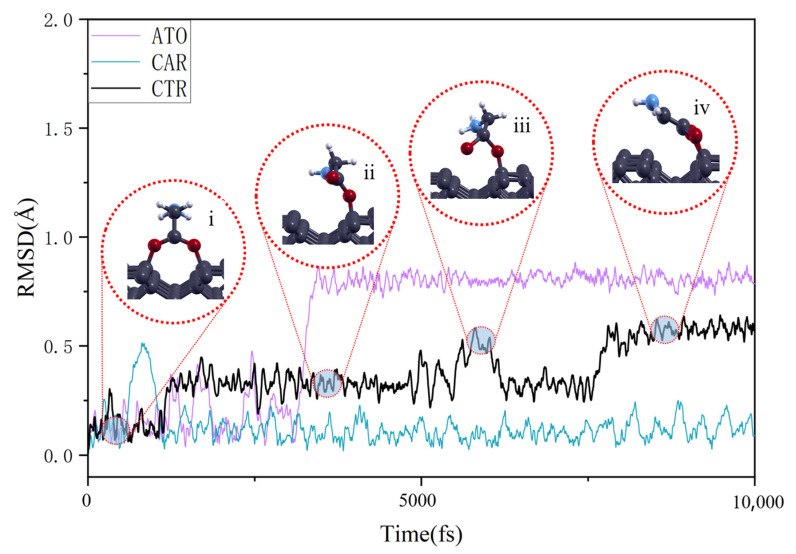 Figure 3
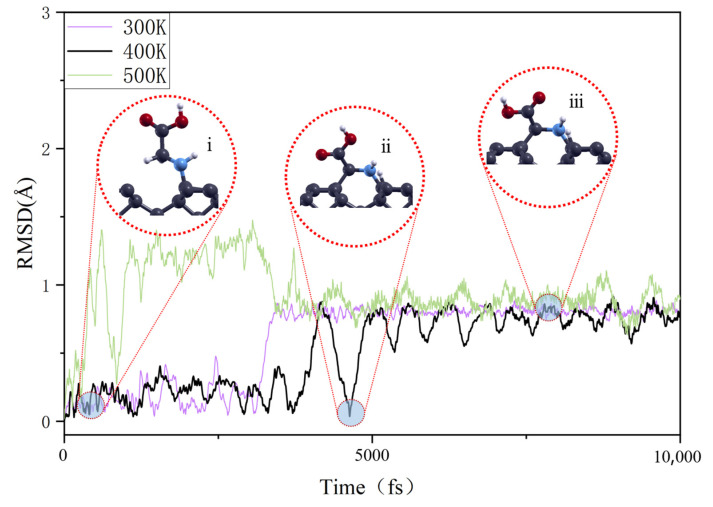 Figure 4
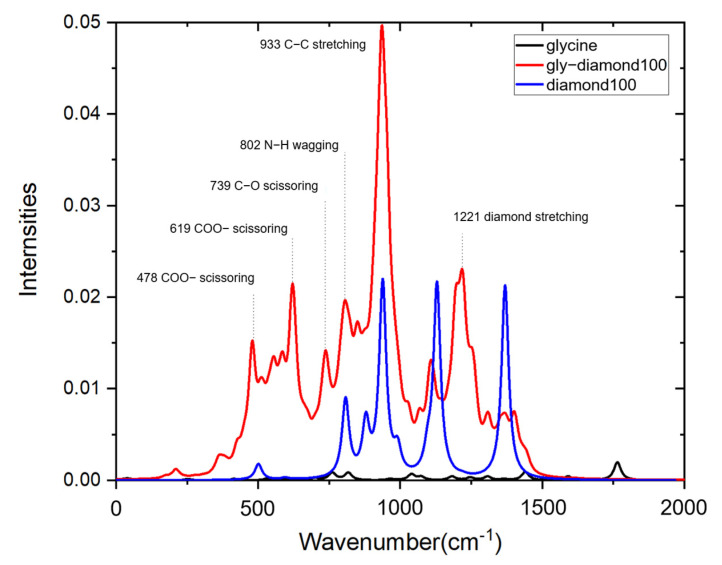 Figure 5
Peer Reviews
No public reviews on file for this paper yet. If you reviewed it on a platform where reviews are public (OpenReview, ICLR, NeurIPS, ICML), you can paste yours below so the community can read it here.
Videos
No videos yet. Explain this paper in a talk, walkthrough, or lecture? Add one.
Taxonomy
TopicsDiamond and Carbon-based Materials Research · Force Microscopy Techniques and Applications · Electronic and Structural Properties of Oxides