Molecular and Immobilized Tripodal Phosphine Ligands and Their Trinuclear Palladium Complexes
Maxwell R. Kimball, Kyle J. Cluff, Nattamai Bhuvanesh, Janet Blümel

TL;DR
This paper describes the synthesis and properties of tripodal phosphine ligands and their trinuclear palladium complexes, including their immobilization on silica surfaces.
Contribution
The novel contribution is the immobilization of a tripodal phosphine ligand on silica and its coordination with palladium and copper on the surface.
Findings
The ligands form trinuclear Pd complexes with a square planar coordination geometry.
The immobilized ligand coordinates PdCl2 on the surface, showing cis and trans coordination depending on surface coverage.
A surface-bound trinuclear Pd complex and a heterobimetallic Pd/Cu complex were successfully generated and characterized.
Abstract
The synthesis and characterization of the tripodal phosphines RSi(CH2CH2PPh2)3 (R = Me, OMe, OEt) (1–3) is described. The 1H NMR spectra of all phosphines display virtual coupling patterns. The ligands form the corresponding trinuclear Pd complexes [RSi(CH2CH2PPh2)3]2(PdCl2)3 (4–6) with three PdCl2 moieties sandwiched between two tripodal ligands. The complexes 4, 5, and 7 (R = OH) have been analyzed by single crystal X-ray diffraction. The coordination at the Pd center is square planar with the phosphine groups occupying trans positions. The 31P{1H} MAS NMR spectra of polycrystalline 1 are in accordance with the packing motif of the molecules in the unit cell. The tripodal ligand 3 has successfully been immobilized on silica as 3i. It coordinates PdCl2 on the surface, as demonstrated by 31P{1H} MAS NMR. Hereby, the cis coordination is prevalent when 3i has maximal surface coverage. At…
Genes, proteins, chemicals, diseases, species, mutations and cell lines named across the full text — each resolved to its canonical identifier and authoritative record.
Click any figure to enlarge with its caption.
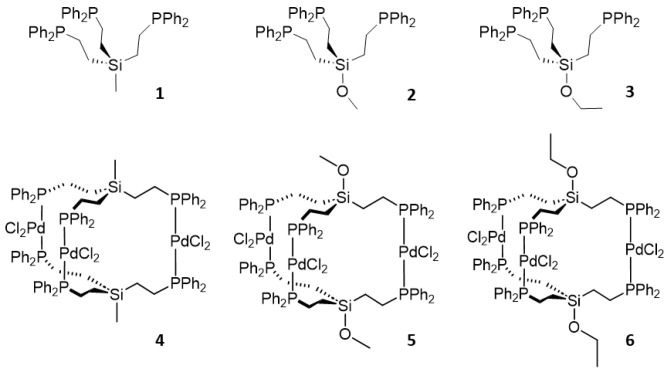 Figure 1
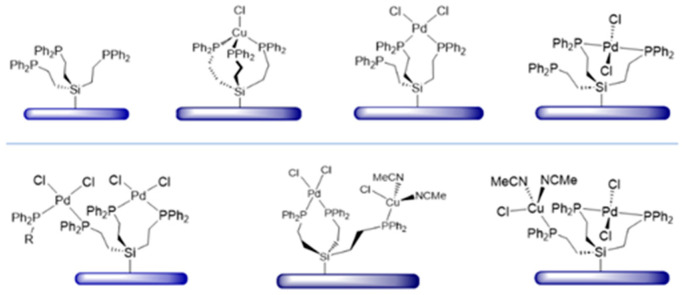 Figure 2
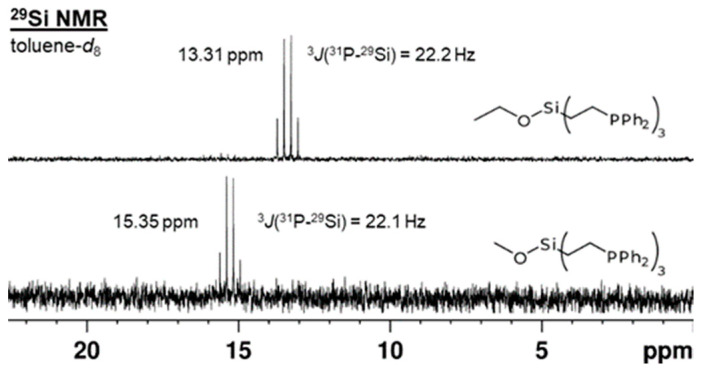 Figure 3
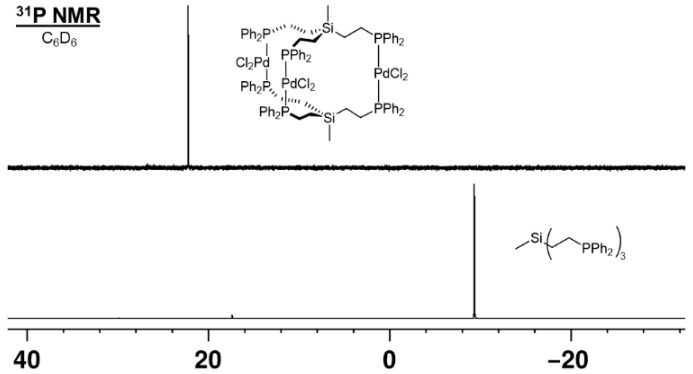 Figure 4
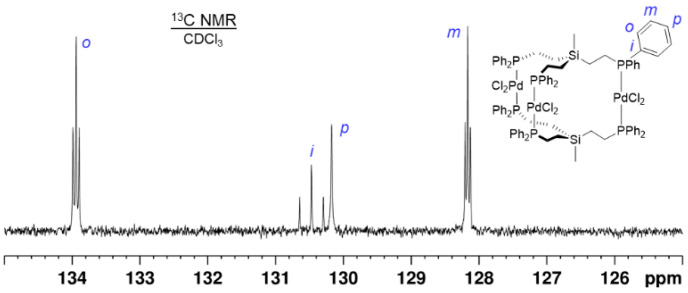 Figure 5
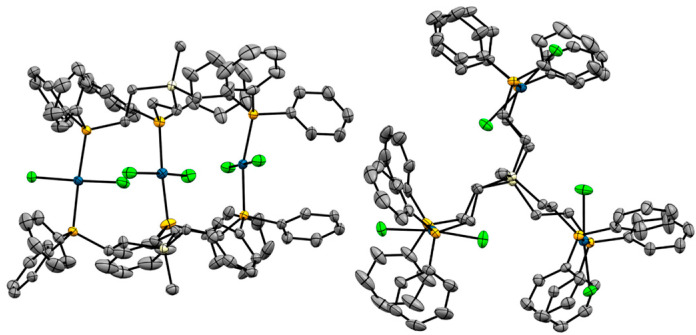 Figure 6
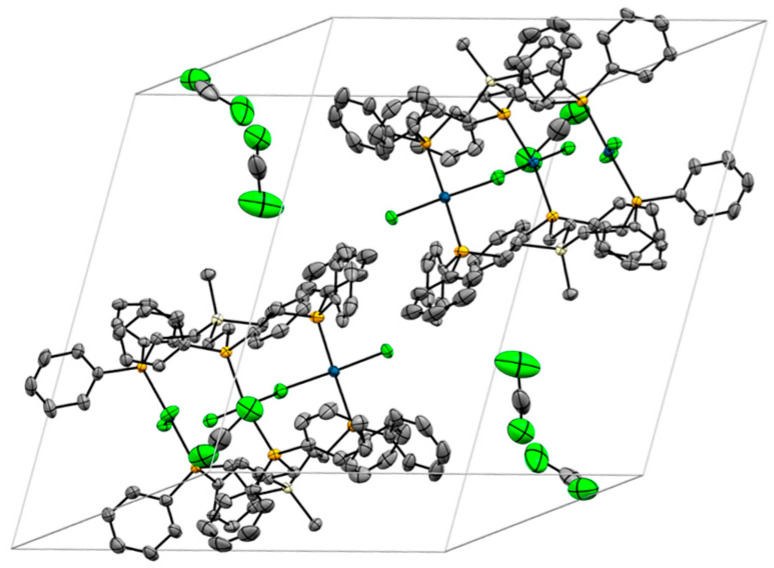 Figure 7
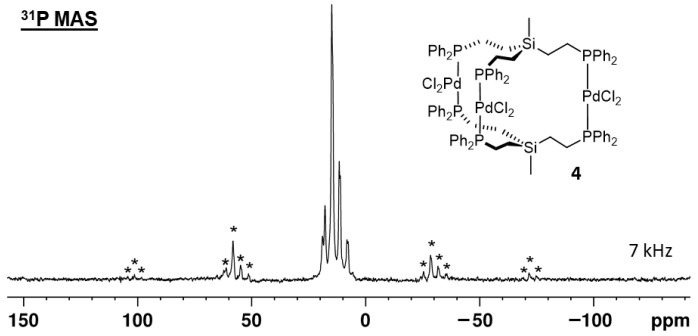 Figure 8
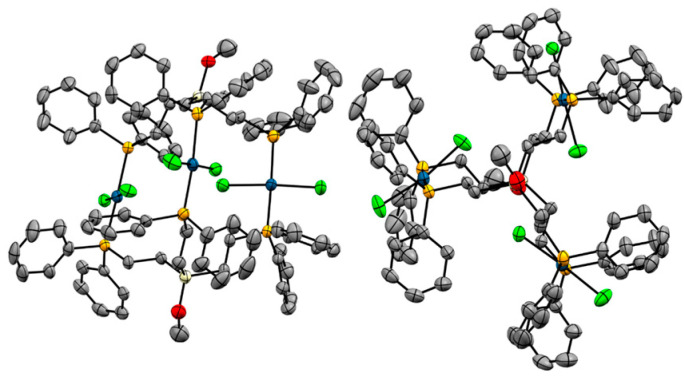 Figure 9
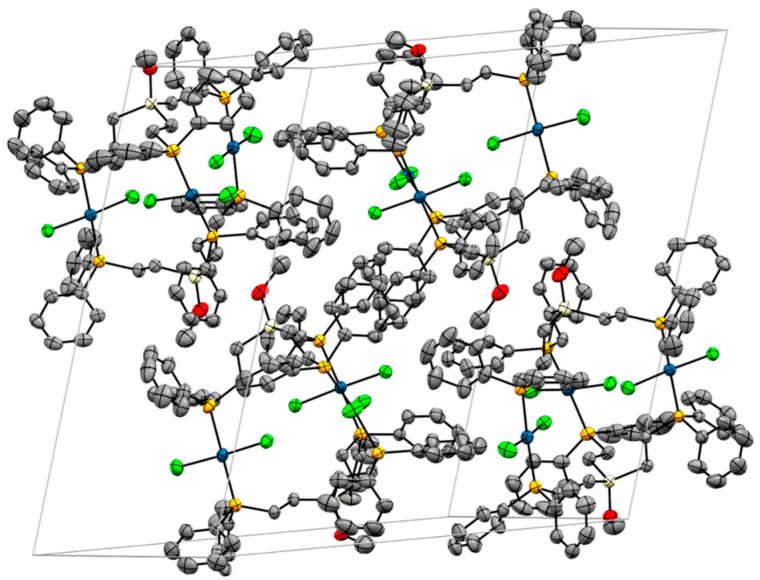 Figure 10
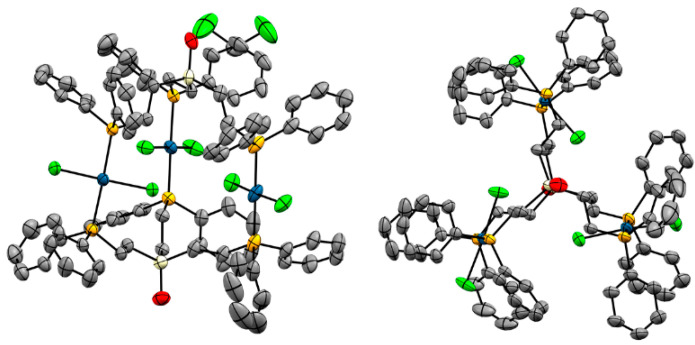 Figure 11
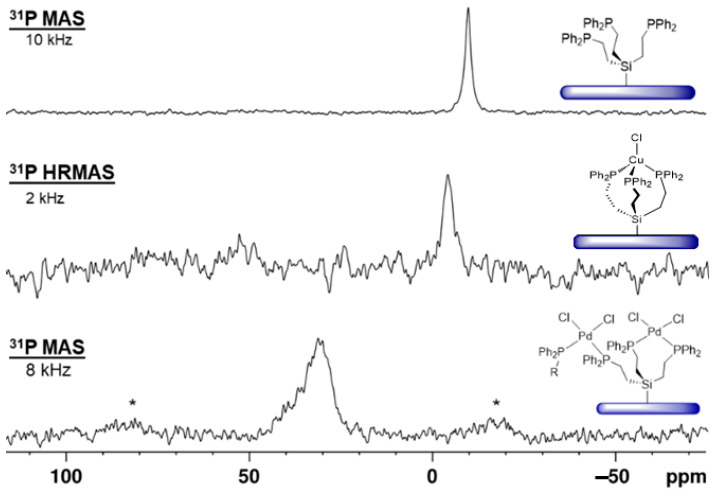 Figure 12
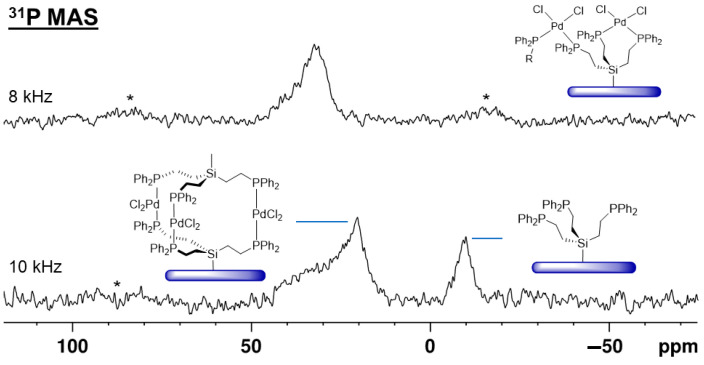 Figure 13
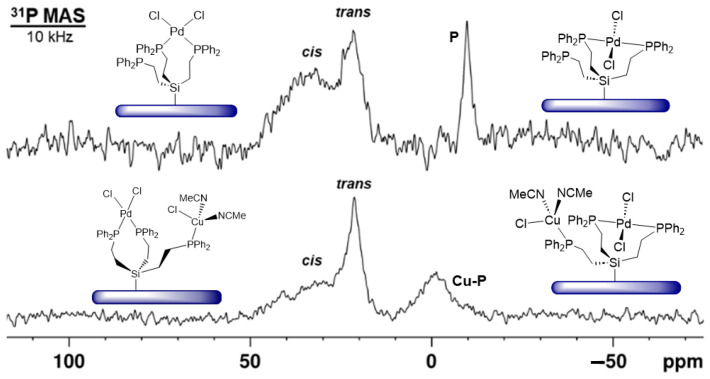 Figure 14
Peer Reviews
No public reviews on file for this paper yet. If you reviewed it on a platform where reviews are public (OpenReview, ICLR, NeurIPS, ICML), you can paste yours below so the community can read it here.
Videos
No videos yet. Explain this paper in a talk, walkthrough, or lecture? Add one.
Taxonomy
TopicsOrganometallic Complex Synthesis and Catalysis · Asymmetric Hydrogenation and Catalysis · Metal complexes synthesis and properties