New Insights into the Adsorption Mechanism of Vanadium Through Quaternary Ammonium Salt-Functionalized SiO2: Synergistic Experiments Utilizing Energy Decomposition Analysis
Qiang Fu, Jianhua Tian, Jinjun Yang, Jie Wang, Meitong Li, Gangzhen Jiao, Yuhong Xie, Wenjiao Yuan, Cuihong Wang

TL;DR
This study explores how vanadium binds to silica modified with quaternary ammonium salts, revealing that chemical bonds and non-bonding interactions are key to the adsorption process.
Contribution
The paper introduces energy decomposition analysis to quantify the roles of chemical and non-bonding interactions in vanadium adsorption by functionalized silica.
Findings
SiO2@DMOA achieved 99.40% vanadium adsorption and a maximum capacity of 39.16 mg g−1.
Chemical bonds contributed 80.26% to the interaction energy between functional groups and vanadium.
Steric hindrance, charge, polarizability, and solvation effects significantly influence the adsorption process.
Abstract
Introducing organic functional groups to adsorbent surfaces enhances vanadium adsorption, an effective strategy for vanadium enrichment. In a quest for a profounder comprehension of the above adsorption mechanism, this study synthesized five types of quaternary ammonium salt-functionalized silica (QAS-SiO2) and investigated the influence of functional groups, pH values, contact time, and temperature on vanadium (V) adsorption. The results indicated that the optimal QAS-SiO2 (SiO2@DMOA) achieved a vanadium adsorption rate of 99.40% and a maximum adsorption capacity of 39.16 mg g−1. SiO2@DMOA exhibited favorable adsorption selectivity for V over chromium (Cr), with a maximum separation factor (βV/Cr) of 135.42 at pH 3.3. SiO2@DMOA maintained efficient adsorption performance over five repeated cycles. A fusion of adsorption trials with energy decomposition analysis (EDA) tentatively…
Genes, proteins, chemicals, diseases, species, mutations and cell lines named across the full text — each resolved to its canonical identifier and authoritative record.
Click any figure to enlarge with its caption.
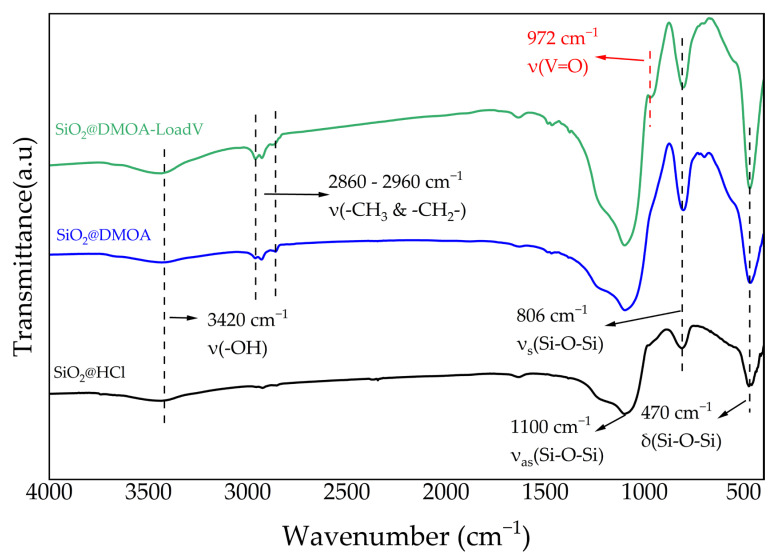 Figure 1
 Figure 2
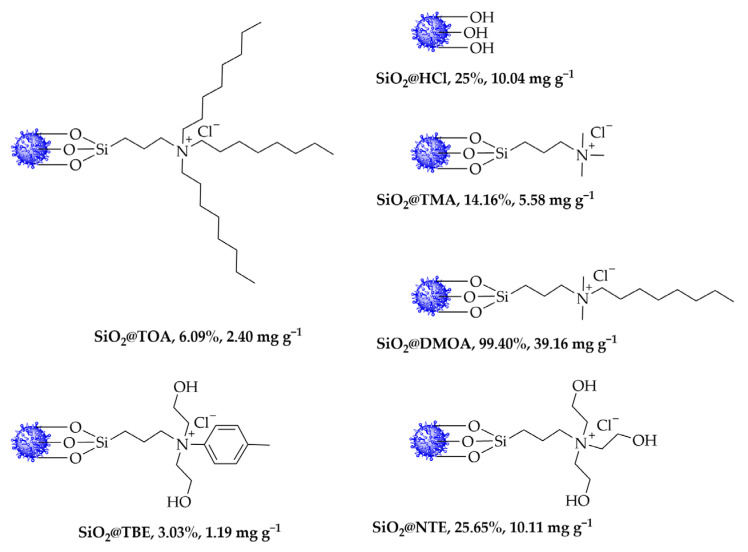 Figure 3
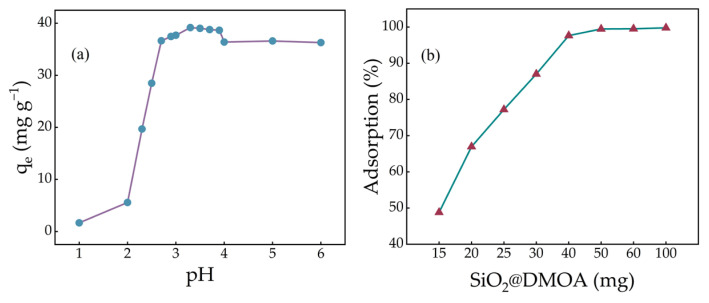 Figure 4
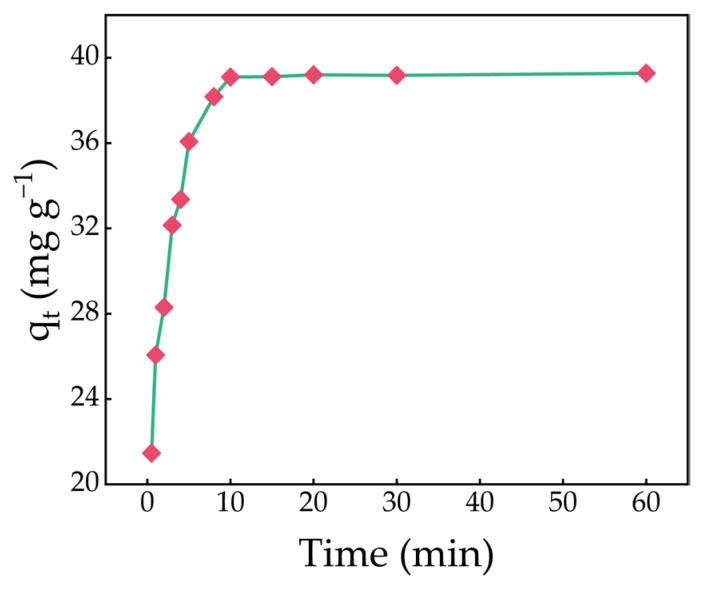 Figure 5
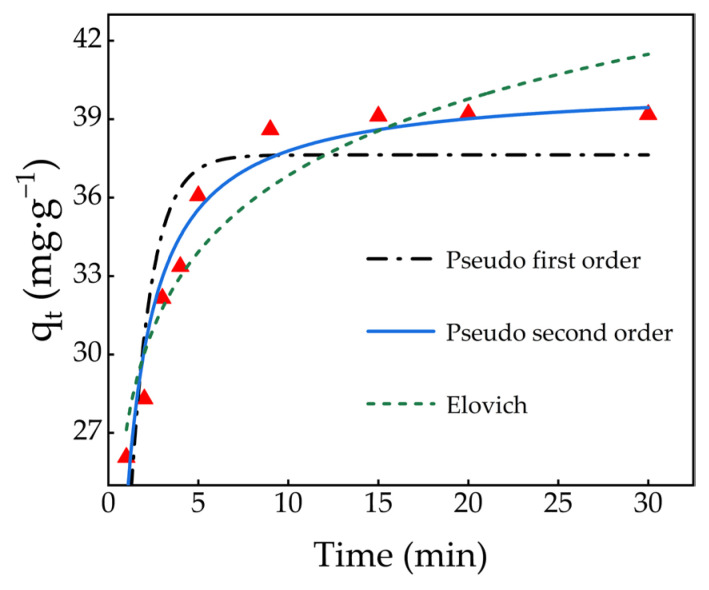 Figure 6
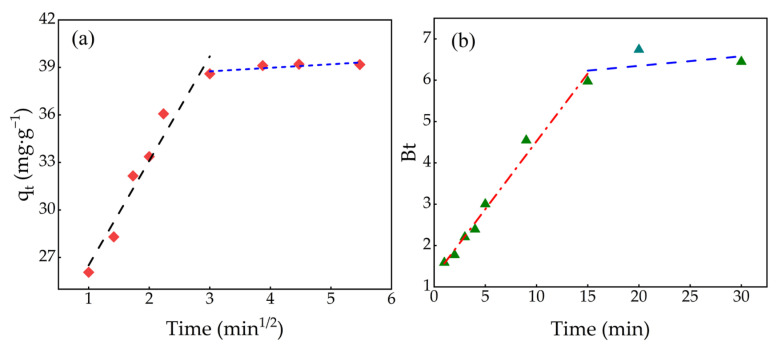 Figure 7
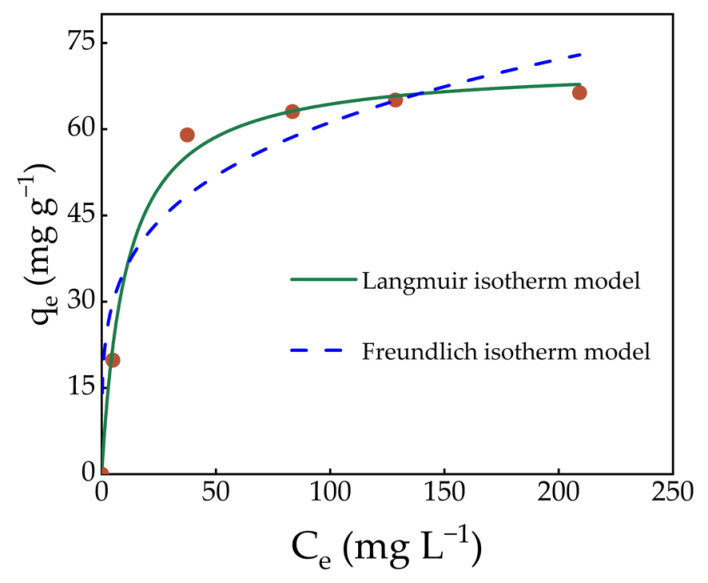 Figure 8
 Figure 9
 Figure 10
 Figure 11
 Figure 12
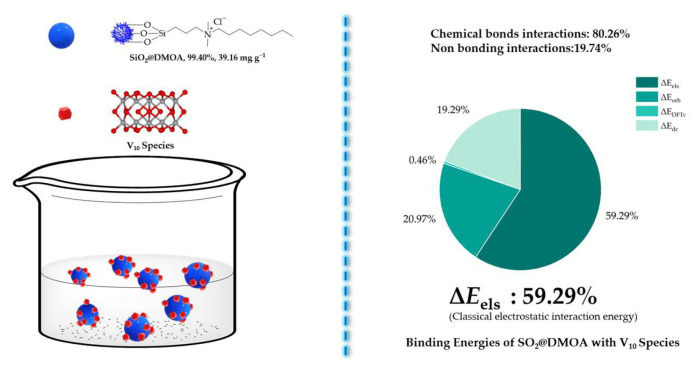 Figure 13
 Figure 14
Peer Reviews
No public reviews on file for this paper yet. If you reviewed it on a platform where reviews are public (OpenReview, ICLR, NeurIPS, ICML), you can paste yours below so the community can read it here.
Videos
No videos yet. Explain this paper in a talk, walkthrough, or lecture? Add one.
Taxonomy
TopicsVanadium and Halogenation Chemistry · Metal Extraction and Bioleaching · Corrosion Behavior and Inhibition