In Situ Anchored, Ultrasmall, Oxygen Vacancy-Rich TiO2−x on Carbonized Bacterial Cellulose for the Efficient Adsorption and Separation of Organic Pollutants
Man Zhou, Yanli Zhou, Minmin Ni, Yuzhe Zhang, Song Xu, Hao Ma, Jian Zhou, Jin Zhao, Liwei Lin, Zhongyu Li

TL;DR
Researchers developed a new method to create a highly effective adsorbent for removing organic dyes from wastewater using modified bacterial cellulose.
Contribution
A novel in situ anchoring strategy for oxygen vacancy-rich TiO2−x on carbonized bacterial cellulose is introduced for efficient organic pollutant separation.
Findings
The TiO2−x/CBC adsorbent achieved a high adsorption capacity of 101.4 mg/g for methylene blue.
The system showed a 97.07% separation efficiency for MB/MO solutions at an optimized carbonization temperature of 300 °C.
The adsorbent retained over 86% of its efficiency after four regeneration cycles.
Abstract
Superior selective adsorption of organic dye is still a big challenge in the process of dye wastewater treatment. Meanwhile, low-price and environmentally friendly biomass-based adsorbents show huge potential in the fields of separation and purification. In this study, we adopted the “hydrolysis–calcination method” to develop a novel in situ anchoring strategy for ultrasmall TiO2−x on carbonized bacterial cellulose (CBC), which was derived from natural bacterial cellulose. Notably, 3D networks of porous CBC played a dual role for both providing hydrolytic sites and controlling the oxygen vacancies (Vo) of TiO2−x. As for the single-dye adsorption, the TiO2−x/CBC had a strong adsorption ability (101.4 mg/g) for removing methylene blue (MB), which was much higher than that of methyl orange (MO), malachite green (MG), rhodamine B (RhB), and tetracyclines (TC). Moreover, under the optimized…
Genes, proteins, chemicals, diseases, species, mutations and cell lines named across the full text — each resolved to its canonical identifier and authoritative record.
Click any figure to enlarge with its caption.
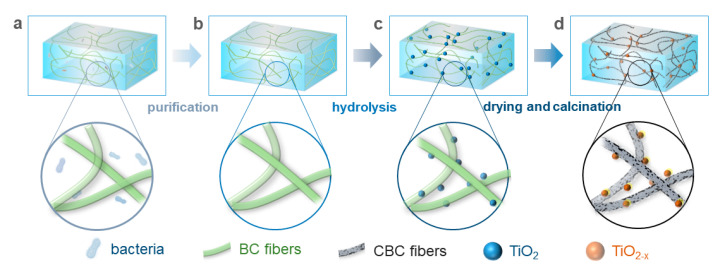 Figure 1
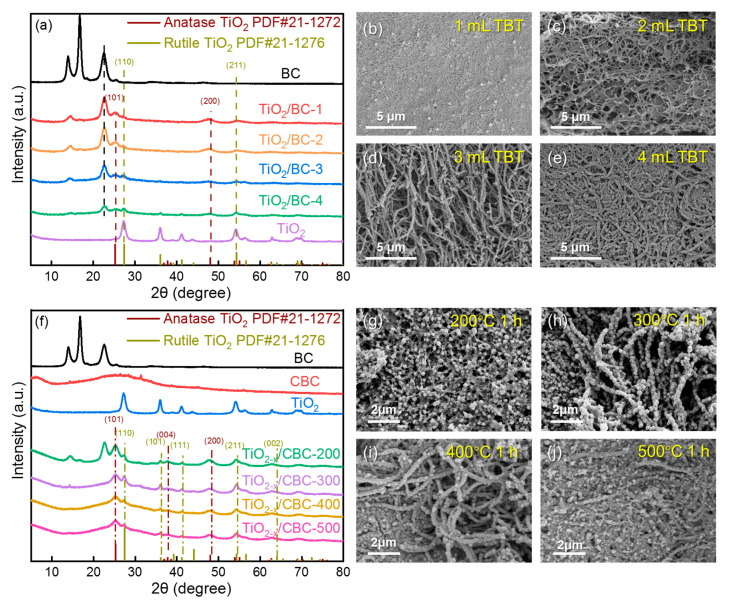 Figure 2
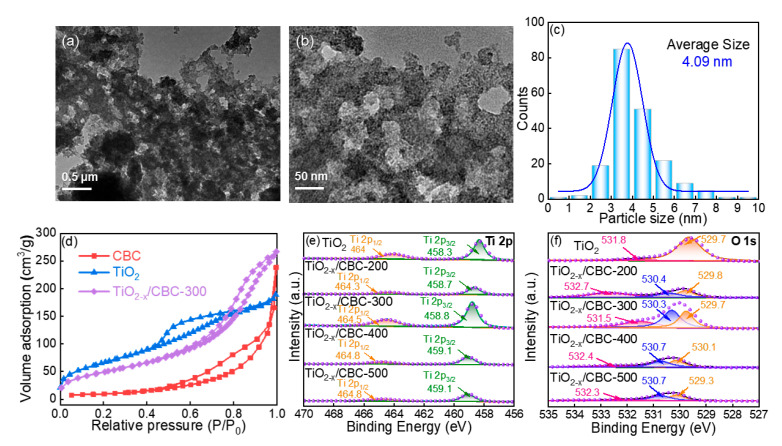 Figure 3
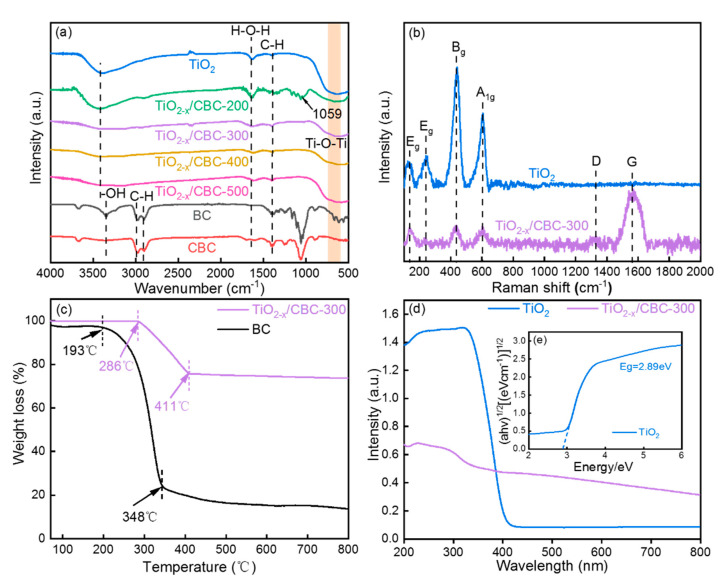 Figure 4
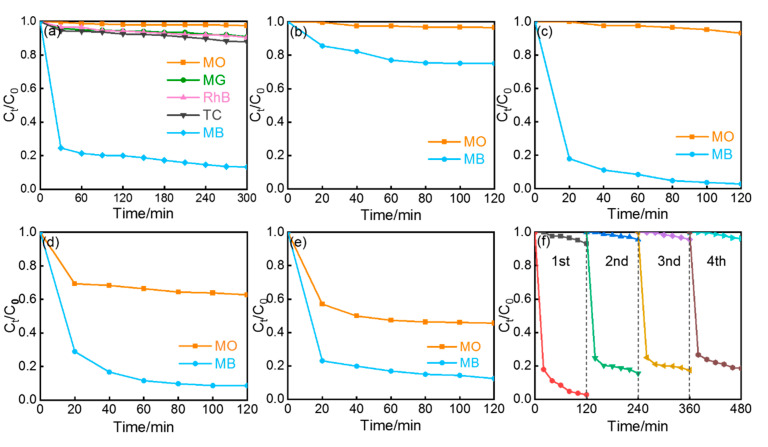 Figure 5
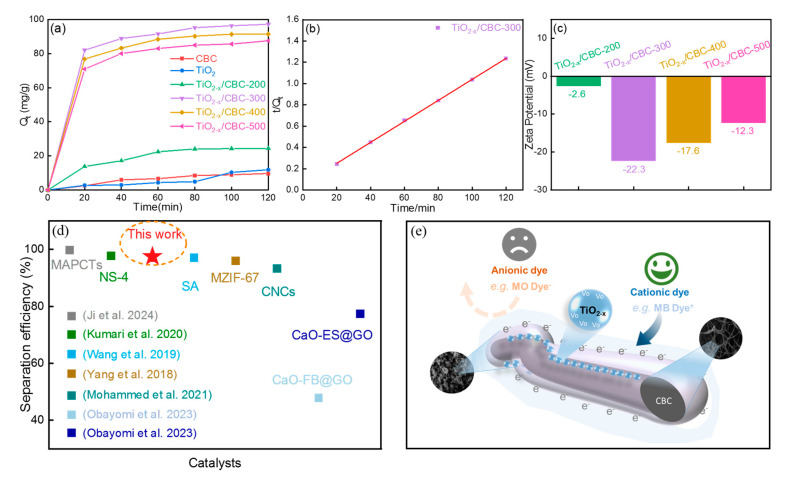 Figure 6
Peer Reviews
No public reviews on file for this paper yet. If you reviewed it on a platform where reviews are public (OpenReview, ICLR, NeurIPS, ICML), you can paste yours below so the community can read it here.
Videos
No videos yet. Explain this paper in a talk, walkthrough, or lecture? Add one.
Taxonomy
TopicsNanomaterials for catalytic reactions · Adsorption and biosorption for pollutant removal · Carbon and Quantum Dots Applications