To Transfer or Not to Transfer an Electron: Anionic Metal Centers Reveal Dual Functionality for Polymerization Reactions
Andrei Evdokimov, Evangelos Miliordos

TL;DR
This paper explores how anionic cobalt centers can act in two different ways during polymerization reactions, depending on the reaction conditions.
Contribution
The study reveals dual functionality of anionic metal centers in polymerization through two distinct reaction mechanisms.
Findings
Co(CO)4− can act as a nucleophile or initiate radical polymerization via single electron transfer.
The activation barriers for the two reaction paths are similar, making the mechanism choice sensitive to conditions.
Solvent effects are suggested to significantly influence the reaction outcome.
Abstract
Catalysts with anionic metal centers have recently been proposed to enhance the performance of various chemical processes. Here, we focus on the reactivity of Co(CO)4− for the polymerization of aziridine and carbon monoxide to form polypeptoids, motivated by earlier experimental studies. We used multi-reference and density functional theory methods to investigate possible reaction mechanisms and provide insights into the role of the negatively charged cobalt center. Two different reaction paths were identified. In the first path, Co− acts as a nucleophile, donating an electron pair to the reaction substrate, while in the second path, it performs a single electron transfer to the substrate, initiating radical polymerization. The difference in the activation barriers for the two key steps is small and falls within the accuracy of our calculations. As suggested in the literature, solvent…
Genes, proteins, chemicals, diseases, species, mutations and cell lines named across the full text — each resolved to its canonical identifier and authoritative record.
Click any figure to enlarge with its caption.
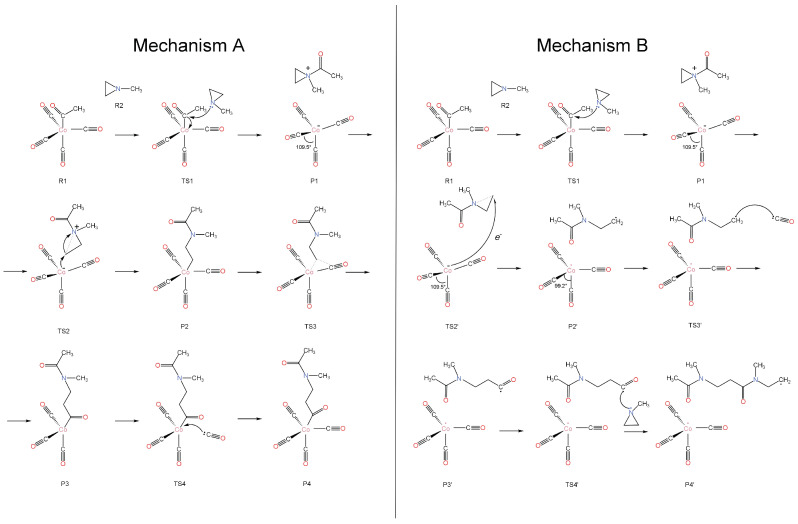 Figure 1
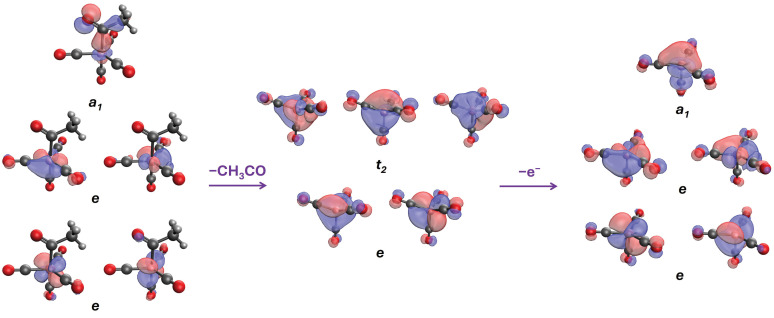 Figure 2
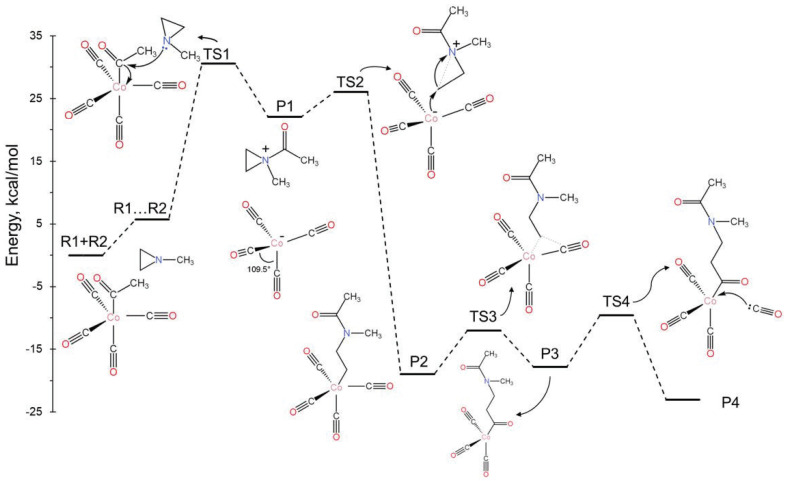 Figure 3
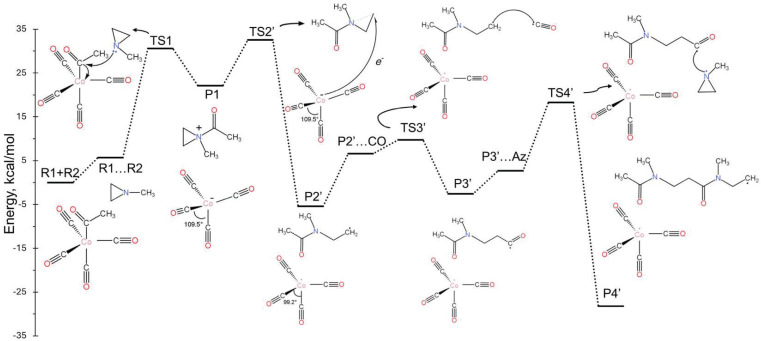 Figure 4
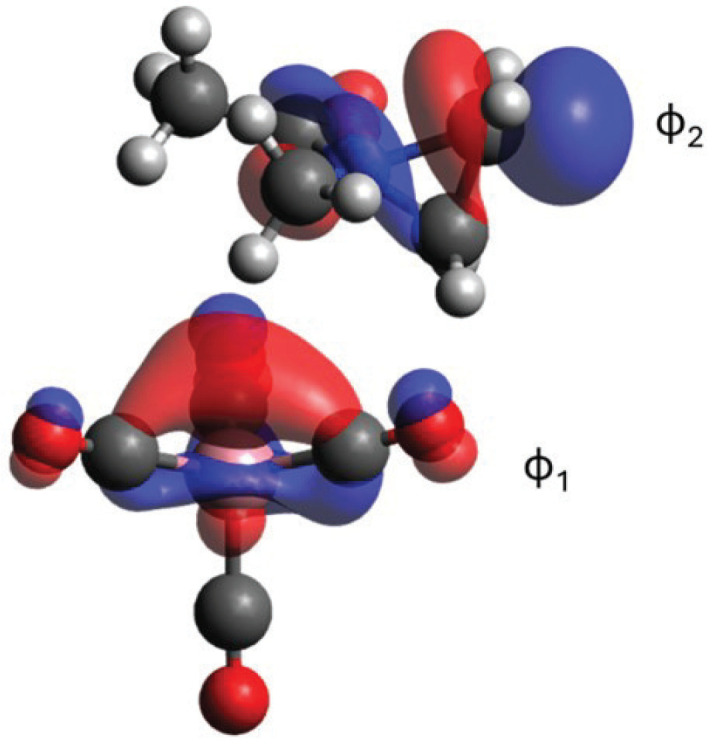 Figure 5
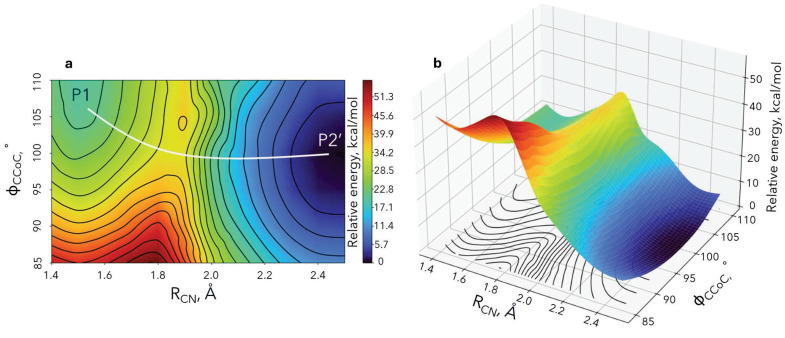 Figure 6
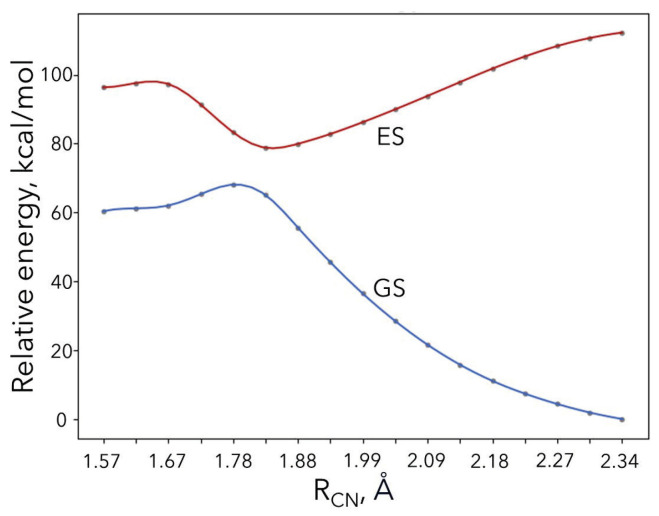 Figure 7
Peer Reviews
No public reviews on file for this paper yet. If you reviewed it on a platform where reviews are public (OpenReview, ICLR, NeurIPS, ICML), you can paste yours below so the community can read it here.
Videos
No videos yet. Explain this paper in a talk, walkthrough, or lecture? Add one.
Taxonomy
TopicsCarbon dioxide utilization in catalysis · CO2 Reduction Techniques and Catalysts · Organometallic Complex Synthesis and Catalysis