Kahook Dual Blade Goniotomy Outcomes in the Underserved Dominican Republic Black and Afro-Latinx Population
Cristos Ifantides, Hernan Bejar, Jennifer Patnaik, Erin Sieck, Mina Pantcheva, Cara Capitena Young, Margarita Arbaje, William McCollum

TL;DR
A study in the Dominican Republic found that a new surgical technique effectively reduced eye pressure and medication use in Black and Afro-Latinx patients with glaucoma, including severe cases.
Contribution
This is the first study to evaluate Kahook Dual Blade goniotomy in Black and Afro-Latinx populations for all glaucoma severities, including severe cases.
Findings
Kahook Dual Blade goniotomy achieved a 31.5% average IOP reduction across all time points up to 20 months post-surgery.
95.6% of patients achieved surgical success at one month, with success rates remaining high through 20 months.
The procedure reduced the number of glaucoma medications by an average of two by month 20.
Abstract
Background/Objectives: Black and Afro-Latinx communities have a higher propensity for more-severe glaucoma at a younger age. This study aimed to use the Kahook Dual Blade (KDB) to treat all glaucoma subtypes and severity levels in this historically underserved community. Materials and Methods: This study involved a retrospective analysis of surgical case records, with follow-up through 20 months. The subjects were glaucoma patients at Hospital Elias Santana in Santo Domingo, Dominican Republic. Inclusion criteria were age >18 years and a minimum follow-up of 1 year after surgery. All glaucoma subtypes and disease severities were included, including previous glaucoma procedures. Sequential patients undergoing KDB goniotomy alone or in combination with phacoemulsification cataract surgery were assessed. IOP data and number of medications were collected at specific time points: baseline,…
Genes, proteins, chemicals, diseases, species, mutations and cell lines named across the full text — each resolved to its canonical identifier and authoritative record.
Click any figure to enlarge with its caption.
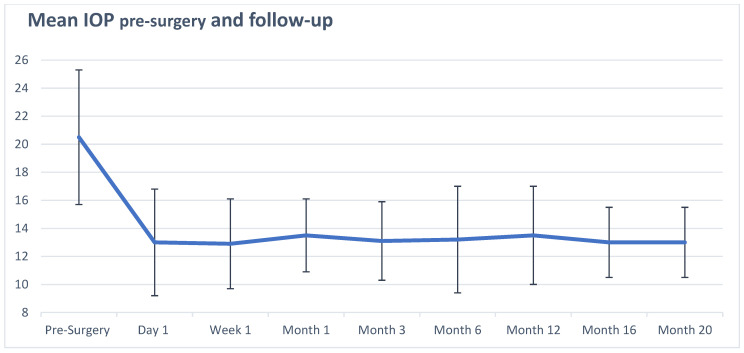 Figure 1
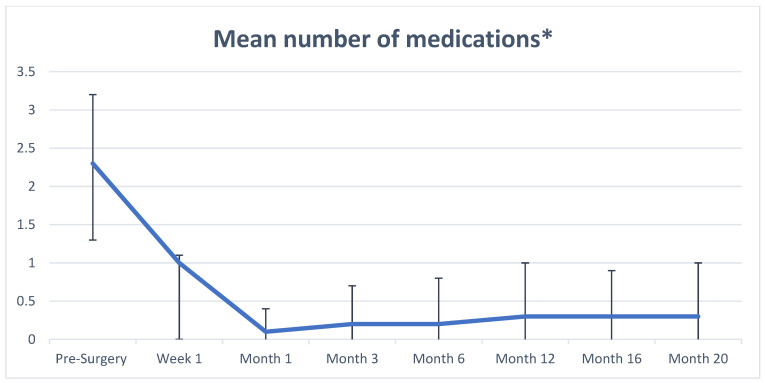 Figure 2
Peer Reviews
No public reviews on file for this paper yet. If you reviewed it on a platform where reviews are public (OpenReview, ICLR, NeurIPS, ICML), you can paste yours below so the community can read it here.
Videos
No videos yet. Explain this paper in a talk, walkthrough, or lecture? Add one.
Taxonomy
TopicsGlaucoma and retinal disorders · Hemispheric Asymmetry in Neuroscience · Corneal surgery and disorders