Patterns of Disease Progression and Outcomes of Inferior ST-Elevation Myocardial Infarction Complicated by Cardiogenic Shock: The Multicenter INSTINCT Registry
Giulia Botti, Marina Pieri, Luigi Cappannoli, Andrea Raffaele Munafò, Mario Gramegna, Marco Gamardella, Rita Camporotondo, Cristina Aurigemma, Marco Ferlini, Stefania Guida, Angelicarosa Cascone, Filippo Russo, Giuseppe Lanzillo, Francesco Burzotta, Matteo Montorfano

TL;DR
This study examines the progression and outcomes of inferior heart attacks complicated by cardiogenic shock, finding high mortality and key risk factors.
Contribution
The study provides new insights into the patterns and outcomes of inferior STEMI complicated by cardiogenic shock using a multicenter registry.
Findings
In-hospital mortality rate was 22.3% for inferior STEMI complicated by cardiogenic shock.
Prolonged CPR, low blood pressure, and elevated lactates predicted higher mortality.
Worsening cardiogenic shock was rare but linked to significantly higher mortality and complications.
Abstract
Background: Cardiogenic shock (CS) is a frequent presentation of anterior ST-elevation myocardial infarction (STEMI); however, data regarding disease progression and outcomes in inferior STEMI complicated by CS are scarce. The present study aims to analyze the prevalence, patterns of disease progression, and outcomes of inferior STEMI-CS. Methods: The INSTINCT (Inferior ST-elevation myocardial Infarction complicated by Cardiogenic shock) Registry retrospectively included consecutive patients who developed CS following inferior STEMI treated at three centers in Italy from 2015 to 2023. Data regarding CS stage according to the Society of Cardiovascular Angiography and Interventions (SCAI) upon diagnosis of shock and during disease progression and in-hospital outcomes were collected. Patients were defined “worsening” (WPs) if the SCAI stage increased. Results: A total of 130 patients…
Genes, proteins, chemicals, diseases, species, mutations and cell lines named across the full text — each resolved to its canonical identifier and authoritative record.
Click any figure to enlarge with its caption.
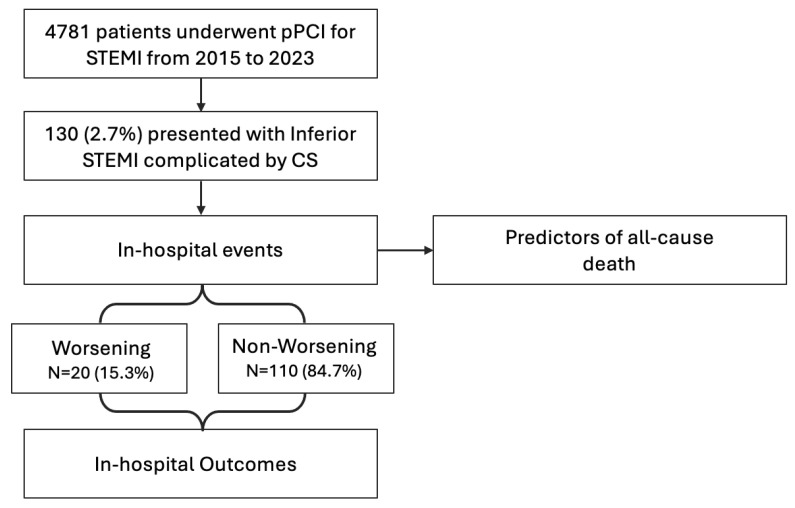 Figure 1
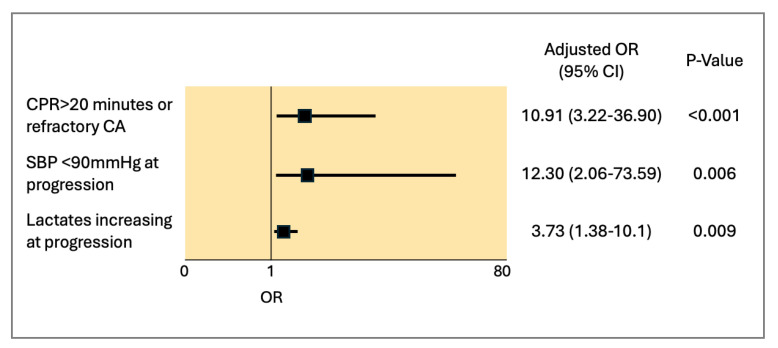 Figure 2
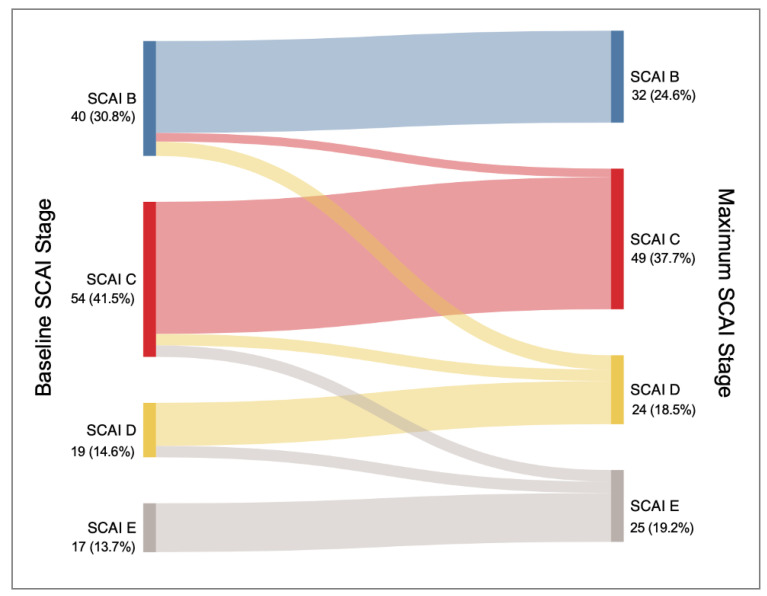 Figure 3
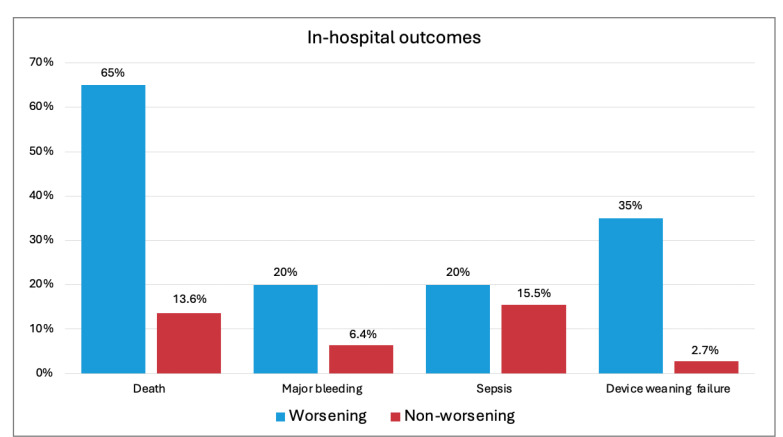 Figure 4
Peer Reviews
No public reviews on file for this paper yet. If you reviewed it on a platform where reviews are public (OpenReview, ICLR, NeurIPS, ICML), you can paste yours below so the community can read it here.
Videos
No videos yet. Explain this paper in a talk, walkthrough, or lecture? Add one.
Taxonomy
TopicsMechanical Circulatory Support Devices · Cardiac Structural Anomalies and Repair · Cardiac Arrest and Resuscitation