Does Preliminary Chest Shape Assessment Improve the Prognostic Risk Stratification of Individuals with Mitral Annular Disjunction? A Case Report and Narrative Review
Andrea Sonaglioni, Gian Luigi Nicolosi, Giovanna Elsa Ute Muti-Schünemann, Gaetana Anna Rispoli, Michele Lombardo, Paola Muti

TL;DR
This paper explores whether chest shape assessment can improve risk prediction for heart issues in patients with mitral annular disjunction and mitral valve prolapse.
Contribution
The study introduces chest wall conformation assessment using the modified Haller index to refine risk stratification in mitral annular disjunction patients.
Findings
A patient with mitral valve prolapse and mitral annular disjunction had a concave chest shape and narrow thoracic diameter.
The modified Haller index identified a benign phenotype with low arrhythmic risk in this patient.
Combining chest shape assessment with imaging may improve risk stratification for MVP patients with MAD.
Abstract
Background: Mitral annular disjunction (MAD), a mitral annular abnormality involving the whole mitral valve annulus circumference, commonly detected in individuals with mitral valve prolapse (MVP), has been recently recognized as a potential risk factor for malignant ventricular arrhythmias (VAs) and sudden cardiac death. Recent evidence indicates that a multimodality imaging assessment comprehensive of echocardiography, cardiac magnetic resonance (CMR), and cardiac computed tomography angiography (CCTA) may improve MAD detection. To date, no previous author has considered the potential influence of chest wall conformation on MAD presence. Considering the strong association between MVP and anterior chest wall deformities and the increased prevalence of MAD among MVP individuals, we have hypothesized that MAD presence might be more frequently detected among MVP individuals with a narrow…
Genes, proteins, chemicals, diseases, species, mutations and cell lines named across the full text — each resolved to its canonical identifier and authoritative record.
Click any figure to enlarge with its caption.
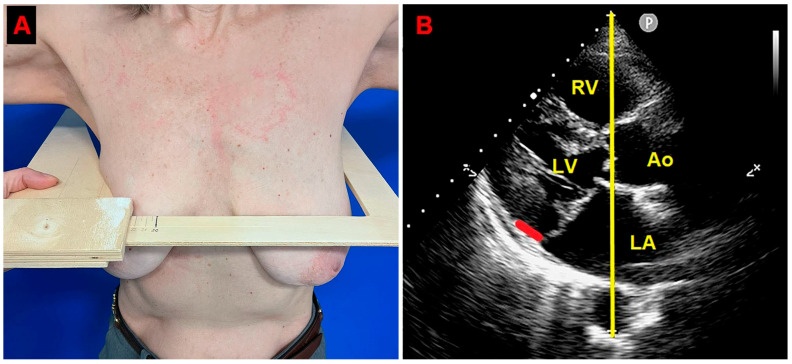 Figure 1
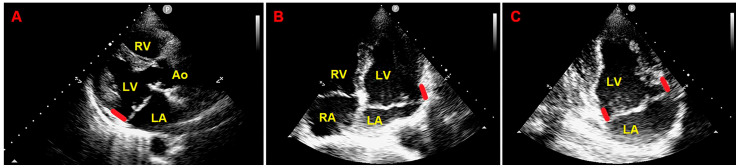 Figure 2
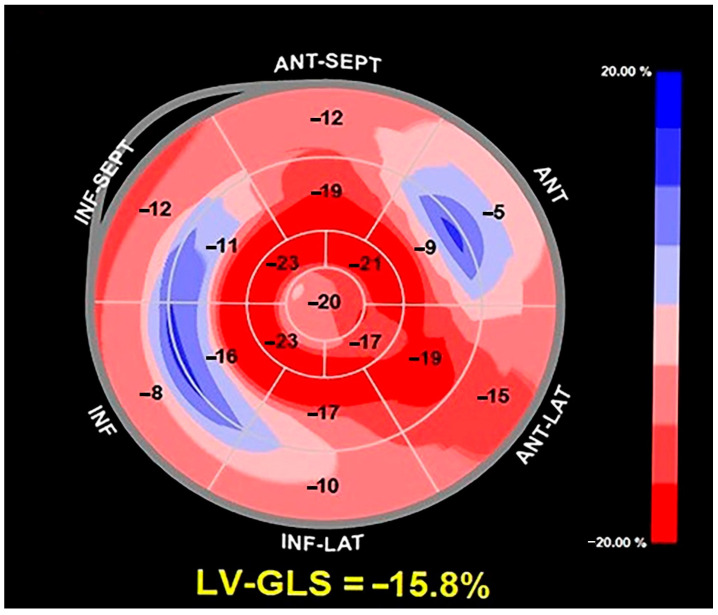 Figure 3
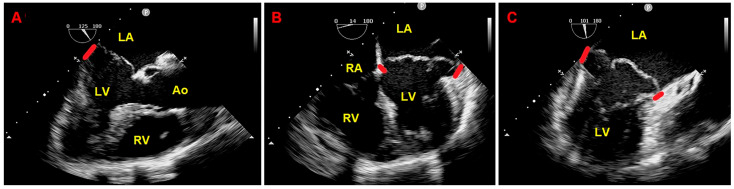 Figure 4
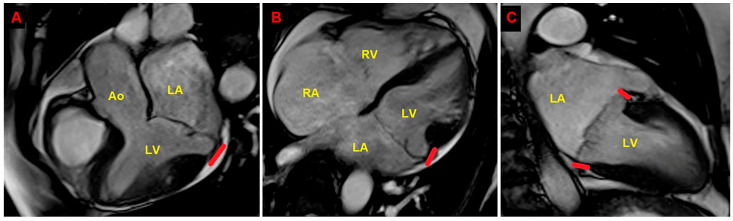 Figure 5
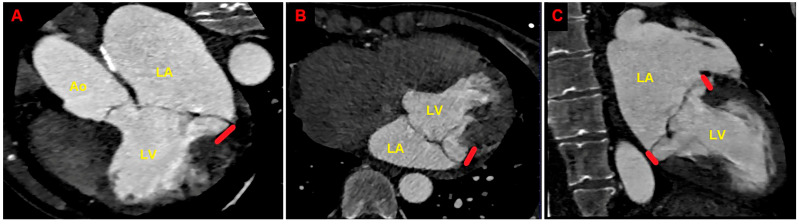 Figure 6
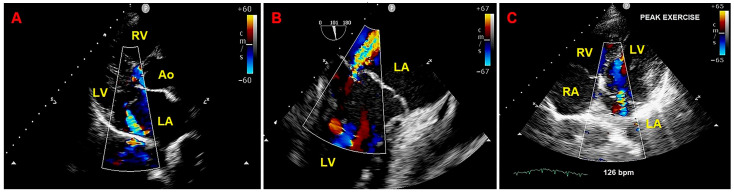 Figure 7
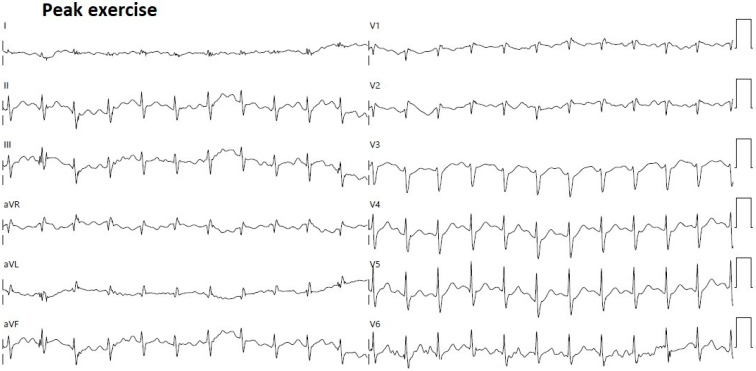 Figure 8
Peer Reviews
No public reviews on file for this paper yet. If you reviewed it on a platform where reviews are public (OpenReview, ICLR, NeurIPS, ICML), you can paste yours below so the community can read it here.
Videos
No videos yet. Explain this paper in a talk, walkthrough, or lecture? Add one.
Taxonomy
TopicsCardiac Valve Diseases and Treatments · Cardiac Structural Anomalies and Repair · Cardiovascular Function and Risk Factors