Prospective Upfront Next-Generation Sequencing for Advanced Non-Small Cell Lung Cancer: Real-World Outcomes from the Ion Chiricuță Oncology Institute
Alexandra Cristina Preda, Nicolae Todor, Bogdan Cârlan, Adelina-Dadiana Kubelac-Varro, Dana Ioana Iancu, Cristina Mocan, Mariana Bandi Vasilica, Milan-Paul Kubelac, Cătălin Vlad, Tudor Eliade Ciuleanu

TL;DR
This study shows that upfront NGS in advanced lung cancer provides quick, comprehensive genetic data to guide personalized treatment and clinical trials.
Contribution
The study presents real-world outcomes of routine, prospective NGS use in advanced NSCLC in a single Romanian center.
Findings
Upfront NGS detected actionable targets in 74.8% of patients, though only 35.3% received personalized therapy.
Liquid rebiopsy at progression refined treatment decisions and showed fewer mutations compared to baseline.
TP53 was the most frequent mutation, and EGFR was more common in never-smokers compared to smokers.
Abstract
Upfront Next-Generation Sequencing (NGS) is increasingly recommended in advanced NSCLC to guide targeted therapy. This prospective single-center study in Romania evaluated routine, upfront NGS in advanced NSCLC at baseline (tissue and/or liquid) and progression (liquid). Baseline FoundationOne NGS (tissue/liquid) was performed in 119 consecutive stage IV NSCLC patients, along with PD-L1 immunohistochemistry (IHC, SP263). Liquid biopsy was repeated at progression. Turnaround time (TAT), the prevalence of actionable targets, and clinical utility were assessed. Patients were predominantly male (68.1%) with a median age of 62 years (range 30–86). Most had ECOG PS 0–1 (79%) and non-squamous histology (67.2%). Never-smokers accounted for 25.2%. The median TAT for the NGS results was 9 days (range 5–21). Overall, 671 genetic alterations were detected in 149 genes. The mean number of distinct…
Genes, proteins, chemicals, diseases, species, mutations and cell lines named across the full text — each resolved to its canonical identifier and authoritative record.
Click any figure to enlarge with its caption.
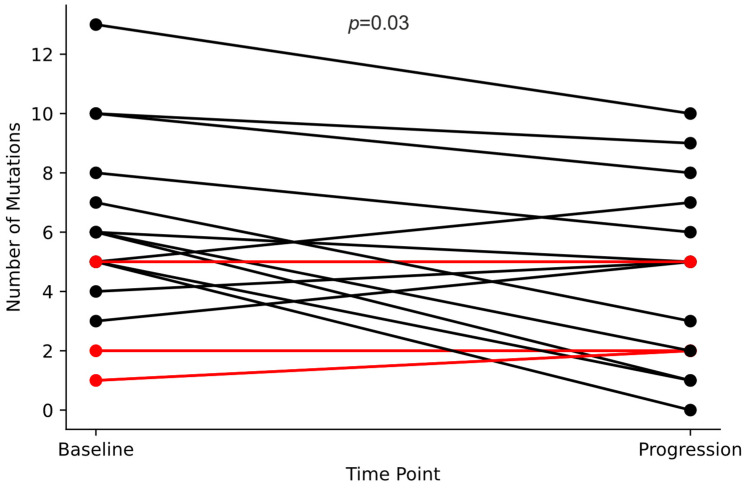 Figure 1
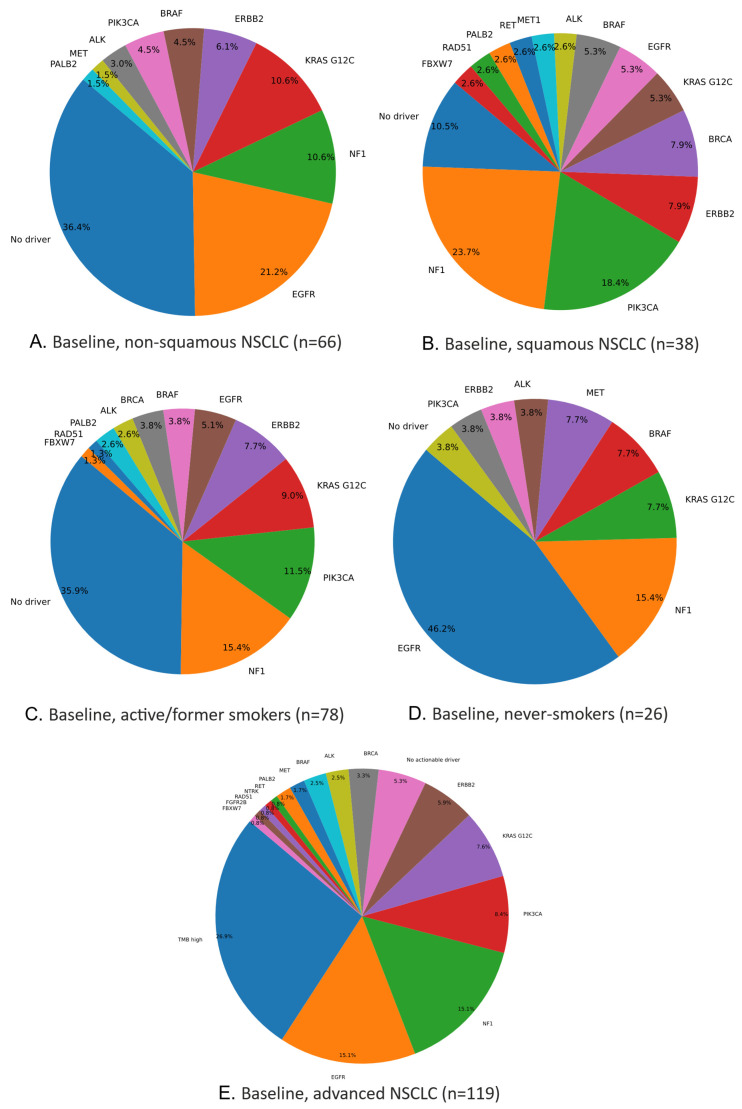 Figure 2
Peer Reviews
No public reviews on file for this paper yet. If you reviewed it on a platform where reviews are public (OpenReview, ICLR, NeurIPS, ICML), you can paste yours below so the community can read it here.
Videos
No videos yet. Explain this paper in a talk, walkthrough, or lecture? Add one.
Taxonomy
TopicsCancer Genomics and Diagnostics · Lung Cancer Treatments and Mutations · Genetic factors in colorectal cancer