Morphokinetic Behavior of the Second Polar Body in Human Zygotes as a Predictor for Embryonic Developmental Potential: An Exploratory Study Based on Time-Lapse Observation
Toko Shimura, Panagiota Tsounapi, Keitaro Yumoto, Yasuyuki Mio

TL;DR
This study explores how the behavior of the second polar body in human zygotes can predict embryonic development potential using time-lapse imaging.
Contribution
The study introduces the morphokinetic behavior of the second polar body as a novel predictor of embryonic developmental potential.
Findings
Good quality embryos tend to have morphologically static second polar bodies.
Euploid embryos were absent in embryos with fragmenting and ruffling second polar bodies.
Polar body behaviors may serve as a useful parameter in AI-assisted embryo evaluation systems.
Abstract
Time-lapse imaging has made possible the detailed observation of all stages of embryonic development, including also from the extrusion of the second polar body up to the first cleavage. By extensive observation, we achieved detection of a variety of behaviors of PBIIs such as (a) morphologically static behavior, (b) amoeboid movement, (c) shrinking, (d) fragmenting, and (e) ruffling. Retrospective analysis was performed on 282 ICSI zygotes derived from 69 ART treatment cycles from January to August 2019. Zygotes with morphologically static PBIIs (a) and PBIIs showing various behaviors (b)~(e) were classified into Group 1 (n = 70) and Group 2 (n = 212), respectively. Based on the rates of irregular division, good quality embryos, and the time from the PBII extrusion, pronuclear breakdown to the first cleavage was compared between groups (Study 1). Furthermore, the relationship between…
Genes, proteins, chemicals, diseases, species, mutations and cell lines named across the full text — each resolved to its canonical identifier and authoritative record.
Click any figure to enlarge with its caption.
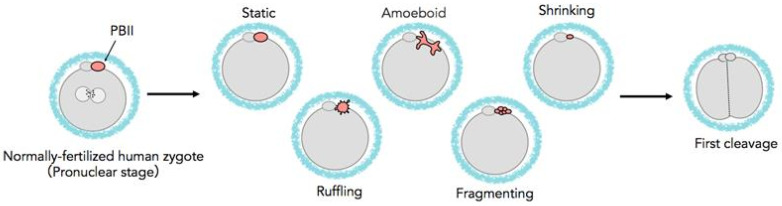 Figure 1
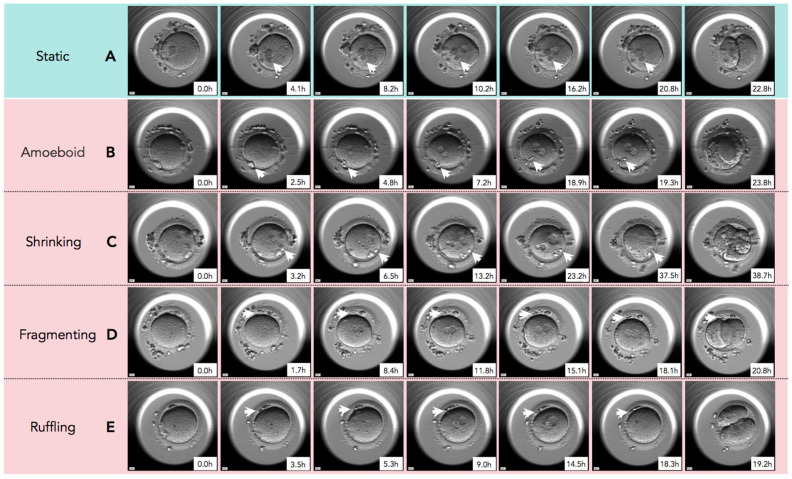 Figure 2
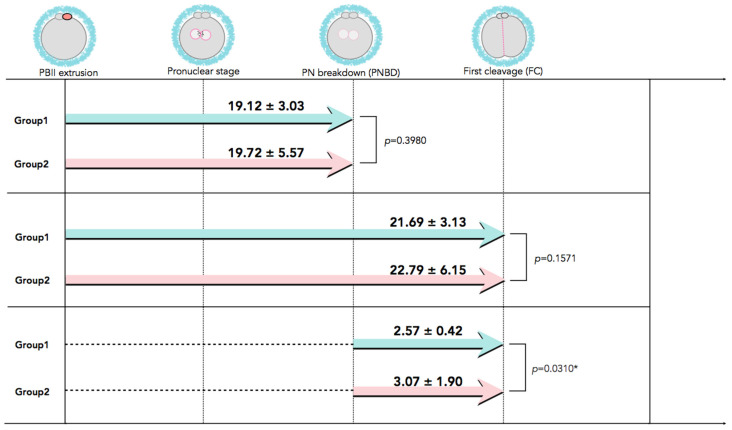 Figure 3
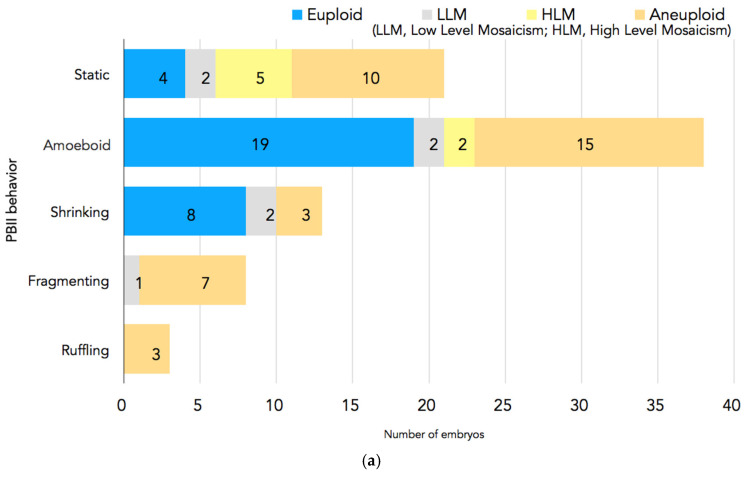 Figure 4
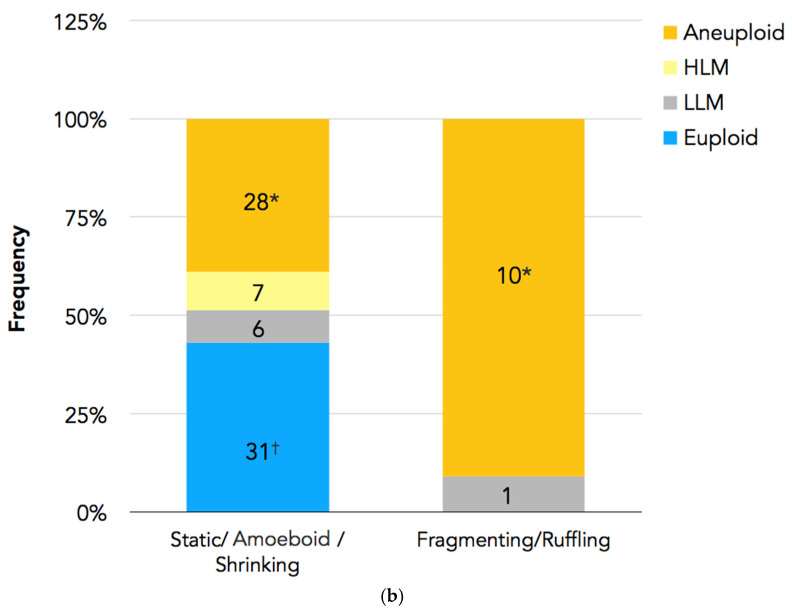 Figure 5
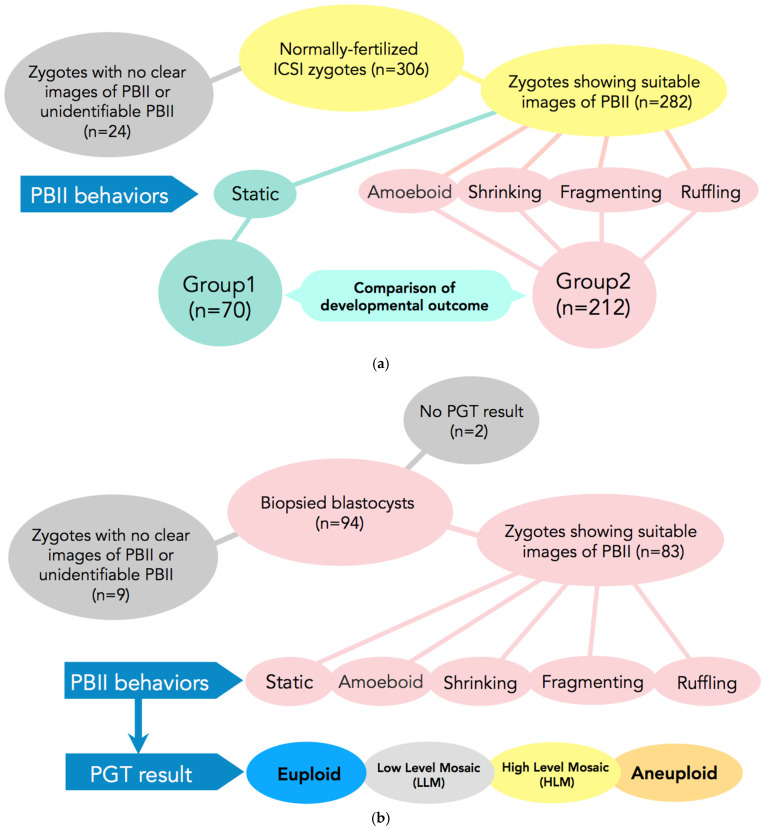 Figure 6
Peer Reviews
No public reviews on file for this paper yet. If you reviewed it on a platform where reviews are public (OpenReview, ICLR, NeurIPS, ICML), you can paste yours below so the community can read it here.
Videos
No videos yet. Explain this paper in a talk, walkthrough, or lecture? Add one.
Taxonomy
TopicsReproductive Biology and Fertility · Renal and related cancers · Prenatal Screening and Diagnostics